
Left Turn Motorcycle Accident Lawyers in Summerville
- Free consultation
- No fee unless we win
- Available 24/7
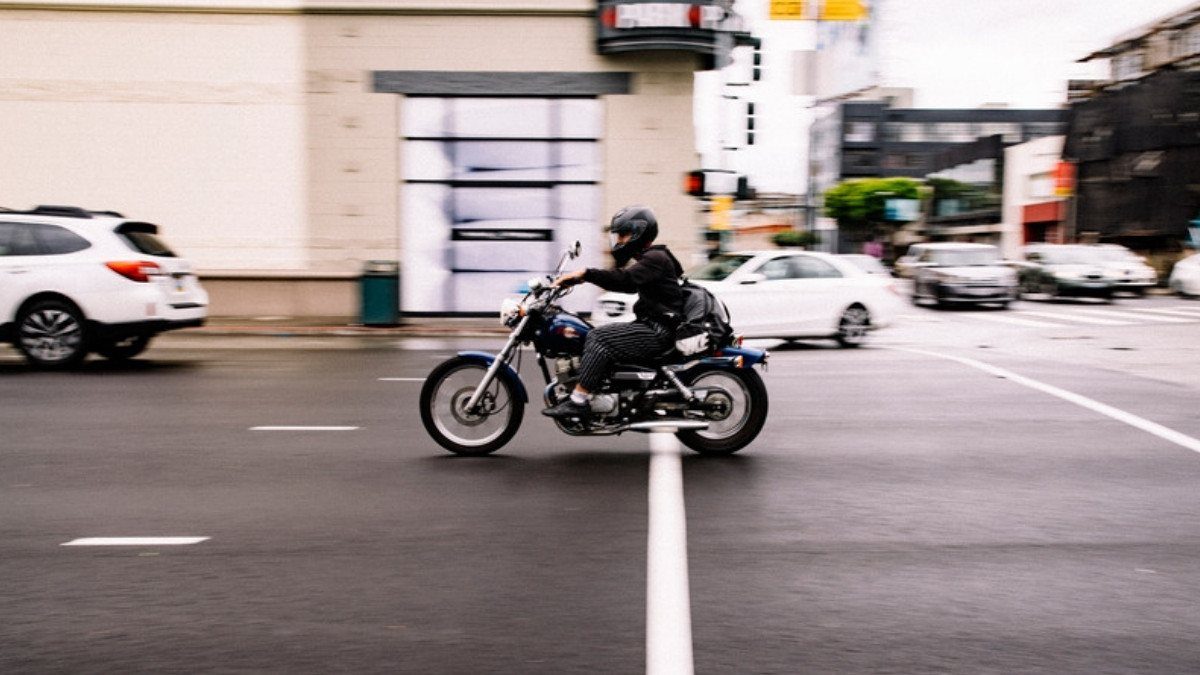
An oncoming car sat with its blinker on, and then it swung across your lane. Frost Law Group's left turn motorcycle accident lawyers in Summerville start with the few seconds before that swing. The driver may say the motorcycle came out of nowhere. South Carolina law asks a narrower question. Where was the bike when the car began to turn?
That question comes from Section 56-5-2320, one sentence in South Carolina's Uniform Act Regulating Traffic on Highways. It makes the left-turning driver yield, whether the turn crosses an intersection or heads into a driveway. Section 15-3-530 gives most injured people three years to file suit. Paint transfer and a bent fork last only until repairs start. Pavement marks fade under traffic. Leave the bike as it is, keep the helmet and write down the collision report number.
Frost Law Group, which a husband and wife operate from Linwood Lane, represents people injured in motorcycle, car and truck crashes. Jack C. Frost gave fourteen years to law enforcement, first as an officer and corporal with the Summerville Police Department and then with the Charleston County Sheriff's Office. There he served as a deputy, master deputy and detective, and he retired from that office. That work taught him how officers gather evidence, interview witnesses and write the reports an insurer reads first.
Call Frost Law Group at (843) 419-6653 for a free, confidential consultation about the turn that put you on the pavement. An attorney takes the call and can talk through the report, the bike and the insurance with you.
Free case review
Tell us what happened. An attorney will explain your options and what to do before you talk to the insurance company.
On this page
- How Left Turn Motorcycle Accident Lawyers in Summerville Apply Section 56-5-2320
- Intersection Turns a Summerville Motorcycle Crash Attorney Sees on Dorchester Road
- Driveway and Side Street Turns a Summerville Biker Accident Lawyer Investigates
- How a Summerville Motorcycle Accident Attorney Answers the Speeding Defense
- Injuries From Left Turn Impacts a Summerville Rider Injury Lawyer Documents
- Left Turn Motorcycle Accident Lawyers in Summerville Ready to Review the Scene
How Left Turn Motorcycle Accident Lawyers in Summerville Apply Section 56-5-2320
Section 56-5-2320 governs any driver planning a left turn, whether at an intersection or into an alley, a private road or a driveway. Oncoming traffic gets priority. The duty runs to a vehicle already inside the intersection and to one whose approach makes it an immediate hazard. Frost Law Group reads that sentence one phrase at a time, since each phrase answers a different question in a rider's claim.
Section 56-5-3610 gives every rider the rights and duties of other drivers. Right-of-way, under Section 56-5-580, is one vehicle's right to proceed lawfully ahead of another when direction, speed and closeness create a danger of collision. Across South Carolina in 2024, officers named failure to yield as the primary contributing factor in 30,543 collisions, and 101 people died in them. That count covers every kind of vehicle, not motorcycles alone.
Three Facts Section 56-5-2320 Asks About Every Turn
Each claim under the statute rests on three facts. Where did the driver turn, which way was the rider traveling, and how close was the bike? Frost Law Group can gather evidence on all three questions before an adjuster settles on its own version of events. A weak answer on any one of them can change how a jury divides fault.
Where the Turn Happened Under the Code's Definitions
Section 56-5-490 defines an intersection as the area inside the extended curb lines of two joining highways. On a divided highway whose roadways sit 30 feet or more apart, each crossing counts as a separate intersection. That detail matters when a driver crosses a wide median in two stages. A turn off the road into a private drive falls under the same yield rule.
Which Direction the Rider Was Traveling
The statute protects a vehicle approaching from the opposite direction. A rider heading toward the turning car fits that wording exactly. A rider overtaking the car from behind does not, and different Code sections govern that crash. Direction of travel comes first, because it decides which rules apply.
How Close the Motorcycle Was When the Turn Began
An immediate hazard means the bike was near enough that turning across its path risked a collision. Section 56-5-2320 sets no distance in feet or seconds. The answer comes from the scene, the damage and any video. A driver's estimate is one piece of evidence, and measurements taken at the scene can contradict it.
Other Code Duties That Travel With a Failure to Yield
Other sections of the Code add duties that often appear beside a left-turn violation. Section 56-5-2120(b) tells a driver to approach a left turn from the extreme left-hand lane lawfully available. Where practicable, the turn passes to the left of the center of the intersection. A driver starting from a stop must also wait until the move is reasonably safe, under Section 56-5-2110. The car's final position and the witness accounts show whether the driver followed each rule.
Does a Turn Signal Give the Driver the Right-of-Way?
No. A blinker announces a turn, and Section 56-5-2320 makes no exception for a driver who signaled. Section 56-5-2150(A) requires the signal and separately bars any turn until it can be made with reasonable safety. A driver who signaled and then turned into a nearby motorcycle did one required thing and skipped another. How much that matters in a given crash depends on distances and timing that a lawyer checks against the evidence.
Intersection Turns a Summerville Motorcycle Crash Attorney Sees on Dorchester Road
In the SCDPS Traffic Collision Fact Book, Dorchester Road ranks first among Dorchester County roads for 2024, with 519 collisions and 6 deaths. The state numbers it SC 642. Officers logged 49 collisions where it meets Ladson Road and 41 where it meets Bacons Bridge Road, which is SC 165. Those are counts of every crash type as officers recorded them, not motorcycle crashes alone.
Heavy traffic gives a left-turning driver more vehicles to judge and more vehicles that can hide a motorcycle. As left turn motorcycle accident lawyers in Summerville, Frost Law Group's attorneys treat each turn on a road like this as a problem of timing and sight lines. Who carries more of the fault depends on those details, and the firm tests them against the evidence before offering a view.
Signal Phases That Shift the Duty to Yield
Each signal color carries its own instruction under Section 56-5-970. At a circular green, a driver may turn left but must yield to vehicles lawfully within the intersection. The duty in Section 56-5-2320 applies on top of that rule. Camera footage and witnesses can establish which phase was lit when the turn began, and that phase shapes how both duties apply.
A Green Arrow That Ends Before the Turn Is Finished
A green arrow lets a driver cautiously enter the intersection to make the arrowed movement. Even then, Section 56-5-970(A)(2) requires yielding to other traffic lawfully using the intersection. Once the arrow ends, so does the permission it gave. Was the oncoming bike lawfully inside the intersection by then, or already an immediate hazard?
The Steady Yellow and a Driver Waiting Mid-Intersection
Under Section 56-5-970(B)(1), a steady yellow warns of one of two things, the end of the green movement or a red signal coming next. A left-turning driver often waits inside the intersection for a gap and then turns as the light changes. Whether the rider entered lawfully, and whether the turning driver still had to yield, rests on timing that video or witnesses have to establish.
Stopped Traffic, a Courtesy Wave and a Rider in the Next Lane
Picture a road with two lanes in each direction and traffic backed up on one side. A driver in the nearer oncoming lane stops and waves a left-turning car through a gap. The turning car crosses that lane and meets a motorcycle moving in the next lane over. Section 56-5-2320 covers any vehicle approaching from the opposite direction, and its text says nothing about a wave. The proof centers on what the turning driver could see past the stopped car.
Afternoon Peaks and Evening Deaths in the 2024 Numbers
Dorchester County's collisions peaked from 3 PM to 6 PM in 2024, with 972, while its fatal collisions peaked from 6 PM to 9 PM. Statewide, the same 3 PM to 6 PM block held 494 motorcycle collisions, more than any other three-hour span. Fatal motorcycle collisions clustered later, with 36 between 6 PM and 9 PM. Frost Law Group also handles auto wreck claims at the Dorchester Road junctions with Ladson Road and Bacons Bridge Road.
Driveway and Side Street Turns a Summerville Biker Accident Lawyer Investigates
A rider heads along Central Avenue as an oncoming SUV slows, then cuts left toward a business driveway. Central Avenue carries the state route number S-13 in Dorchester County. Officers recorded 198 collisions on it in 2024, fifth among the county's roads, and that total covers every type of crash.
Section 56-5-2320 reaches that turn by name, since it covers turns into a driveway as well as intersections. Section 56-5-1810(c) bars driving left of the center line on a road with four or more lanes, but it does not bar crossing that line to turn into a driveway. Early photos of the driveway mouth and the sight line from the turning lane preserve what the driver could see. Fault then turns on the bike's position, each vehicle's speed and the driver's view, facts Frost Law Group weighs case by case.
Center Lanes, Store Entrances and Private Drives
Some driveway turns begin in a center lane painted for left turns by traffic from both directions. Others start from the through lane when no such lane exists. Either way, the turning driver still has to yield to an oncoming rider near enough to pose an immediate hazard. The lane markings and any posted signs at the scene show which Code rule governed the driver's approach.
Two-Way Left Turn Lanes Under Section 56-5-2120(d)
Section 56-5-2120(d) covers a center lane marked for left turns by drivers going in opposite directions. Where one exists, a driver may not make a left turn from any other lane. Nor may a driver travel in that lane except to prepare for or make a left turn or a lawful U-turn. A driver who uses the center lane to get around slow traffic and then turns may break this rule as well as the yield rule.
Alleys and Private Roads as South Carolina Defines Them
Section 56-5-611 defines an alley as a street that gives access to the rear or side of lots or buildings in urban districts, not a route for through traffic. Under Section 56-5-450, a private road or driveway is a privately owned way used for travel only by the owner and people with the owner's express or implied permission. A private subdivision drive, a church lot entrance or a business service lane can fit that definition. Each one carries the same yield duty when a driver turns left into it across a rider's path.
Cars Turning Left Out of a Side Street or Parking Lot
Some crashes run the other way, with a car leaving a side road or lot and turning left across the rider. The rider then approaches from the side, so the opposite-direction wording of Section 56-5-2320 does not fit. At a stop sign, Section 56-5-2330 requires a stop and then a yield to cross traffic that is an immediate hazard. A driver leaving a parking lot answers to Section 56-5-2350, which requires yielding to all vehicles approaching on the road. That section has no immediate hazard qualifier, though a jury still weighs distance and timing.
When a Rider Passing on the Left Meets a Turning Car
A slow car ahead drifts toward the center line, and the rider moves left to pass. Then the car turns left into a driveway, directly into the motorcycle. Section 56-5-2320 does not govern this crash, because the rider approached from behind. Passing and signal rules that bind both people take its place. A reconstruction can show where each vehicle sat in the lane and when the turn signal came on, if it came on at all.
The Turning Driver's Signal and Safety Duties
Section 56-5-2150(A) bars a turn until it can be made with reasonable safety, and it bars any turn made without an appropriate signal. Subsection (B) requires the signal to run without a break over the final 100 feet before the turn. A blinker switched on at the edge of the driveway falls short of that distance. Whether the driver checked the mirror before turning also bears on reasonable safety.
The Passing Rider's Own Duties Under the Code
The rider carries duties in this crash too, and an insurer may raise them. Section 56-5-1840 requires an overtaking vehicle to pass on the left at a safe distance. Two more limits govern when and where a rider may use the left side of the road. A lawyer measures the pass against both limits before forming any view of fault.
Left-Side Travel Within 100 Feet of an Intersection
Section 56-5-1880(a)(2) bars driving on the left side of the roadway within 100 feet of an intersection or while crossing one. A pass that began near a cross street may run into that limit. The section exempts a driver turning left into or from a driveway, not the rider passing that driver.
A Clear Left Side for the Whole Pass
Section 56-5-1860 allows a pass left of center only when that side is clearly visible and free of oncoming traffic far enough ahead to finish. The whole pass must work without interfering with oncoming traffic or the vehicle being overtaken. Riders using the oncoming lane must return before coming within 200 feet of approaching traffic. When a car turns into the passing rider, the question becomes which vehicle interfered with which.
How a Summerville Motorcycle Accident Attorney Answers the Speeding Defense
Speed over the limit does not, by itself, end a rider's claim in South Carolina. An insurer may lean on Section 56-5-580, which defines right-of-way as the right to proceed "in a lawful manner" ahead of another vehicle. The argument follows that a rider breaking the speed limit had no right-of-way to lose.
Measurements answer that argument better than labels do. The left-turn statute asks whether the bike posed an immediate hazard when the turn began. A faster motorcycle closes distance sooner, so it can become that hazard from farther away. Speed can help either side, and Frost Law Group reviews the evidence before offering any view on how a jury might divide fault.
What Section 56-5-1520 Asks of Every Rider
Section 56-5-1520(A) sets a reasonable and prudent standard, measured against the conditions and the actual and potential hazards. It reaches riders through Section 56-5-3610. Posted limits count too, yet a rider can break the rule while under the limit. The section's default maximums include 55 miles an hour outside the special categories it lists. Two passages in the section matter most in a left-turn crash.
Speed Control Toward Traffic Entering in Compliance With the Law
Subsection (A) requires speed control to avoid colliding with a vehicle "on or entering the highway in compliance with legal requirements." That wording sits beside the turning driver's own duty under Section 56-5-2320. A driver who turned without yielding did not follow that section. How the two duties fit together in one crash is a legal question that depends on the facts and on how a court reads the statute.
Slower Approaches to Intersections Under Subsection (F)
Subsection (F) gives the insurer an argument instead. It calls for an appropriate reduced speed when approaching and crossing an intersection, and when other traffic creates a special hazard. An insurer may argue that a rider nearing a busy junction should have slowed. The answer depends on what the rider could see of the turning car and how early the turn began.
Proof of Speed That Replaces a Driver's Estimate
A driver who turned into a motorcycle may guess its speed after the fact. That guess is testimony, and physical proof can test it. Video from a store camera or a following car can time the bike across known distances. Gouges, scrapes, crush depth on the car's side and final rest positions let an accident reconstructionist estimate speed from the crash itself. Tara L. Frost's July 2022 to August 2025 tenure on the Dorchester County magistrate bench showed her how a court weighs measured evidence against a witness's estimate.
Can a Rider Who Was Over the Limit Still Recover?
A rider over the limit may still recover under South Carolina's modified comparative negligence rule. That rule compares each person's share of fault. A rider whose share tops 50% recovers nothing. At 50% or less, the award shrinks by the rider's percentage. Speed is one factor among several, alongside the driver's failure to yield, the signal and the sight lines. Nobody can promise where the percentages land.
Injuries From Left Turn Impacts a Summerville Rider Injury Lawyer Documents
Sixty-six motorcyclists appear as victims in Dorchester County's 2024 crash figures. Seven of them died, 12 had suspected serious injuries and 19 had suspected minor injuries. Another 16 showed no apparent injury. Those counts include every type of motorcycle crash in the county, not left turns alone.
A left-turn impact can send a rider into the side of a car or over it. The injury record starts with the first ambulance note, since an insurer may treat a gap in care as a sign of a minor injury. Value turns on the injury, the coverage and the paper trail. No one can put a number on a claim while a rider is still in treatment, and Frost Law Group does not try.
How a Side Impact With a Turning Car Injures a Rider
When a car turns across its path, a motorcycle may strike the car's side or front corner. The rider's lower body can take the first contact while the upper body keeps moving. Medical records and the treating physicians can tie each injury to that sequence. That link between the mechanism and the injury answers an insurer who blames the harm on something else.
Legs, Knees and Hips at the Point of Contact
A rider's leg can end up caught between the motorcycle and the car's door or fender. Lower leg fractures, knee injuries and hip damage can follow, depending on the angle and speed. Orthopedic records, imaging and surgical notes carry the proof. Treating physicians can explain in writing how the impact caused each injury.
Head, Neck and Shoulder Injuries After the Rider Is Thrown
A rider who goes over the hood or roof can strike the car and then the pavement. Records from these crashes can show head and neck injuries, broken collarbones and shoulder damage, often with road rash. An insurer may raise helmet use when the head took a blow. Frost Law Group handles helmet law injury claims when that argument comes up and can separate head injuries from harm no helmet could have affected.
Medical Records From the First Emergency Room Visit
Proof of a left-turn injury starts in the ambulance. The run sheet notes how the crew found the rider, what hurt and what the medics saw at the scene. The HCA Healthcare Summerville Hospital emergency room on Midland Parkway treats patients around the clock, though it is not on the state's trauma center list. Riders with the gravest injuries may go instead to MUSC or Trident Medical Center, the designated trauma centers in Charleston County, as field triage protocols direct. Those charts and later therapy notes carry the injury proof forward.
Insurance That Pays After a Left-Turn Crash
The turning driver's liability policy is the usual first source. The Section 38-77-140 floor is 25/50/25, so a driver carrying only the minimum has $25,000 for one injured person. Under Section 38-77-250, an insurer must disclose the driver's limits within 30 days of a qualifying request from the rider's attorney. Section 38-77-150 makes uninsured motorist coverage part of every South Carolina motorcycle policy. Frost Law Group handles claims against a rider's own uninsured motorist coverage when the driver had none. Underinsured coverage is optional for the buyer, and Section 38-77-160 makes every insurer offer it.
Left Turn Motorcycle Accident Lawyers in Summerville Ready to Review the Scene
Body shops straighten fenders, and road crews sweep away glass and plastic. The marks that place a motorcycle at the moment of a left turn go with them. At Frost Law Group, left turn motorcycle accident lawyers in Summerville can explain how to preserve the scene while that evidence still exists.
Tara L. Frost and Jack C. Frost practice side by side from one office, and an attorney picks up your call. Jack's years as an officer and detective shape how the firm reads a collision report. Tara's focus on personal injury and vehicle crash claims shapes how the firm documents your losses.
Bring the report number, photos of the bike and the car, the helmet and your policy card to a free, confidential consultation at 128 Linwood Lane, Summerville, SC 29483. The meeting carries no obligation to hire anyone.
Call (843) 419-6653 to reach an attorney directly, or message Frost Law Group online and include the date of the crash and a callback number.

The attorneys at Frost Law Group
 Tara L. FrostAttorney at Law · Personal injuryTara L. Frost focuses on personal injury, car accident and truck accident claims. A lifelong resident of the tri-county area, she meets clients at the Linwood Lane office in Summerville.
 Jack C. FrostAttorney at Law · Former Summerville police officer and Charleston County Sheriff's Office detectiveJack C. Frost spent fourteen years in law enforcement with the Summerville Police Department and the Charleston County Sheriff's Office before he practiced law.