
Uninsured Motorist Motorcycle Lawyers in Summerville
- Free consultation
- No fee unless we win
- Available 24/7
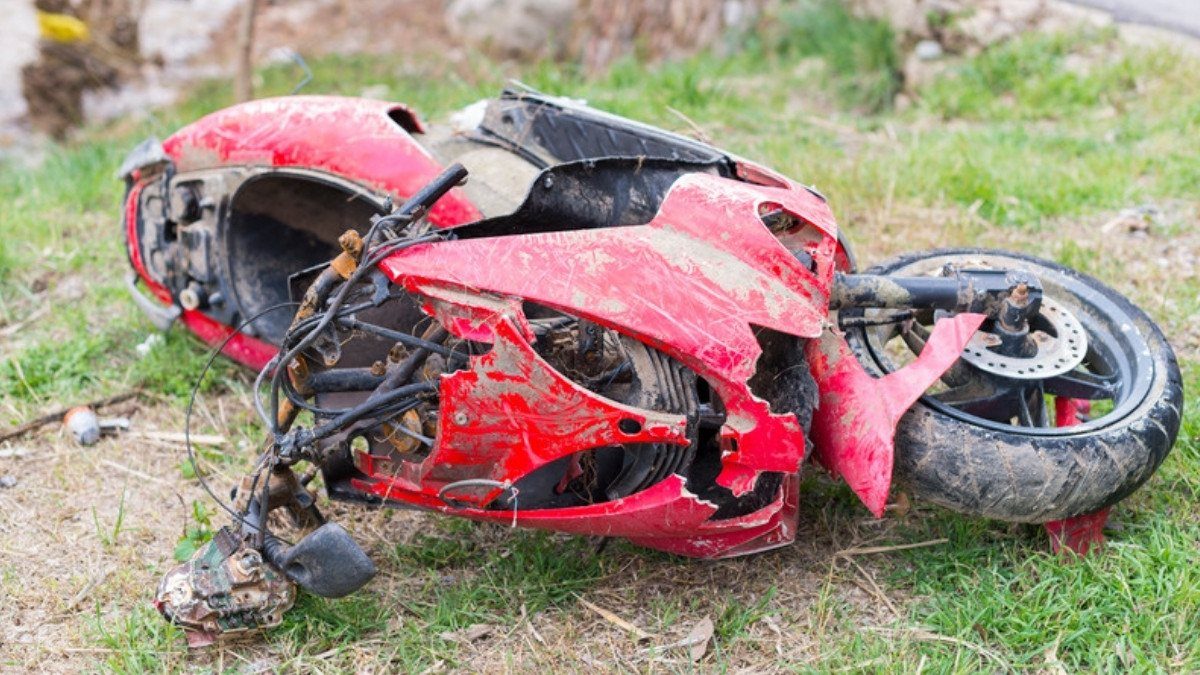
The driver who knocked you off your motorcycle had no insurance card to show the officer, or never stopped long enough to show one. At Frost Law Group, uninsured motorist motorcycle lawyers in Summerville look first at a policy you already paid for, the one on your bike. South Carolina requires uninsured motorist coverage on every motorcycle policy. That coverage answers for what you could legally recover from the uninsured driver, up to the limits you carry.
Those rules come from Title 38, Chapter 77 of the South Carolina Code. Its definition of a covered policy names the motorcycle type beside cars and station wagons. Section 38-77-150 makes the uninsured motorist provision mandatory. Section 38-77-160 makes insurers offer underinsured coverage, and each buyer accepts or declines it. Before any adjuster calls, find your declarations page, the collision report number and the insurance form the officer handed you.
Frost Law Group is a husband-and-wife practice, and its office sits on Linwood Lane in Summerville. The firm represents people hurt in motorcycle, car and truck crashes. An uninsured motorist claim, or UM claim, goes to the rider's own insurer, so that policy comes first. The person who picks up your call is a lawyer, not a call center operator.
Call (843) 419-6653 to reach Frost Law Group and set up a free, confidential consultation about the crash and your motorcycle coverage. Bring the policy if you have it, and an attorney can go over it with you.
Free case review
Tell us what happened. An attorney will explain your options and what to do before you talk to the insurance company.
On this page
- How Uninsured Motorist Motorcycle Lawyers in Summerville Use Your Own Policy
- When the Driver Had No Insurance, a Summerville Motorcycle UM Attorney's First Steps
- When the Driver Fled, the Rules a Summerville Motorcycle Hit and Run Lawyer Follows
- When the Policy Is Too Small, Underinsured Coverage With a Summerville Rider Attorney
- Insurer Deadlines a Summerville Motorcycle Insurance Claim Lawyer Enforces
- Talk With Uninsured Motorist Motorcycle Lawyers in Summerville About Your Policy
How Uninsured Motorist Motorcycle Lawyers in Summerville Use Your Own Policy
Section 38-77-150 makes the uninsured motorist provision pay all sums the insured could legally recover as damages from the uninsured driver or owner. That duty holds within the policy's UM limits. Frost Law Group reads that promise as two tasks. One is proving what the uninsured driver owes, and the other is proving that the rider's policy reaches it.
The rider's insurer pays in place of the missing liability policy, but it does not concede fault. The rider still has to prove fault and damages, since the insurer may contest both. UM limits cannot drop under the 25/50/25 floor in Section 38-77-140. That floor works out to $25,000 for each injured person and $50,000 for all injured people in one crash. Any claim's value turns on the policy wording, the proof of fault and the injuries, and a lawyer reviews all three first.
Two Coverage Lines on a Motorcycle Declarations Page
The declarations page is the summary sheet at the front of a policy, listing each coverage with its dollar limits. Section 38-77-150 requires the uninsured motorist provision to cover bodily injury and the insured's own property. So the UM entry on a bike's declarations page answers two different losses. The rider's medical bills and the repair estimate show whether each figure covers the loss it answers.
Bodily Injury Limits Under the Uninsured Motorist Provision
The bodily injury limit caps what the insurer pays for the rider's injuries. Section 38-77-30 defines bodily injury to include a death that results from it. A per-person figure applies to one injured rider. The per-accident figure comes into play when a passenger on the back is hurt too, and both people draw from it.
The Bike, Helmet and Jacket as Insured Property
The motorcycle itself, a cracked helmet and a torn jacket are all the rider's property. Section 38-77-150 requires at least $25,000 in uninsured motorist coverage for damage to the insured's property in one accident. A policy may exclude the first $200 of that loss, and the South Carolina Department of Insurance calls a $200 deductible typical. Under Section 38-77-210, the UM provision need not cover property damage that other insurance already paid. If collision coverage fixed the bike, the UM property line does not have to pay that loss again. Which items the property line reaches depends on the policy's wording.
Can a Motorcycle Insurer Require Arbitration of a UM Claim?
No. Arbitration means a private hearing in place of a court case. Section 38-77-200 says the uninsured motorist provision may not require arbitration of any claim under it. The same section bars the policy from restricting the insured's right to hire a lawyer or to file suit. Other requirements can come only from the statutes themselves or the form the Director of Insurance prescribes. Beyond those, the policy may ask nothing of the insured except proof that the uninsured driver is legally liable. A lawyer can read the UM endorsement for clauses that add steps the statute bars.
When the Driver Had No Insurance, a Summerville Motorcycle UM Attorney's First Steps
After an injury crash, the officer working it hands each driver or owner an insurance verification form. The Highway Patrol's name for it is the FR-10. Under Section 56-9-350, the completed and verified form goes to the South Carolina Department of Motor Vehicles, or SCDMV. It is due 15 days after the officer delivers it. If the other driver or owner never returns it properly verified, the statute treats the missing form as prima facie evidence of no insurance on that vehicle. Prima facie evidence stands as proof unless someone rebuts it.
Frost Law Group treats that form as the first record showing whether a UM claim is the right path. Whether UM coverage pays, and how much, turns on those records and on proof of fault. A lawyer weighs both before offering a view.
Records Showing the Other Vehicle Carried No Coverage
The collision report, the FR-10 and the vehicle's registration each add a piece. Under Section 56-10-10, every owner of a registered vehicle must keep the required security for as long as the registration lasts. To register, an owner must also name the liability insurer and sign a perjury-backed statement that insurance is in place. Frost Law Group can request these records before an adjuster frames the claim.
Collision Report Copies From Summerville Police or SCDMV
The Summerville Police Department, at 108 North Cedar St., directs people to CrashDocs, a private portal, for the collision reports its officers write. SCDMV also releases official copies online, at a branch or through the mail on Form FR-50, and it charges a $10 fee per report. By SCDMV's own description, that report holds more detail than whatever a driver was handed on crash day. SCDMV cannot release it until the officer's report reaches the agency and goes through processing.
Registration Law Since the Uninsured Vehicle Fee Ended
South Carolina once let an owner register an uninsured vehicle by paying a fee. That option ended on July 1, 2024, when 2023 Act No. 51 reserved Section 56-10-510, the section that allowed it. Section 56-10-520 makes it a misdemeanor to drive your own uninsured vehicle or to let someone else drive it. A first conviction brings a fine of $100 to $200 or 30 days in jail. SCDMV also suspends the owner's license, registration and plates on notice of a violation.
Is a Driver Without a Policy Always Uninsured?
Not always. Section 38-77-142 makes every auto liability policy cover the named insured and anyone using the vehicle with that person's express or implied consent. So a driver who borrowed a friend's pickup may fall under the friend's policy. The answer changes if the named insured signed a driver exclusion under Section 38-77-340. Coverage then does not apply while the excluded person drives. The owner's policy deserves a check before anyone treats a vehicle as uninsured.
Proving Fault When the Other Driver Had No Insurer
A UM claim still turns on fault. Section 38-77-150(B) lets the rider's insurer appear and defend in the uninsured driver's name, so it can dispute fault as any liability carrier would. Under modified comparative negligence, the rider collects nothing if a jury puts more than half the fault on the rider. A smaller share shrinks the award by that percentage.
Frost Law Group also handles left-turn motorcycle crashes in which the car that turned across the rider carried no coverage. There the proof centers on where the bike was when the car started across its lane. How a jury might divide fault depends on evidence a lawyer tests, and no one can predict the split.
When the Driver Fled, the Rules a Summerville Motorcycle Hit and Run Lawyer Follows
A rider comes off I-26 at Exit 203, the College Park Road interchange that the state Department of Transportation places in Berkeley County. A sedan swerves into the rider's lane, and the rider brakes hard and goes down. The sedan keeps going without ever touching the motorcycle. Officers recorded 113 collisions where I-26 meets College Park Road in 2024, according to the Department of Public Safety's Fact Book. No Berkeley County intersection had more.
Frost Law Group's practice includes Berkeley County motorcycle crash claims, along with Dorchester County cases. When the driver disappears, Section 38-77-170 controls the UM claim. As rewritten effective May 20, 2024, the section sets three conditions. First, someone reported the crash to an appropriate police agency within a reasonable time. Second, the claim fits at least one of three proof routes. Third, the rider cannot have been negligent in failing to identify the car and its driver at the time. The uninsured motorist motorcycle lawyers in Summerville at Frost Law Group can work through all three with a rider.
Which Police Agency Takes the Report After a Rider Goes Down
Section 56-5-1260 tells a driver in a crash that hurts or kills someone to notify police immediately, by the fastest means. Within town or city limits, the notice goes to the local police department, such as the Summerville Police Department. Outside municipal limits, notice goes either to the county sheriff or to the nearest Highway Patrol office.
Section 38-77-170 measures the report against all the circumstances rather than a set number of hours. Jack C. Frost's roles in fourteen years of law enforcement included corporal at the Summerville Police Department. He also worked as a detective at the Charleston County Sheriff's Office. He knows how an officer's narrative describes contact between vehicles, and that description can shape the choice of proof route.
When the Motorcycle Went Down Without Any Contact
Physical contact with the unknown vehicle is one route, but a rider who dodges a car and falls may never touch it. The statute also accepts a witness, and the 2024 rewrite added a recording as a third route. Frost Law Group applies the same section in hit and run claims for people in cars. Section 38-77-180, which allows suit against an unknown driver as John Doe, still speaks of injury by physical contact. A lawyer weighs that wording before filing any suit.
An Eyewitness Other Than the Rider
The witness route needs someone other than the owner or operator of the insured vehicle. On a motorcycle claim, that rules out the rider and the bike's owner. A driver who stopped behind the rider can qualify, and so can a pedestrian. The statute's wording appears to reach a passenger on the back of the bike as well. The statute then asks for one of two kinds of sworn proof.
Sworn Affidavits and the Statutory Warning Line
An affidavit is a written account that the witness swears is true, and this one describes the crash. Section 38-77-170(B) requires a capitalized warning, displayed prominently on its face, that a false statement may bring criminal penalties. Frost Law Group can check the affidavit for that warning before the witness signs.
Court-Ordered Testimony Before Any Lawsuit
Some witnesses talk freely at the roadside and then refuse to sign anything. The statute then lets the insured seek a judge's order to depose that witness before anyone files suit. The procedure comes from Rule 27 of the state's Rules of Civil Procedure, and the witness answers questions under oath. Tara L. Frost held a magistrate judgeship in Dorchester County from July 2022 to August 2025. Those years showed her how a court tests sworn testimony and a witness's credibility.
Recordings Showing the Unknown Vehicle Caused the Fall
A recording can also carry the claim if it shows the unknown vehicle caused the harm, whether captured electronically or by other means. A helmet camera, a following driver's dashcam or a gas station camera may qualify. The clip has to show the unknown car causing the fall, not merely a car passing nearby. Frost Law Group can send nearby businesses a written request to keep that footage.
Could the Insurer Say a Thrown Rider Should Have Read the Plate?
The third condition asks whether the insured was negligent in failing to identify the other vehicle and driver at the time. Negligence means a failure to use reasonable care under the circumstances. A rider sliding across the pavement or pinned under a bike has little chance to read a plate. An insurer may still argue that the rider could have noted a make or color. The injuries, the medical records and the scene answer that argument, and the outcome depends on facts a lawyer reviews.
When the Policy Is Too Small, Underinsured Coverage With a Summerville Rider Attorney
What happens when the driver who hit you carried only the minimum? Under Section 38-77-140, a policy at the 25/50/25 floor pays at most $25,000 for one person's bodily injury. Underinsured motorist coverage, called UIM, pays damages beyond the at-fault driver's liability limits under Section 38-77-160. The motorcycle's declarations page shows whether the rider carries UIM.
UIM is optional. Every insurer has to offer it, up to the buyer's own liability limits. The Director of Insurance approves the offer form, which lists the available limits and the range of premiums. Under Section 38-77-350(C), an insurer need not make a new offer when a policy renews or a new one replaces it. So a choice made on a rider's first bike policy can stay in place through later renewals. Section 38-77-350(E) covers an insured who does not return the signed offer form in 30 days. The insurer then has to add UM and UIM at limits equal to the policy's liability limits. The signed form, or its absence, answers that question, so a lawyer asks the insurer for it.
Why the Motorcycle's Own Limits Set the UIM Ceiling
Section 38-77-160 ties UM or UIM coverage over the basic limits to a particular vehicle. The policy protects the insured only to the extent of the coverage the insured has on the vehicle involved in the accident. If none of the insured's vehicles was involved, the limit is the coverage on any one vehicle that carries the added protection. For a rider, that makes the motorcycle's declarations page the starting point, even when the family car carries higher limits.
Riding the Motorcycle Listed on Your Policy
A rider hurt on his or her own motorcycle is riding the vehicle involved in the accident. Under the statute's wording, the UIM figure on that motorcycle is the reference point for coverage over the basic limits. A rider who bought high UIM limits on a truck and little or no UIM on a bike may discover the difference only after a crash. For a household with several policies, the result depends on the policy language and South Carolina case law, read together.
Riding a Borrowed Motorcycle
A rider on a friend's bike is a permissive user under the friend's policy, and permissive users fall in Class II. Stacking combines the UIM limits listed for two or more vehicles. The 1998 Concrete Services opinion, Opinion No. 24773, states that only Class I insureds may stack. Only the named insured, a spouse and relatives living in the named insured's household belong to Class I. Because the bike belongs to the friend, none of the rider's own vehicles was involved in that crash. Section 38-77-160 has a sentence for crashes that involve none of the insured's vehicles. Under it, the rider's own policy offers UIM only up to the coverage on any one of the rider's vehicles with UIM.
Can a Rider Take the Driver's Policy Limits and Still Claim UIM?
Section 38-77-160 contemplates that sequence. No underinsured motorist policy may require the UIM insurer's consent before the insured settles with the at-fault party. Suppose the liability insurer pays its limits to settle part of the claims. The UIM carrier may then assume the defense and conduct it for its own benefit. Frost Law Group can map those steps before a rider signs any release, and the right order depends on the facts of the claim.
Insurer Deadlines a Summerville Motorcycle Insurance Claim Lawyer Enforces
A claim number does not hand the insurer control of the calendar. South Carolina's insurance code puts deadlines on insurers too, such as 30 days to disclose a driver's limits and 30 days to appear after service.
The rider has deadlines as well. The FR-10 goes back to SCDMV within 15 days of delivery. Form FR-309 covers a crash no officer investigated that caused injury, death or at least $1,000 of apparent property damage. Section 56-5-1270 gives the driver or owner 15 days to send that written report to SCDMV. Section 15-3-530 gives most injury suits a three-year filing deadline. The controlling date turns on the facts of the crash, and a lawyer can pin it down early.
The 30-Day Sworn Statement of the Driver's Coverage
Section 38-77-250 gives a claimant's attorney a way to learn the at-fault driver's limits. The attorney's request is itself sworn, describes the claim and says the attorney is authorized to ask. The statute names two tracked delivery methods for sending it. A copy of the incident report accompanies it. Within 30 days, a corporate officer or claims manager must answer under oath with the insurer's name, each insured and the coverage limits. A copy of the declarations page may take the place of that statement. Fleet policies and umbrella or excess coverage are exempt. The answer helps show whether UIM comes into play.
When the Insurer Says the Request Falls Short
An insurer that finds the request too thin to answer may say so in writing. Section 38-77-250(B) requires that reply to name the specific added information the insurer needs. A reply of that kind counts as compliance, so the next step is a corrected request with the missing details.
Limits Answers That Change or Stay Confidential
Under subsection (D), the insurer must amend its answer if it learns facts that differ from or add to what it reported. Subsection (C) keeps the answer from waiving the insurer's coverage defenses and bars it from evidence. Subsection (F) makes the information confidential, and the attorney must destroy it when the case ends.
Thirty Days to Appear After the UM or UIM Carrier Is Served
A UM or UIM claim that reaches court follows its own service rule. In that suit, Frost Law Group has to serve copies of the pleadings on the insurer that wrote the coverage, as Sections 38-77-150(B) and 38-77-160 require. That insurer gets 30 days from service to enter the case, and it can defend under the uninsured or underinsured driver's name. Both statutes keep the evidence of service on the insurer out of the record.
Talk With Uninsured Motorist Motorcycle Lawyers in Summerville About Your Policy
The declarations page on your motorcycle policy lists the UM and UIM limits that frame the claim. Frost Law Group can read that page with you, along with the collision report and any insurer letters.
A lawyer answers the phone at the office, where Tara L. Frost and Jack C. Frost practice together. The firm's uninsured motorist motorcycle lawyers in Summerville can explain what your policy appears to cover before you give any insurer a recorded statement.
Bring your declarations page, any photos of the damaged motorcycle and the report number to a free, confidential consultation at 128 Linwood Lane, Summerville, SC 29483. Nothing about that meeting obligates you to hire anyone.
Call (843) 419-6653 with the crash date and your motorcycle insurer's name handy, or contact Frost Law Group online if a call is hard to make.

The attorneys at Frost Law Group
 Tara L. FrostAttorney at Law · Personal injuryTara L. Frost focuses on personal injury, car accident and truck accident claims. A lifelong resident of the tri-county area, she meets clients at the Linwood Lane office in Summerville.
 Jack C. FrostAttorney at Law · Former Summerville police officer and Charleston County Sheriff's Office detectiveJack C. Frost spent fourteen years in law enforcement with the Summerville Police Department and the Charleston County Sheriff's Office before he practiced law.