
Slip and Fall Attorneys in Summerville
- Free consultation
- No fee unless we win
- Available 24/7

A wet tile, a curled mat or a loose stair tread can put you on the ground. Next come the manager's incident report, a call from the property's insurer and an emergency room bill. Slip and Fall Attorneys in Summerville begin with a narrower question than most people expect. What was on the floor, who put it there, and how long had it been there when you stepped on it?
Wintersteen v. Food Lion, a 2001 opinion of the South Carolina Supreme Court, sets the rule for spills in this state. A store answers for a substance on its floor only if it put the substance there or had actual or constructive notice of it. Actual notice means the owner knew, and constructive notice means the owner should have known. Photos, witness names and the exact time of your fall help answer those questions, so save them now.
A husband and wife run Frost Law Group, an injury practice with one office in Summerville. Tara L. Frost focuses on personal injury claims, and she practices alongside her husband, Jack C. Frost. Tara's time as a Dorchester County Magistrate Judge ran from July 2022 through August 2025. On that bench she saw how a courtroom separates solid evidence from guesswork and weighs each witness's credibility.
Frost Law Group takes calls at (843) 419-6653 and offers a free, confidential consultation about your fall. The phone reaches one of the two attorneys, not a call center, and calling puts you under no obligation to hire the firm.
Free case review
Tell us what happened. An attorney will explain your options and what to do before you talk to the insurance company.
On this page
- What Slip and Fall Attorneys in Summerville Must Prove Under the Wintersteen Rule
- How a Summerville Premises Injury Lawyer Shows the Owner Created the Hazard
- When a Summerville Fall Injury Attorney Proves the Owner Knew About the Danger
- Why Your Reason for Being There Matters to a Slip and Fall Lawyer in Summerville
- How a Summerville Trip and Fall Lawyer Answers the Open and Obvious Defense
- Store, Apartment, and Government Property Falls a Summerville Injury Attorney Handles
- Slip and Fall Attorneys in Summerville Can Review Your Photos and Incident Report
What Slip and Fall Attorneys in Summerville Must Prove Under the Wintersteen Rule

Teresa Wintersteen slipped on a puddle of clear liquid near a self-service soda fountain with an ice dispenser. The trial judge let her case reach a jury on the theory that ice falling from the machine was a foreseeable risk. The Court of Appeals reversed, and the Supreme Court agreed with that reversal in 2001. Frost Law Group measures every fall claim against the rule the Court restated in her case.
Under that rule, you must show one of two things. One is that the owner or its employees created the dangerous condition. The other is that the owner had actual or constructive knowledge of it and failed to fix it. For a spill, that means proof the owner put the substance on the floor or had notice it was there when you fell. Wintersteen's case began in Orangeburg County, which sits in the First Judicial Circuit with Dorchester County. The same test governs falls at grocery stores, gas stations and shopping centers in Summerville.
Why a Foreseeable Spill Does Not Decide the Case
Wintersteen argued that a store able to foresee items landing on its floor should have to prevent them. The Court declined. It wrote that requiring shopkeepers to "anticipate and prevent the acts of third parties" would make them "insurers of their customers' safety."
The opinion leaned on two earlier cases that rejected the same argument. In Simmons v. Winn-Dixie, the number of past falls in the chain's stores did not replace proof of notice. In a 1998 Court of Appeals case against Bi-Lo, a shopper slipped on a grape in a checkout line. She still had to prove notice, even though she blamed the vented bags the grapes came in. Your evidence has to be about the hazard that hurt you, not about how the business runs in general.
Spills on the Floor Versus Defects Built Into the Property
Wintersteen describes a line of "foreign substance" cases, meaning something that does not belong on the floor. Spilled soda, melted ice and a dropped grape all fit that label. A fixed defect is different. In O'Leary-Payne v. R.R. Hilton Head II, a metal grounding rod stuck up about five and a half inches from a shopping center sidewalk.
The Court of Appeals still applied the created-or-notice test to that rod. With a built-in defect, though, the questions shift toward who installed it, who maintained it and whether a routine inspection would have caught it. Frost Law Group sorts each fall into one of these two groups early, because each group calls for different proof.
Three Years to File Over a Fall on Private Property
For a fall on private property, the filing period under Section 15-3-530 is generally three years. The clock starts under Section 15-3-535 once you knew about the claim, or would have known with reasonable diligence. Section 15-3-40 can lengthen the period for someone hurt before turning 18. The added time cannot run past one year after the 18th birthday, and it adds nothing when the regular three years would end later. A fall on government property follows a shorter schedule, so confirm which deadline applies before relying on any of these.
Proving the Harm and Repaying Medicaid or Medicare
A claim also needs proof of harm, which the medical records and bills document. Those records start with the first emergency visit and run through every follow-up appointment. South Carolina's cap on pain-and-suffering damages, in Section 15-32-220, applies to medical malpractice claims.
Repayment claims can reduce what reaches you. If Medicaid paid for your care, Section 43-7-420 treats you as having assigned to SCDHHS, the state Medicaid agency, your right to recover what Medicaid paid. Federal law also requires Medicare's conditional payments to be reimbursed from a recovery. No one can tell you what a fall claim is worth before the medical records and bills are complete.
Does a Store Have to Pay Because I Fell Inside It?
No. Wintersteen repeats that a merchant "is not an insurer of the safety of his customers." A store does owe a duty to keep its aisles and passageways reasonably safe. In Garvin v. Bi-Lo, the Supreme Court added that a merchant need not keep its premises so safe that "no accident could happen."
A fall alone proves little. A fall plus evidence of notice or a created hazard is the kind of claim South Carolina law recognizes. No lawyer can tell you how a jury would weigh your evidence before reviewing it. Any honest answer starts with the two Wintersteen routes.
How a Summerville Premises Injury Lawyer Shows the Owner Created the Hazard

Many people assume every fall case turns on how long a spill sat on the floor. The clock drops out when the owner or its employees made the hazard. Wintersteen calls this an injury "caused by a specific act of the defendant which created the dangerous condition." A clerk who mops a Bacons Bridge Road convenience store during business hours and posts no warning may fit that description.
Frost Law Group looks for the act behind the hazard before it looks at timing. The firm brings the same approach to premises liability claims over falling merchandise, broken stairs and dim lighting. Proof of a created hazard often sits with the business itself. It tends to turn up in schedules, work orders and the memories of the employees on shift.
Mopping, Waxing and Floor Mats Put Down by Employees
Water from a mop, fresh wax and a mat laid across a wet entrance all start with a worker's own act. For water or wax, Wintersteen's foreign substance rule reaches a substance that "was placed there by the defendant or its agents." The broader rule for a condition the owner created reaches a mat an employee laid down. Either way, you do not need to show how long the hazard sat. The questions become whether the worker's act made the floor dangerous and whether any warning reached you in time.
Warnings get their own scrutiny. A cone folded behind a display or set two aisles away may not have told you anything. Video, photos and witness accounts can show where the sign stood when you fell.
Stacked Displays and the Garvin v. Bi-Lo Decision
Falling merchandise raises the created-hazard question in its sharpest form, since a display is something the store set up. The Supreme Court decided Garvin v. Bi-Lo in February 2001, three weeks before Wintersteen. Justice Waller wrote both opinions, and both apply the same two-route test. Garvin shows how much detail a display claim needs before a jury can hear it.
What the Moncks Corner Shopper Offered as Proof
Linda Garvin was shopping at a Bi-Lo in Moncks Corner when she reached for canned goods priced at four for $1.00. The cans sat in cut-open shipping boxes at the end of an aisle, stacked higher than her 5-foot-2 frame. About fifteen cans tumbled down, and some struck her face and cut her near the lip. The Court held her evidence of the height, the boxes and the sale insufficient as a matter of law.
Evidence the Court Said Was Missing
The opinion named the gap. Garvin offered no evidence of "some defective manner of stacking the boxes," and nothing showed Bi-Lo was on notice that "the stacked cans had become rickety." A photo of crushed or leaning boxes, an employee who saw the stack lean or an earlier complaint might have filled that gap. Whether your own display fall has proof of that kind is a question for a lawyer who has seen the evidence.
Work Crews That Leave a Hazard Behind
The party that did the work is not always the property owner. In Larimore, a utility crew dug a trench across a homeowner's lot and refilled it. Its own procedures called for a mechanical tamp to pack the soil, but the crew used the trenching machine instead. The claim against the homeowner failed, while the claim against the utility went to a jury. Frost Law Group traces who performed the work that left the hazard, because that party may answer even when the owner does not.
When the Owner Blames a Vendor or Cleaning Contractor
A store may answer a created-hazard claim by pointing at someone else, such as a vendor stocking shelves or an outside cleaning crew. Act No. 42 widened whose fault a jury may count, for claims arising after January 1, 2026. Jurors can assign part of the fault to a wrongdoer nobody sued, a tactic lawyers call the empty chair. The defendant has 180 days from the start of the suit to name that person, unless the court finds good cause to allow more time.
The share rule itself is older, dating to July 1, 2005. Section 15-38-15 limits a defendant whose fault a jury puts under 50% to that defendant's own percentage of the damages. A defendant whose share reaches 50% may still owe the entire award, and so may one whose conduct a jury finds willful, wanton, reckless or intentional.
Blame also needs evidence. In O'Leary-Payne, the shopping center owner filed a separate suit against the contractors who installed the rod. It offered no proof of their fault at trial, so the court barred it from blaming them in closing argument. Frost Law Group looks early at which companies touched the floor, since a missing party can shift where fault lands.
When a Summerville Fall Injury Attorney Proves the Owner Knew About the Danger

How long must a puddle sit before a store should have found it? Wintersteen sets no number of minutes. The traditional test asked about time. Was the substance there "for a sufficient length of time that the storekeeper should have discovered and removed it"? Wintersteen also recognizes other routes to the same answer.
Those routes run through two kinds of notice, actual and constructive. Frost Law Group builds each one from records and witnesses rather than guesses about the owner's habits. Jack C. Frost's fourteen years at the Summerville Police Department and the Charleston County Sheriff's Office included writing reports. He understands what goes into an incident report and what one can leave out.
Actual Notice From a Complaint, a Call or an Employee
Actual notice means the owner or someone working for it knew about the hazard before you fell. A customer may have told a cashier about spilled detergent. An employee may have seen a leak and gone for a mop without blocking the aisle. In Davenport v. Cotton Hope Plantation, a Hilton Head Island resident had phoned the management company several times about dead floodlights at his stairway.
Names, times and any texts or emails sent to management give slip and fall attorneys in Summerville a way to prove this kind of notice. Witnesses who heard an employee mention the spill before your fall matter just as much.
Three Ways to Show Constructive Notice
Constructive notice is, in the words of the Court of Appeals, "a legal inference which substitutes for actual notice." It lets a jury treat the owner as knowing what it should have known. South Carolina appellate opinions describe three ways to build it. A claim that falls short on one may still stand on another, so each deserves a look.
Time on the Floor Before You Fell
The traditional route asks how long the hazard was there. Evidence of age can come from the hazard itself. Cart tracks through a spill, dirt mixed into the liquid or dried edges around a puddle all suggest time. Time-stamped video and any sweep log the store keeps can do the same work. Without some proof of time, a spill that appeared seconds before your fall generally cannot support constructive notice.
An Inspection Routine the Owner Adopted
In O'Leary-Payne, the shopping center's owner had a procedure requiring employees to inspect all sidewalks regularly. The woman who tripped was walking at dusk on a lit but dim walkway behind a Hilton Head outlet store. The court held that because the owner should have seen the rod during an inspection, it had constructive notice. An owner's own safety rules can become evidence of what it should have found. A written inspection policy is among the first records slip and fall attorneys in Summerville ask a business to produce.
Hazards That Keep Coming Back
The first footnote in Wintersteen adds a third route. Recurrence alone is not enough, but a hazard that returns so often it amounts to "a continual condition" can count. Paired with other evidence, such as employees knowing about it, that pattern "may be sufficient to create a jury issue" on constructive notice. The footnote draws on two earlier cases.
Sweet Gum Balls in a Hospital Parking Lot
In Henderson, decided in 1990, a person slipped on a sweet gum ball in a hospital parking lot. The hospital had planted sweet gum trees there in 1971. Its architect later advised removing the trees, yet the hospital added a stairway beside one of them. The Supreme Court found a jury question on whether the hospital was negligent for keeping the trees without enough safeguards.
Poinsettia Leaves Left for the Next Sweeping
In Pinckney, a 1992 Court of Appeals case, a person slipped on fallen poinsettia leaves at a Winn-Dixie store. The evidence allowed jurors to infer that the store manager saw leaves dropping to the floor. The leaves then stayed there until the next periodic sweeping. That mix of a repeating hazard and an employee's knowledge is the pattern the footnote describes.
Notice Alone Does Not Finish the Proof
Wintersteen's second route has two parts. The owner must have known or should have known about the hazard, and it must have "failed to remedy it." The opinion quotes a federal appeals court applying South Carolina law. That court held a storekeeper "only to reasonable care in the discovery and remedy or removal" of a hazard. An employee who spots a spill, blocks it off and calls for a mop may have met that standard. Whether the response in your fall was reasonable depends on timing and details an attorney has to pin down.
Records a Business May Hold After a Fall
Much of the notice evidence belongs to the business. An incident report, security video, sweep or inspection logs, work orders and the shift schedule can each show who saw what and when. Ask for a copy of the incident report, or whatever reference number the business uses, before you leave. Frost Law Group can ask for the rest in writing while the business still has it.
What if the Manager Says Nobody Reported the Spill?
A manager's statement that no one complained speaks only to actual notice. It says nothing about how long the spill sat, whether employees skipped a scheduled walk-through, or whether the same leak had dripped before. Constructive notice can exist without a single complaint. Whether it exists in your case turns on facts an attorney has to gather and test. No one can predict that from a manager's comment.
Keep your own record while it is fresh. Write down the time, the lighting, what the floor looked like and who came over afterward. An attorney can later hold your notes up against the store's version, line by line.
Why Your Reason for Being There Matters to a Slip and Fall Lawyer in Summerville

In April 1995, a utility employee reading meters on an unfamiliar route tried to open a homeowner's wrought iron gate. It came off its hinges and crashed down on her, and her lawsuit later came up on appeal from Berkeley County. The trial judge ruled she was only a licensee and directed a verdict for the homeowner, ending the case without a jury decision. In Sims v. Giles, the Court of Appeals reversed and held that she was a business invitee.
That label decided which duty the homeowner owed her. South Carolina sorts people on another's property into four groups. They are adult trespassers, invitees, licensees and children. Because the duty owed changes with the group, Frost Law Group asks why you were on the property before it asks how you fell.
Bites work differently. Frost Law Group handles dog bite claims in Summerville under Section 47-3-110, which asks whether you were lawfully on the property or somewhere public, not which visitor label fits.
Invitees and the Duty of Reasonable Care
An invitee enters by the owner's express or implied invitation, usually for a purpose that benefits the owner. The owner owes an invitee reasonable or ordinary care and must warn of hidden dangers it knows or should know about. Sims describes the invitee as receiving "the utmost duty of care" from the landowner. Even so, an owner is not an insurer, so proof of the owner's actual or constructive knowledge still matters.
Store Customers, Clinic Patients and Gas Station Visitors
Sims quotes a South Carolina torts treatise listing common invitees. The list includes store customers and patients in a physician's office. It also covers people using a filling station restroom and workers invited onto the premises. That reaches most people hurt in a Summerville store, clinic or gas station. Sims then splits invitees into two branches. The first, the public invitee, covers anyone invited in as one of the general public, for the use the land is open for.
Shoppers, Utility Workers and Delivery Drivers as Business Visitors
Business visitors form the other branch, coming for a purpose tied to business dealings with the owner. The Restatement comment Sims quotes places a person who enters a shop to buy or to look at goods on display in this branch. Sims treated the utility employee as a business visitor because the homeowner benefited from the power she was there to measure. The court also pointed to Larimore, where a siding installer working on a new house counted as an invitee. It quoted the Restatement's example of a truck driver delivering goods to a private home.
Social Guests Are Licensees in South Carolina
A friend's cookout feels like an invitation, but South Carolina law treats a social guest as a licensee. The host must use reasonable care in activities on the land and warn of concealed dangers the host actually knows about. Beyond that, the host has no obligation to make the premises safe for the guest. A soft deck board in a Knightsville backyard generally matters under this rule only if the host knew about it and said nothing.
Sims also quotes a national legal encyclopedia that lists other licensees, such as people who come to seek a favor, do volunteer work or pick up property they left behind. Proving what a host knew can be hard, and it often depends on texts, repair records or a neighbor's memory. Frost Law Group can weigh that proof with you before anyone assumes a claim exists or does not.
Age, Experience and the Care an Owner Owes
Sims and Larimore both repeat that the care owed an invitee must match the circumstances, "including the age and capacity of the invitee." Larimore applied that rule against an experienced contractor who knew the site and inspected it for his own crew. In Callander, an owner's knowledge that older customers backed onto its stools helped create a jury question. Who you are can matter as much as what you stepped on.
Trespassers and the Willful or Wanton Standard
An owner owes an adult trespasser only the duty not to injure the trespasser willfully or wantonly. Estate of Adair v. L-J, Inc. came up from Charleston County. The owners there had posted no trespassing signs, dug ditches, built berms and put up gates. A man who drove onto their sand pits at night was a trespasser, and the Court of Appeals upheld summary judgment for the owners. That ruling ends a case before trial when no real dispute exists over the facts that matter. Few fall victims are trespassers, but an insurer may still test the label if you cut across a closed area.
Can a Shopper Lose Invitee Status by Walking Into a Stockroom?
Sometimes. Invitee status reaches only as far as the invitation. Sims quotes the Restatement rule that an invitee who goes outside the area of the invitation becomes a licensee or a trespasser. Which one turns on whether the owner consented to the detour.
Picture a customer at a Summerville hardware store who pushes through a door marked for employees and falls on a wet stockroom floor. The owner may argue that only the lower licensee or trespasser duty applies. Sims adds that the loss of invitee status is usually a question for the jury. The signs on that door, and whether an employee sent you through it, can decide which duty a jury applies.
How a Summerville Trip and Fall Lawyer Answers the Open and Obvious Defense
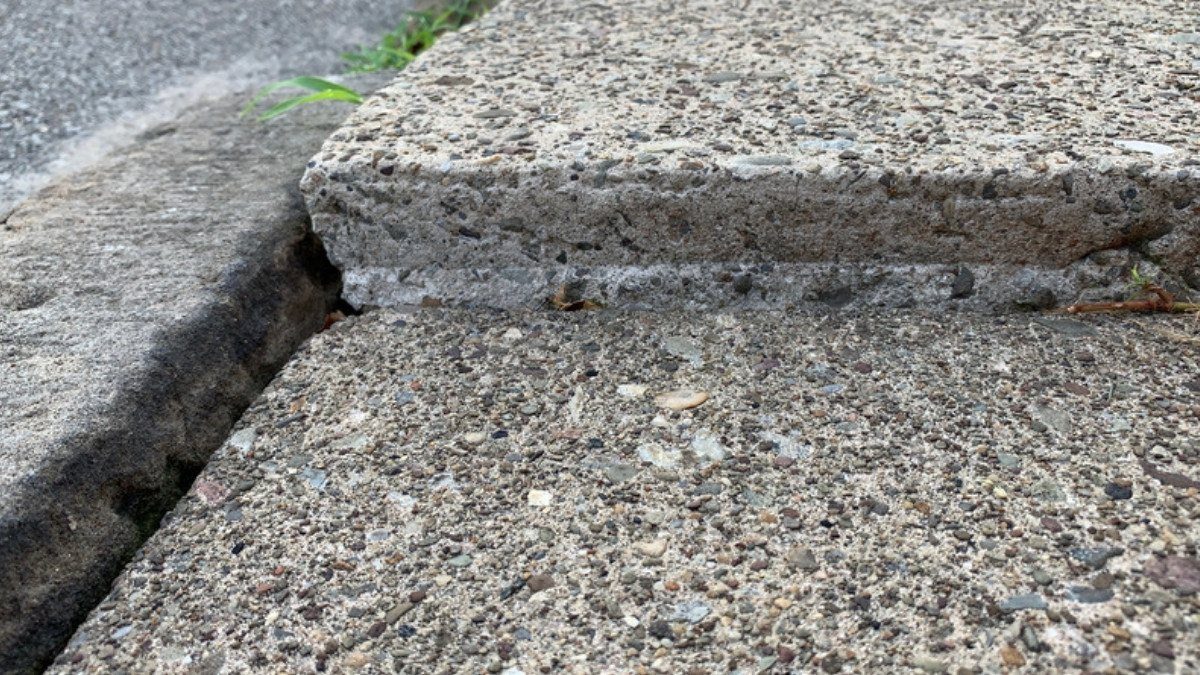
Section 343A of the Restatement (Second) of Torts protects owners from liability for obvious dangers, with one exception. An owner still answers if it "should anticipate the harm despite such knowledge or obviousness." In 1991, the South Carolina Supreme Court adopted that section in Callander v. Charleston Doughnut Corp. The general rule still favors owners, since a landowner usually owes no duty to warn about an open and obvious condition. The exception is where a trip over a curb, a wheel stop or a raised slab gets argued.
In practice, the defense sounds simple. You should have seen it. Frost Law Group answers by looking at what the owner knew and what it should have expected visitors to do. Lighting, paint, crowding and nearby signs all bear on that question, and so does how carefully you were walking.
How an Obvious Trench Defeated a Claim in Larimore
H.P. Larimore was installing vinyl siding on a new house when a utility crew dug a trench across the lot. He was on site the day the crew dug it. After a rain, he stepped on the dirt covering it while looking up at the gables. The trench caved in and fractured his right hip.
At trial, the judge found the trench open and obvious, and Larimore did not appeal that ruling. The Court of Appeals affirmed the directed verdict for the homeowner, who had no knowledge of the defect. It declined to read Section 343A "to require landowners to anticipate harm from an open and obvious condition from the moment of the condition's creation." The court explained that an owner's liability to an invitee "rests upon his superior knowledge of the danger." An owner who never knew about a hazard generally cannot be expected to anticipate injuries from it.
When an Owner Should Expect Visitors to Miss the Danger
Comment f to Section 343A gives the standard reason an owner may need to anticipate harm from an obvious condition. It applies where the owner "has reason to expect that the invitee's attention may be distracted." Section 343A(2) adds that a visitor's right to use public land is a factor pointing toward anticipating harm. Two South Carolina cases show those ideas at work.
A Missing Warning Sign at a Crowded Charleston Doughnut Shop
In Callander, an elderly customer walked into a crowded Charleston doughnut shop. He backed up to sit on a stool that lacked a rounded seat cushion and fell. The owner had known about the stool for more than two months. It had once posted a warning sign, but the sign was missing that day. With the shop often crowded and often visited by senior citizens who backed onto the stools, the Supreme Court found a jury question.
Distracted Shoppers and Visitors on Public Land
A shopper reading shelf tags or steering a cart is looking where the store's displays direct her eyes. Comment f treats that kind of distraction as a reason an owner may need to expect falls near its displays. On public land, Sims cites Creech, a case about a woman who fell off a public dock. Sims reads Creech to mean a landowner may be liable for an obvious danger if it should have anticipated the harm. Frost Law Group asks what drew your eyes away from the floor, because the answer can bring the exception into play.
Measurements and Photos Taken From Where You Fell
The open and obvious defense assumes a clear view of the hazard. Photos taken from your own eye level, at the same time of day, show what a visitor could actually see. A tape measure against a raised slab or a wheel stop records its height. The color of the hazard against the floor, the light level and any display or crowd nearby all belong in the record. These details are worth recording while the scene still looks the way it did.
Can You Recover if You Knew the Stairway Was Dark?
Sometimes, yes. In Davenport, the Hilton Head Island tenant knew the floodlights were out and had a safe alternate route. He fell after stepping onto what looked like a step but was a shadow, and he admitted he did not use the handrail. The trial court ruled him more than 50% at fault as a matter of law. The Supreme Court held that a jury should decide.
Davenport also held that knowingly facing a risk bars recovery only when that fault is greater than the defendant's negligence. A signed waiver raises a separate defense. South Carolina lets you recover if your negligence is not greater than the owner's, with the award reduced by your share. At more than 50%, you recover nothing. Nobody can forecast the fault split a jury would reach in your fall, and Frost Law Group will not guess at one before the evidence is in.
Store, Apartment, and Government Property Falls a Summerville Injury Attorney Handles
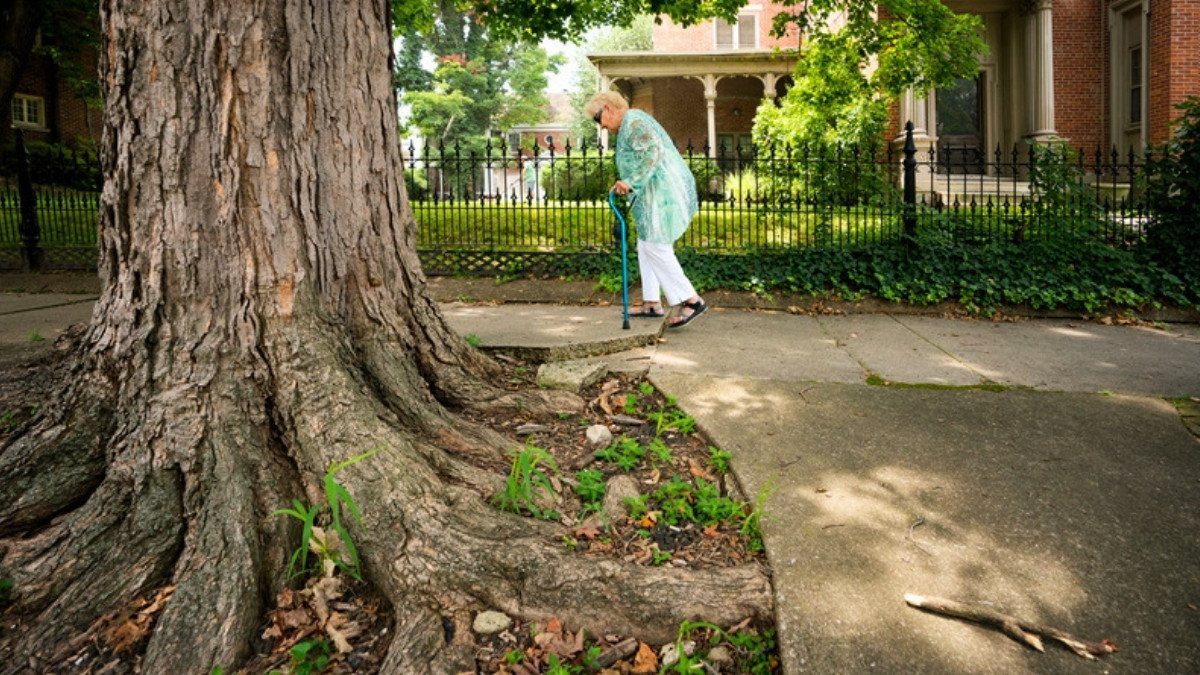
The Town of Summerville lies in three counties. The Census Bureau estimated 53,177 town residents as of July 1, 2025. Of those, 44,724 lived in the Dorchester County portion, while Berkeley County's portion held 5,798 and Charleston County's held 2,655. That split shapes where a claim against a government owner is heard. It is one of several ways the type of property changes the rules.
Frost Law Group handles falls on private and public property as part of the personal injury cases it takes on. The governing rules differ between a grocery aisle, an apartment stairway and a town walkway. That makes ownership the first question for slip and fall attorneys in Summerville.
Grocery Aisles, Store Entrances and Shopping Center Sidewalks
Inside a store, the Wintersteen test controls. Outside, the store and the shopping center owner may be different defendants. O'Leary-Payne explains that a center owner who keeps control of the parking area and sidewalks owes customers ordinary care to keep those passageways reasonably safe. In that case, the lease put the common areas in the landlord's hands.
Frost Law Group reviews the lease and the store's conduct in grocery and retail store falls. Wet produce aisles and entrance mats on rainy days are two examples. Who controlled the exact spot often decides who has to account for it.
Apartment Stairways, Walkways and Parking Areas
South Carolina's Residential Landlord and Tenant Act requires a landlord to keep all common areas in a reasonably safe condition. Section 27-40-440 also requires repairs that keep the premises fit and habitable. Supplied facilities, including elevators, must stay in reasonably good and safe working order. In Robinson v. Code, the Court of Appeals described the tenant's claim as one for failure, "after notice, to make necessary repairs."
Frost Law Group handles apartment injury claims that start in a dark stairwell, on a broken step or in a cracked parking area. A written repair request can help prove notice, though the result still depends on the full record. Section 27-40-610 lets a tenant recover actual damages when a landlord fails to comply with Section 27-40-440. The Act covers residential tenancies, so a fall at a leased office or warehouse falls outside it.
Falls on Town, County, School or State Property
Claims against the state, counties, towns, school districts and special purpose districts run through the South Carolina Tort Claims Act. Under Section 15-78-40, those entities answer in the same manner as a private person, subject to the Act's limits and exceptions. For a claim against a public body, Section 15-78-30(f) defines loss to include bodily injury, lost wages and other economic loss, pain and suffering and mental anguish. The deadlines are strict, and missing one can end a claim that might have gone forward against a private owner. Frost Law Group can check early who owns and maintains the spot.
Two Years to Sue and One Year to File a Claim
Section 15-78-110 generally requires suit within two years after you discovered the loss or should have discovered it. The window stretches to three years only when you first file a verified claim with the agency or political subdivision. Under Section 15-78-80(d), the agency has to receive that claim no more than a year after the discovery date. An injured child may get more time under Section 15-3-40, which reaches these suits too.
What a Verified Claim Must Say
Section 15-78-80 spells out the contents of a verified claim. It describes how the loss happened, how large it is, the time and place, the people involved if known and the amount claimed. Each agency and political subdivision must name an employee or office to accept these claims. When the right defendant is unclear, the claim may go to the Attorney General.
Weather, Park and Public Way Exceptions
Section 15-78-60 lists losses a government entity does not answer for. Item 8 covers snow or ice, or temporary or natural conditions caused by weather on a public way or other public place. That immunity does not reach snow or ice that an employee's negligent act affirmatively caused. Rainwater pooled on a town walkway after a Lowcountry storm may fall within the weather rule.
Item 16 covers parks, playgrounds and recreation areas. There, the entity must have had actual notice of the defect and failed to fix it within a reasonable time. Item 15 covers defects on streets and other public ways that a third party caused. Liability there requires notice and a failure to make timely repairs. Which item fits a given fall is a question an attorney works through with the maintenance records in hand.
Damage Limits and the Courthouse Where Suit Is Filed
Under Section 15-78-120, no one person may recover more than $300,000 for a single occurrence. The total for that occurrence cannot exceed $600,000. The Act also bars punitive damages, which punish a wrongdoer, and prejudgment interest, which covers the time before a judgment.
Section 15-78-100 requires filing in circuit court, in whichever county saw the act or omission behind the injury. For Dorchester County, the Court of Common Pleas, the civil side of circuit court, meets at 5200 East Jim Bilton Boulevard, St. George. A fall at a town facility in Summerville's Berkeley County part would generally belong in Berkeley County, part of the Ninth Judicial Circuit. When a private company is sued alongside the government entity, the fact finder must return a special verdict. That separate finding states each defendant's share of liability.
Slip and Fall Attorneys in Summerville Can Review Your Photos and Incident Report
A photograph did real work in O'Leary-Payne. The Court of Appeals said a layperson could see the grounding rod was a hazard. Pictures and testimony about its height and position were enough to show a hazard, with no outside witness needed. The report she made to the shopping center's office the next morning said she "tripped over a pipe sticking out" of the sidewalk. Your own photos and the business's incident report may carry similar weight when slip and fall attorneys in Summerville review a claim.
Bring what you have to a free, confidential consultation with Frost Law Group. Useful items include photos, the incident report or its number, the shoes you wore and witness names. Emergency room papers help too, whether they come from HCA Healthcare Summerville Hospital on Midland Parkway or the Roper St. Francis Berkeley Hospital emergency department at 100 Callen Boulevard. An attorney will go through them with you and explain what the Wintersteen test would require. Cassandra Snyder, the firm's paralegal, keeps the documents organized and keeps you informed.
Client reviews on Google put Frost Law Group at 4.8 stars. The office is at 128 Linwood Lane, Summerville, SC 29483. Frost First means you can call with a single question before you decide anything.
Call (843) 419-6653 or write to the office online, and have the photos and the report ready.

The attorneys at Frost Law Group
 Tara L. FrostAttorney at Law · Personal injuryTara L. Frost focuses on personal injury, car accident and truck accident claims. A lifelong resident of the tri-county area, she meets clients at the Linwood Lane office in Summerville.
 Jack C. FrostAttorney at Law · Former Summerville police officer and Charleston County Sheriff's Office detectiveJack C. Frost spent fourteen years in law enforcement with the Summerville Police Department and the Charleston County Sheriff's Office before he practiced law.