
Car Accident Lawyers in Berkeley County
- Free consultation
- No fee unless we win
- Available 24/7
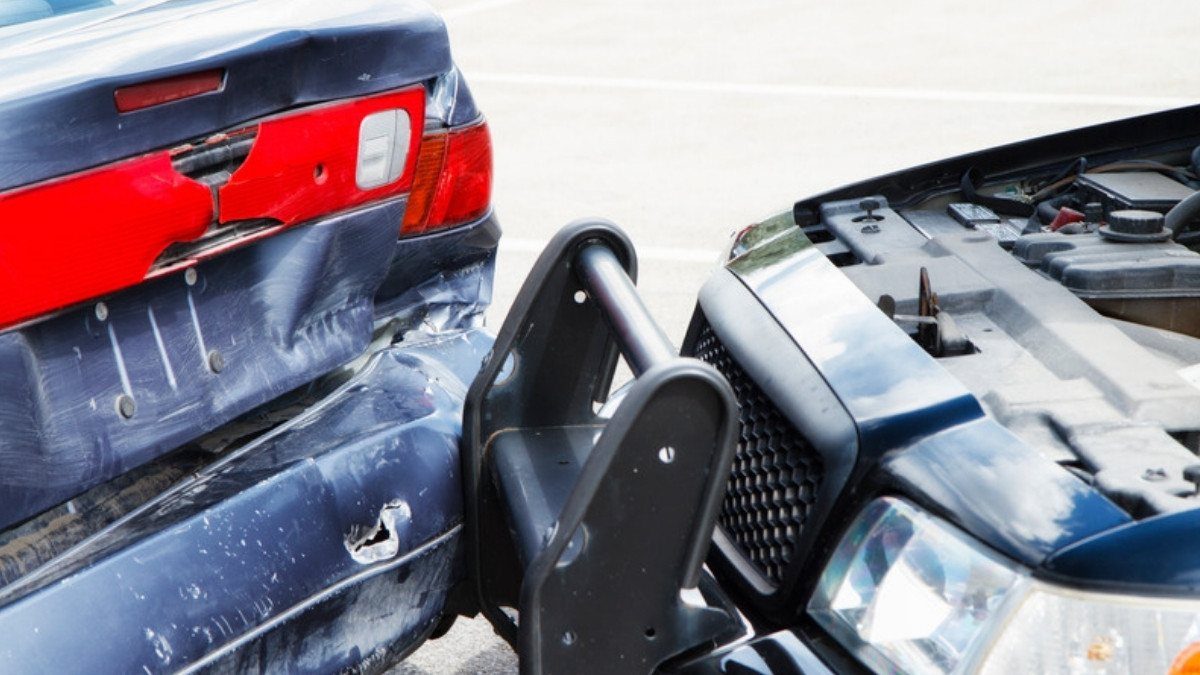
A Berkeley County crash report often carries one short phrase, Driving Too Fast for Conditions. Officers entered it 1,561 times across the county in 2024, and no factor appeared more. Car accident lawyers in Berkeley County treat that entry as the start of a fault question, not the answer. The other driver may never have topped the posted limit, and the claim can still turn on speed.
The reason is Section 56-5-1520 of the South Carolina Code. It ties lawful speed to the conditions and hazards on the road, not just to the sign. Fault decides who pays in South Carolina, and a jury may weigh the conduct of every driver in the wreck. Before you call an adjuster back, keep the report number and see a doctor about any pain. The driver or owner must return the FR-10 to SCDMV within 15 days of the officer's handoff.
Frost Law Group belongs to a married pair of Summerville attorneys, Tara L. Frost and Jack C. Frost. In her practice, Tara focuses on injury claims from car and truck crashes. She heard cases as a Dorchester County Magistrate Judge from July 2022 through August 2025. That former service showed her how a judge weighs evidence, preparation and credibility. The firm takes car wreck cases from Moncks Corner, Goose Creek, Hanahan and the part of Summerville that lies in Berkeley County.
Frost Law Group takes calls about Berkeley County car wrecks at (843) 419-6653, and a consultation about the crash is free and confidential. An attorney, not a call center, takes the call, and one question obligates you to nothing.
Free case review
Tell us what happened. An attorney will explain your options and what to do before you talk to the insurance company.
On this page
- Why Car Accident Lawyers in Berkeley County Start With Speed for Conditions
- US 52 and US 176 Crash Claims a Berkeley County Auto Accident Attorney Handles
- Improper Lane Changes and Run Off Road Wrecks a Berkeley County Car Crash Lawyer Sees
- Summerville's Berkeley County Side and the Car Wreck Claims a Local Attorney Takes
- Court and Insurance Steps a Berkeley County Car Accident Attorney Follows
- Talk to Car Accident Lawyers in Berkeley County Before the Adjuster Calls Back
Why Car Accident Lawyers in Berkeley County Start With Speed for Conditions
Many drivers assume a speed claim needs radar proof that someone broke the posted limit. South Carolina's speed statute asks something broader. A Berkeley car claim at Frost Law Group may begin with the speed entry. Officers used it more than any other factor in the county.
The 2024 Traffic Collision Fact Book, published by the Department of Public Safety, counted 1,561 speed-for-conditions listings in Berkeley. Failed to Yield Right of Way came second with 1,454. Dorchester and Charleston counties rank failure to yield ahead of speed. A single report can carry as many as five factors, so the totals count entries rather than crashes. To car accident lawyers in Berkeley County, each entry is one officer's judgment about one wreck.
The Posted Limit Is Only a Ceiling Under Section 56-5-1520
Subsection (A) of the speed statute measures a lawful speed against the actual and potential hazards then existing. It also requires speed control that avoids any person or vehicle on the highway or lawfully entering it. Subsection (B) treats speed limits as maximum lawful speeds, except when a special hazard requires going slower.
Subsection (F) lists places that call for reduced speed. They include intersections, railway grade crossings, curves, hillcrests, narrow bridges and winding roads. Weather, pedestrians, other traffic and highway conditions count as hazards too. On US 176 in a downpour, a driver holding the posted number may still break the rule. Whether a speed was reasonable depends on the road, the light and the traffic that day.
Why Too Fast for Conditions Is a Different Code From Speeding
The Fact Book keeps two speed codes apart. Counting only the primary factor, officers statewide named Driving Too Fast for Conditions in 35,024 collisions in 2024. Exceeded Authorized Speed Limit was the primary factor in 374. The conditions code outnumbered the speed-limit code by more than 90 to one.
The road itself rarely takes the blame. Wet pavement was present in 19,790 South Carolina collisions that year. Yet Road Surface Condition was the primary factor in only 113. On a wet road, the primary factor almost never names the pavement. The fault question turns to how each driver handled the conditions.
Most Berkeley Deaths Came Between 6 PM and 6 AM
The Fact Book splits Berkeley's 2024 crashes into eight time windows. From 6 PM to 6 AM, four windows held 1,954 of the county's 6,536 collisions, about 30%. Those same hours accounted for 27 of the 37 people killed. The 12 daytime hours produced 4,582 collisions and 10 deaths.
Statewide, crashes coded Dark (No Lights) made up about 13% of all collisions in 2024. Yet they included 336 of the 951 fatal collisions. Section 56-5-1520 never mentions darkness, but its test looks to the actual and potential hazards then existing. Headlight range, witness accounts and scene photos help show what a driver could see at that hour. Frost Law Group can weigh that against the car's speed before forming a view.
Does an Officer's Speed Entry Settle Who Was at Fault?
No. Section 56-5-1290 covers the crash reports required by Sections 56-5-1260 to 56-5-1280. None of them can be evidence of either party's negligence, or of due care, at a trial for damages. An officer who testifies may still look at the report to refresh memory. The report also names the people the officer interviewed, as Section 56-5-1270 requires, so it points to witnesses.
South Carolina applies modified comparative negligence. A jury assigns each driver a percentage of fault, then reduces the injured person's award by his or her own percentage. Recovery ends once that percentage passes 50%. A speeding driver and a driver who pulled out too soon can both carry fault. No lawyer can promise a percentage, and Frost Law Group bases any view of the split on proof rather than the report's codes.
US 52 and US 176 Crash Claims a Berkeley County Auto Accident Attorney Handles
US 52 crosses into Berkeley County from Charleston County with about 66,900 vehicles a day, by SCDOT's 2024 estimate. US 176 enters from Orangeburg County with 7,300 and reaches Goose Creek Boulevard with 42,900. Frost Law Group takes car crash claims from both corridors, from heavy Goose Creek traffic to lighter stretches near the county line.
Among the five roads on Berkeley's top roadway list, US 52 logged 653 collisions in 2024 and US 176 logged 569. The two routes together produced 12 fatal crashes, while I-26 in Berkeley produced 2. One route can produce a lone-car night crash at one end and a rush-hour rear impact at the other.
Ten Fatal Crashes on US 52 Against Two on I-26
Of the 653 collisions on US 52, 10 were fatal and 9 caused serious injuries. Those crashes left 13 people seriously hurt and 256 with other injuries. US 176 had 84 fewer collisions than US 52, but only 2 fatal crashes. Its crashes left 196 people with other injuries.
The Fact Book does not break contributing factors down by road. So no one can say from its tables how many US 52 crashes involved speed. Frost Law Group can work through that question one wreck at a time, from the report, the scene and the cars. Heavy trucks share these routes, and the firm handles tractor-trailer and dump truck claims in Berkeley County as their own case type.
US 176 From the Orangeburg County Line to Goose Creek Boulevard
SCDOT labels US 176 State Road where SC 27 meets it and St. James Avenue at Myers Road. Daily traffic climbs from 7,300 at the Orangeburg County line to 19,800 approaching North Main Street. Past Myers Road, the count reaches 38,700, and the segment that meets Goose Creek Boulevard carries 42,900.
US 176 also meets US 17A, which SCDOT lists as North Main Street at that junction. Frost Law Group can confirm which agency worked a US 176 crash before ordering its report. A wreck near Goose Creek and one near the Orangeburg County line can draw different agencies.
Default Speed Limits Behind the Signs on US Routes
Where signs give notice, Section 56-5-1520(B) sets 60 mph as the default ceiling on multilane divided primary highways. Other highways default to 55 mph, and unpaved roads to 40. An urban district defaults to 30 mph. That means a street lined with buildings less than 100 feet apart for a quarter mile or more.
Sections 56-5-1530 and 56-5-1540 let SCDOT and local governments set different limits. So the number at a given spot on US 52 needs checking. Frost Law Group can confirm the limit posted at the crash site, then ask whether conditions called for less.
Improper Lane Changes and Run Off Road Wrecks a Berkeley County Car Crash Lawyer Sees
A sedan slides into the next lane on US 52 without a clear gap. The driver beside it jerks the wheel, runs onto the shoulder and hits a ditch bank. The two cars never touch, one driver is hurt and the other keeps going. That scenario leaves Frost Law Group with two questions. Who broke the lane rule, and whose policy pays when the other car is gone?
Improper Lane Usage or Change showed up 927 times on Berkeley reports in 2024, and Ran Off Road 635 times. Their severity splits look very different. About one run-off-road listing in three came from a crash that killed or hurt someone. For lane changes, the share was roughly one in nine. Ran Off Road appeared on 14 fatal crash reports, and the lane-change code on just 1.
Staying Within One Lane Under Section 56-5-1900
On a road with clearly marked lanes, Section 56-5-1900(a) keeps a car as nearly as practicable within one lane. The driver may leave it only after first making sure the move is safe. On a three-lane, two-way road, subsection (b) limits the center lane to passing and left-turn preparation. Signs can instead assign that lane to one direction.
Statewide, officers named improper lane use or change as the primary factor in 13,893 collisions in 2024. Proof comes from scrape marks, where the damage sits on each car, turn signals and dashcam video. Footage from nearby businesses can vanish once a recording cycle writes over it, so an early request matters.
When One Car Leaves the Road
A run-off-road crash often involves one vehicle and one set of tire marks. The injured person may be a passenger, or a driver who swerved to miss someone else. Each situation points to different insurance. Frost Law Group can sort that out before an adjuster frames the crash as a lone driver's mistake. The answer shapes which policy pays first and which statute applies.
A Passenger's Claim Against the Driver's Liability Coverage
When your own driver runs off the road, you may be able to claim against that driver's liability insurance. Section 38-77-140 requires at least 25/50/25. That means up to $25,000 for any one person's injuries and $50,000 for all injuries in the crash, plus $25,000 for property. Three hurt passengers on a minimum policy may have to share that $50,000. Their own household policies may add underinsured coverage. How much can depend on the Supreme Court's 1998 Concrete Services opinion, which sorts insureds into Class I and Class II for stacking, the combining of coverage from several vehicles. Class I, the only group allowed to stack, takes in the named insured, a spouse and relatives residing in the same household. A Class II insured, such as a guest in the insured car, may not stack.
A Swerve With No Contact and Uninsured Motorist Coverage
When the lane-changer drives off, uninsured motorist coverage on the injured person's own policy may apply. Section 38-77-170 sets the conditions for a claim against an unknown driver. Police must hear of the crash in a reasonable time. The insured also cannot be at fault for never learning the other driver's identity. The claim then needs one of three kinds of proof.
Dashcam Footage After the May 2024 Rewrite
Before May 20, 2024, the statute offered no recording option. The rewritten section accepts physical contact with the unknown vehicle. It also accepts a signed affidavit from someone besides the insured car's owner or driver. A third route is a recording, from a dashcam or elsewhere, showing that the unknown vehicle was the cause. In a no-contact swerve on US 52, a dashcam clip or store video may now meet that condition.
The Physical Contact Wording Left in Section 38-77-180
Section 38-77-180 lets an injured person sue the unknown driver as John Doe. That section still describes a vehicle that caused injury by physical contact. Frost Law Group does not assume the newer proof routes carry over to a John Doe suit, so a claim may need to meet both sections.
Can a Shoulder or Guardrail Problem Bring SCDOT Into the Claim?
Sometimes, though the Tort Claims Act narrows that path. Under Section 15-78-60, a government road agency is not liable for highway design. Signs, guardrails and lights follow a notice rule. If one is knocked down, damaged or stops working, the agency answers only for leaving it unfixed a reasonable time after notice. That notice can be actual or constructive, meaning the agency should have known. Statewide in 2024, roadway conditions were the primary factor in only 1,435 collisions.
Under Section 15-78-110, the Act ordinarily gives a claimant two years to sue. The count begins on the day the loss came to light, or the day it should have. A three-year period applies instead if the claimant first presents the agency with a verified claim. That claim must arrive at the agency within a year of the same starting day, per Section 15-78-80(d). The Act's Section 15-78-120 generally caps one person's recovery from a single occurrence at $300,000. Frost Law Group can test a road-condition theory against photos and maintenance records before raising it.
Summerville's Berkeley County Side and the Car Wreck Claims a Local Attorney Takes
The Census Bureau estimated 53,177 Summerville residents on July 1, 2025, and placed 5,798 of them in Berkeley County. That is roughly one resident in nine. Yet 416 of the 1,758 collisions the Fact Book credits to the Summerville Police Department happened on the Berkeley side. That is nearly one crash report in four.
Most of the town, including Frost Law Group's office on Linwood Lane, sits in Dorchester County. The firm handles car wreck claims across Summerville in all three of its counties. A crash on the Berkeley side can mean a different courthouse and a different agency writing the report.
What the 416 Berkeley-Side Police Reports Show
None of those 416 crashes killed anyone. Four caused serious injuries, 63 caused other injuries and 349 damaged property only. Together they left 4 people seriously injured and 101 with other injuries. Jack C. Frost began his fourteen years in law enforcement at the Summerville Police Department. He served there as an officer and a corporal before moving to the Charleston County Sheriff's Office. From those years he learned how officers build a crash report from statements, measurements and the scene.
When a crash inside town limits hurts someone, Section 56-5-1260 requires notice to the town's police. Outside town limits, the driver notifies the sheriff or the nearest Highway Patrol office. Summerville police direct drivers to the CrashDocs portal for their reports. SCDMV provides the official copy for $10 per report. The agency says that copy is more detailed than the scene paperwork, and a lawyer can order it once SCDMV has processed the filing.
Traffic at the Nexton Parkway and North Main Street Interchanges
SCDOT's interchange diagrams place Exit 197 at Nexton Parkway and Exit 199 at US 17A, North Main Street. Both sit in Berkeley County. SCDOT's 2024 traffic counts show how fast the load builds around them. Counts alone never prove fault in a merge or rear-impact claim, so Frost Law Group treats them as background. The evidence in each file still decides the claim.
Exit 197 and the Jump in Interstate Traffic
On the I-26 segment from Jedburg Road to Nexton Parkway, SCDOT's 2024 estimate was 56,800 vehicles a day. The next segment, running to North Main Street, carried 81,500. That is a rise of about 24,700 vehicles a day across one interchange. Drivers merging at Exit 197 join the denser stream. Countywide, ramps saw 101 collisions in 2024, and 15 of them injured someone.
North Main Street on Both Sides of the County Line
In Summerville, US 17A is Main Street. On the Dorchester side, SCDOT's 2024 count between 5th Street North and the county line was 33,100 vehicles a day. Across the line, the Berkeley segment running to I-26 carried 54,000. Beyond the interstate, the stretch to Myers Road carried 40,700. Of those three segments, the one ending at the Exit 199 ramps carried the heaviest traffic.
Court and Insurance Steps a Berkeley County Car Accident Attorney Follows
The declarations page, usually the first sheet of an auto policy, shows each coverage you bought and its limit. The SC Department of Insurance explains that every South Carolina policy must include 25/50/25 liability and uninsured motorist coverage at those amounts. Underinsured coverage, by contrast, is optional. Frost Law Group can read your declarations page, and the at-fault driver's once the insurer discloses it, before any number comes up with an adjuster.
The courthouse matters too. Berkeley and Charleston counties make up the Ninth Judicial Circuit. Frost Law Group also handles car wreck claims in Charleston County, the circuit's other half. In a Berkeley County case, the insurance steps and the filing deadline run side by side.
Policies That May Answer for a Berkeley Wreck
Most car claims draw on more than one policy. The at-fault driver's liability coverage comes first. Your own uninsured, underinsured and medical payments coverage may follow. The order of payment depends on policy wording and on facts Frost Law Group would confirm before giving you a view. Stacking coverage from more than one vehicle has limits of its own under Section 38-77-160.
A Sworn Statement of the Other Driver's Limits
Under Section 38-77-250, the injured person's lawyer can demand the at-fault driver's limits in a sworn written request. The lawyer attaches the incident report and sends the request by statutory overnight delivery or by a mail service that proves receipt. The insurer's sworn reply, listing its limits, is due within 30 days. It may send the declarations page instead. Picture a driver with 25/50/25 limits who injures two people on US 17A. That policy holds $50,000 in bodily injury coverage for the crash and no more than $25,000 for either person.
Your Own Uninsured and Underinsured Limits
Every South Carolina auto policy carries uninsured motorist coverage, a requirement set by Section 38-77-150. It pays when the at-fault driver was uninsured or cannot be identified. Insurers must also offer underinsured coverage under Section 38-77-160. That coverage pays when your damages exceed the other driver's limits. Suppose the signed offer form never made it back within 30 days. In that case, Section 38-77-350 required the insurer to add both coverages at your liability limits.
Filing Suit at the Moncks Corner Courthouse
In state court, a Berkeley County injury suit worth more than a magistrate can hear goes to the circuit court's civil branch, the Court of Common Pleas. It sits at 300-B California Avenue, the Berkeley County Courthouse in Moncks Corner. A magistrate can hear a civil case only when $7,500 or less is at stake, under Section 22-3-10. Venue rules in Section 15-7-30 can also place a Berkeley crash suit in the at-fault driver's home county. A traffic ticket from the same crash travels through magistrate or municipal court on its own track.
A Three-Year Window That Insurance Talks Usually Leave Running
Section 15-3-530 generally gives a person hurt in a car wreck three years to sue. The clock under Section 15-3-535 starts when the claim became known to the injured person, or when a reasonably diligent person would have found it. Talks with an adjuster ordinarily do not stop that clock. For a child, Section 15-3-40 can add time, though the extension cannot run beyond one year after the 18th birthday.
Act No. 42 and Claims Arising After January 1, 2026
A defendant found under 50% at fault has generally owed just its own percentage of the damages ever since Section 15-38-15 took effect on July 1, 2005. That share rule reaches a 2025 wreck and a 2026 wreck alike. The 2025 law known as Act No. 42 left the threshold alone and changed how fault is counted, but only for a claim whose arising or accrual date falls after January 1, 2026. In those newer claims, the jury also weighs the fault of wrongdoers who are not parties. The defense generally must name them within 180 days after the suit begins. The Act also retired the older exceptions that left a grossly negligent defendant, or one whose conduct involved alcohol, liable for the whole award. A three-car chain near Exit 199 in 2026 falls under the amended rules, while a 2025 wreck sued on in 2026 does not.
Does a Missing Seat Belt Cut a Berkeley Occupant's Claim?
An insurer may raise the point, but the belt statute limits what the insurer can do with it. Section 56-5-6540(C) says a violation is not negligence per se, the rule that breaking a statute proves fault by itself. Nor is it contributory negligence, the injured person's own share of fault, and the statute bars offering it as evidence in a civil action. Frost Law Group can cite that text to an adjuster. The injuries and the rest of the proof still shape the claim.
Talk to Car Accident Lawyers in Berkeley County Before the Adjuster Calls Back
Keep the adjuster's voicemail, and gather three papers before you return the call. The report number, the FR-10 form and your declarations page answer most of what an attorney asks first. Frost Law Group can review them with you and talk through what the other insurer has asked for so far.
Clients meet the two attorneys at 128 Linwood Lane, Summerville, SC 29483. Hours are 9 AM to 5 PM from Monday through Thursday. On Friday the office closes at noon, though you can ask for an afternoon meeting.
Car accident lawyers in Berkeley County at Frost Law Group offer a free, confidential consultation with no obligation to hire the firm. The first step is the same for a wreck on US 52, US 176 or the Berkeley side of Summerville. Bring whatever you have, even if the report has not reached SCDMV yet.
Call (843) 419-6653, or send a short message online describing the Berkeley County crash and a good time to talk.

The attorneys at Frost Law Group
 Tara L. FrostAttorney at Law · Personal injuryTara L. Frost focuses on personal injury, car accident and truck accident claims. A lifelong resident of the tri-county area, she meets clients at the Linwood Lane office in Summerville.
 Jack C. FrostAttorney at Law · Former Summerville police officer and Charleston County Sheriff's Office detectiveJack C. Frost spent fourteen years in law enforcement with the Summerville Police Department and the Charleston County Sheriff's Office before he practiced law.