
Car Accident Lawyers in Charleston County
- Free consultation
- No fee unless we win
- Available 24/7
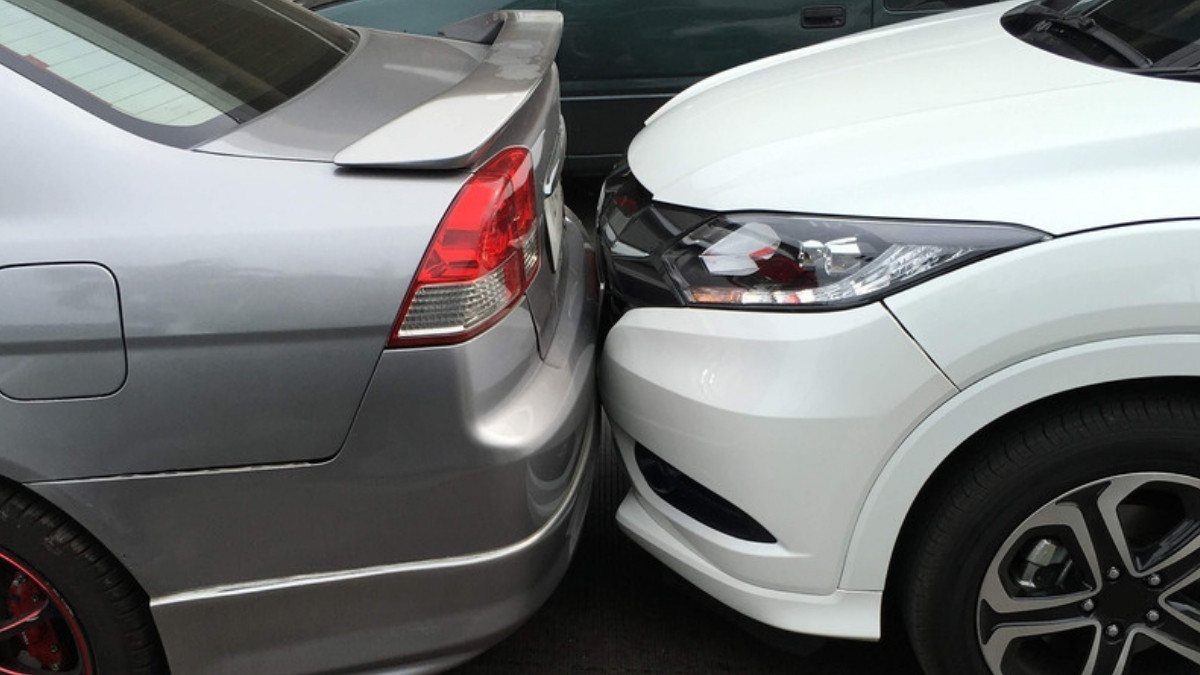
The driver who hit you may have been looking at a phone, a dashboard screen or nothing in particular. Officers entered Distracted or Inattention as a contributing factor 2,965 times on Charleston County collision reports in 2024. Only Failed to Yield Right of Way topped that count. Car accident lawyers in Charleston County treat the entry as a question to answer with proof. Much of that proof sits in records the other driver controls, and a wrecked car may not stay on a tow lot for long.
A contributing factor entry records the investigating officer's opinion, and one report can carry several factors. South Carolina assigns responsibility by fault. So a claim starts with the driver who caused the wreck and that driver's insurer. Section 15-3-530 ordinarily sets a three-year window for an injury lawsuit, and a claim against a government agency may face a shorter one. Hold on to the report number, and write down anything you noticed inside the other car while it is fresh.
Frost Law Group works out of one Summerville office on Linwood Lane. Its two lawyers, wife and husband, are Tara L. Frost and Jack C. Frost. The couple were Summerville High School sweethearts. Later, the Charleston School of Law gave each of them a law degree. They represent drivers and passengers hurt in Charleston County car wrecks and in the seven other counties the office serves.
Call Frost Law Group at (843) 419-6653 for a free, confidential consultation about a Charleston County wreck. An attorney answers the phone, and asking a question carries no obligation.
Free case review
Tell us what happened. An attorney will explain your options and what to do before you talk to the insurance company.
On this page
- How Car Accident Lawyers in Charleston County Prove Distraction
- Failure to Yield Crashes a Charleston County Auto Accident Attorney Handles
- Following Too Closely on US 17 and I-26 With a Charleston County Car Crash Lawyer
- Mount Pleasant, North Charleston, and James Island Wrecks a Charleston County Car Lawyer Takes
- Serious Injury Claims and Policy Limits a Charleston County Car Wreck Attorney Confronts
- Car Accident Lawyers in Charleston County Who Answer Your Questions Directly
How Car Accident Lawyers in Charleston County Prove Distraction
South Carolina's collision report, Form TR-310, gives officers separate codes for Distracted or Inattention, Cell Phone and Texting. In 2024, Charleston County's distraction entries included 561 from crashes with injuries short of serious. Another 28 came from serious injury crashes. A lawyer at Frost Law Group can treat that entry as the start of an inquiry rather than its end.
An officer arrives after the glance has already happened. The distraction entry may rest on a driver's admission, a witness or the way a car moved before impact. Jack C. Frost's fourteen years in policing began at the Summerville Police Department, where he held the ranks of officer and corporal. His later titles at the Charleston County Sheriff's Office included master deputy and detective. Along the way he learned how an officer turns roadside statements into a written report, and which parts of it rest on memory rather than measurement.
Brake, Throttle and Speed Readings From an Event Data Recorder
Many cars carry an event data recorder, a module that saves vehicle data when a crash triggers it. Federal rules in 49 CFR Part 563 do not require a carmaker to install one. They set what the recorder must capture when a car built on or after September 1, 2012, has one. Part 563's required owner's manual statement says the recorder stores no names and no crash location. Phone activity is not among its data elements either. The other car's recorder is worth asking about before a body shop or salvage buyer reaches it.
Five Seconds of Pre-Crash Data Under 49 CFR Part 563
Section 563.7 lists what a covered recorder must keep. The list includes the car's speed, how far the accelerator was pressed and whether the brake pedal was down. For cars on the road today, the rule calls for those readings twice a second across the last five seconds. A 2024 federal amendment stretches the window to 20 seconds, phased in for cars built starting September 1, 2028. Suppose a car rear-ends you near the I-26 exit for Ashley Phosphate Road. If every brake sample in those five seconds reads off, the recorder logged no braking before impact, though it cannot say why.
Who May Download the Recorder Under the Driver Privacy Act
The Driver Privacy Act of 2015, a federal law, makes recorder data the property of the vehicle's owner. For a leased car, the lessee owns it. Anyone else may retrieve the data only on a short list of grounds. Two of them matter in a crash claim.
Written or Recorded Consent From the Owner
An owner or lessee can agree to a download in writing, electronically or in a recorded statement. The owner of your own car can consent to reading your recorder. It may show you slowing and braking before the hit. The at-fault car's owner has little reason to agree, and nothing in the Act forces consent.
A Court Order Authorizing Retrieval
A court or other judicial or administrative body with jurisdiction can authorize the download. The Act adds that retrieved data must still meet that tribunal's standards for admission into evidence. That route usually opens after a lawsuit is filed. In the meantime, a lawyer can send the owner a letter asking that the car and its recorder stay unaltered.
Phone Company Logs and the Limits of 18 U.S.C. 2702
Carrier records can place a call or text at a minute that matches the crash time on the report. A federal statute, 18 U.S.C. 2702, bars a public messaging or phone provider from knowingly revealing the stored contents of a message. Its exceptions are narrow, such as consent from a sender or recipient. The same section lets a provider release customer records without content to anyone other than a government entity. So from the carrier, a crash claim usually gets time stamps, not words. Frost Law Group can line those times up with the report and any recorder data.
Does a Hands-Free Ticket Prove the Other Driver Was at Fault?
Not by itself. Section 56-5-3890 has barred holding a phone while driving since September 1, 2025. It labels a driver found in violation guilty of distracted driving. Compare the seat belt law. Section 56-5-6540(C) says a belt violation is not negligence per se, meaning fault established by the violation itself. It also bars using the violation as evidence in a civil case. The hands-free statute has no clause like that. How a court treats a hands-free citation turns on the evidence rules and the case facts, which a lawyer researches first.
Can the Recorder in Your Own Car Work Against You?
It can. Your car's recorder keeps the same speed, throttle and brake readings as the recorder in the other car. If it shows you over the posted limit or never braking, an insurer may use it to argue that you share the fault. The data belongs to your car's owner, so a lawyer talks the decision through with the owner before anyone downloads it.
Failure to Yield Crashes a Charleston County Auto Accident Attorney Handles
Section 56-5-2350 sets one of the plainest duties in the traffic code. A driver entering a road from anywhere other than another road must yield to all vehicles approaching on that road. That covers a car leaving a parking lot, a gas station or a private drive. Its text carries no immediate hazard qualifier, unlike the left-turn rule in Section 56-5-2320.
Failed to Yield Right of Way drew 3,525 entries on Charleston County reports in 2024, the highest count on the list. Of those, 885 came from crashes with other injuries. Another 2,578 came from crashes with property damage only. In a yield case, Frost Law Group can ask one more question. Was the driver who pulled out, or the driver who kept coming, looking somewhere else?
Parking Lot Exits and the TR-310 Driveway Code
The TR-310 records a junction type for every crash, and one of its codes is for a driveway. That code separates a pull-out from a store lot from a wreck at a signal. Suppose a driver leaves a shopping center onto Rivers Avenue while reading a text and cuts into your lane. Section 56-5-2350 put the yielding duty on that driver. Phone records or a store camera may show why the driver never saw you.
Unmarked Intersections and the Driver on the Right
Some neighborhood intersections have no sign or signal at all. Section 56-5-2310 covers two vehicles that approach or enter such an intersection from different roads at about the same time. The driver on the left yields to the driver on the right. Main roads designated for through traffic modify that rule, and so does any sign. A driver checking a phone at an unmarked corner may never notice the car arriving from the right.
Right Turns on Red Under Section 56-5-970
South Carolina allows a right turn on a steady red after a full stop unless a sign bars it. Under Section 56-5-970(C)(3), the turning driver must still yield to other traffic lawfully using the intersection. The same duty runs to pedestrians in an adjacent crosswalk. A driver who makes the stop, then checks a phone before rolling into cross traffic, still owed that yield. Subsection (A)(1) sets a matching duty for turns on a green light.
Some yield crashes involve a commercial truck swinging wide or pulling out slowly. Frost Law Group handles tractor-trailer crashes in Charleston County as their own case type. Federal carrier rules and records come with them.
What if Both Drivers Were Looking Away When They Collided?
Fault can split between them. South Carolina uses modified comparative negligence. Jurors give each driver a percentage, then shrink an award by the injured person's percentage. Anyone whose share passes 50% recovers nothing. Picture a driver turning left from Dorchester Road while the oncoming driver reads a message. Both lapses can count, and car accident lawyers in Charleston County study the timing and evidence before giving any view of the split.
When two drivers blame each other, a court weighs each account against the physical evidence. Tara L. Frost saw that weighing up close in Dorchester County, where she held a Magistrate Judge post from July 2022 until August 2025. Her time on the bench also showed her how preparation and credibility come through in a courtroom.
Following Too Closely on US 17 and I-26 With a Charleston County Car Crash Lawyer
Traffic slows on I-26 between Aviation Avenue and Remount Road, and the car behind you keeps coming. SCDOT's 2024 estimate for that segment was 143,900 vehicles a day. A safe gap closes fast at that volume when the driver behind looks down. The Followed Too Closely factor appeared 2,532 times on county reports that year. Many rear-end claims turn on whether the driver behind was looking at the road at all.
Section 56-5-1930 measures a following gap against what is reasonable and prudent. It weighs speed, traffic and highway conditions. The statute gives no set distance, in feet or in seconds. A distracted driver can break the rule without ever choosing to tailgate, because the gap looked fine until the car ahead braked. Whether a particular gap was reasonable is a question of fact, answered crash by crash from the evidence.
Why Rear-End Injuries Rarely Show as Serious on the Report
Charleston County reports carried 462 Followed Too Closely entries from crashes that hurt or killed someone in 2024. Of those, 453 came from crashes with other injuries. Serious injury crashes supplied 8, and a fatal crash supplied 1. Those codes record what the officer saw or was told at the scene. They do not measure how the person feels the next morning, or what an X-ray shows later.
Possible Injury and Suspected Minor Injury Codes
The Fact Book defines a possible injury as one a person reports or shows through behavior. No wound is readily evident. A suspected minor injury is one evident at the scene, such as a lump on the head, abrasions, bruises or small cuts. Neck or back pain after a rear-end crash would usually fall under the first code, since nothing shows.
Treatment Records That Replace the Roadside Code
Imaging, therapy notes and a doctor's work restrictions describe an injury in ways a roadside code cannot. An insurer may point to a possible injury code to argue the crash did little harm. A delay before the first doctor visit hands the same insurer another argument. How the records affect a claim depends on the full medical picture, which a lawyer reviews before offering any view.
Signals and Stopped Traffic on US 17
US 17 led Charleston County with 1,805 collisions in 2024. Of those, 392 were other injury collisions, and US 17 crashes that year left 586 people with injuries short of serious. SCDOT estimated 75,400 vehicles a day on US 17 between Lockwood Drive and I-26. The TR-310 records what each vehicle was doing before impact, and one code reads Slowing or Stopped in Traffic. In a rear-end crash at a red light, that code would describe the car that was hit. Frost Law Group handles rear-end wrecks in Summerville under the same statute, from the same Linwood Lane office.
Who Pays in a Three-Car Chain Collision on I-26?
Each driver's share usually turns on that driver's own following distance and attention. The middle driver may have stopped in time and been pushed forward. Or the middle driver may have hit first and then been struck. Recorder data from each car can show which one braked and when. Since 2005, Section 15-38-15 has limited a defendant with under 50% of the fault to paying its own share. Reckless conduct and a few other listed categories fall outside that limit. Act No. 42 of 2025 governs a claim arising or accruing after January 1, 2026. In that newer claim, a jury may also weigh the fault of people nobody sued. The Act also drops the old full-liability exceptions for alcohol and gross negligence. Nobody can forecast at the scene how a jury would divide fault among three drivers.
Mount Pleasant, North Charleston, and James Island Wrecks a Charleston County Car Lawyer Takes
A North Charleston address does not settle whether a crash happened in Charleston County. The city reaches into Dorchester and Berkeley counties. The 2024 Fact Book shows its police working wrecks in all three. For Frost Law Group, the county line is an early question. Under Section 15-7-30, the county where most of the careless conduct happened is one county where the injured person may file suit.
Crashes in Mount Pleasant, North Charleston and James Island usually carry different agencies' names on the report. Inside a municipality, Section 56-5-1260 has a driver in an injury wreck notify that town's police department. Outside any municipality, the statute sends that notice to the county sheriff or to whichever South Carolina Highway Patrol office sits closest. That agency's name matters later, since it leads to the full report and to the officer who wrote it.
North Charleston Police Reports in Three Counties
North Charleston police investigated 4,780 collisions in Charleston County in 2024, including 17 fatal and 85 serious injury crashes. No agency in the county logged more serious injury collisions. The same department worked 465 collisions in Dorchester County and 11 in Berkeley County. So a wreck near a county line can carry a North Charleston report and still be a Dorchester or Berkeley County case. Frost Law Group also handles car crash claims in Berkeley County when the line falls on that side.
North Charleston is also home to the Highway Patrol's Troop Six headquarters on Northbrook Boulevard. Post A there covers Charleston and Berkeley counties. The Patrol investigated 1,497 Charleston County collisions in 2024.
Johnnie Dodds Boulevard and Coleman Boulevard in Mount Pleasant
A 2008 Town of Mount Pleasant master plan covers Johnnie Dodds Boulevard from the Ravenel Bridge to the Mark Clark Expressway. It notes that SCDOT classifies the road as US 17 North. The plan said demand for driveway connections grew as stores moved in, and frontage roads went in to limit access points. SCDOT's 2024 estimate for the US 17 segment that starts at Coleman Boulevard was 65,300 vehicles a day. Coleman Boulevard itself, SC 703, carried 37,100 between US 17 and Vincent Drive.
Mount Pleasant police investigated 1,763 collisions that year, including 6 fatal and 22 serious injury crashes. Suppose a driver leaves a Coleman Boulevard business with a phone in hand for directions and pulls across traffic. Section 56-5-2350 required a yield. Section 56-5-3890 permits map use on a phone only when the driver is not holding or supporting the device.
James Island Wrecks and the Island Sheriff's Patrol
The Town of James Island relies on an agreement with the Charleston County Sheriff's Office for law enforcement. It funds extra deputies through what it calls the Island Sheriff's Patrol. City of Charleston police also patrol on the island. So a wreck on Folly Road may produce a sheriff's report, a city police report or a Highway Patrol report, depending on where it happened. City of Charleston police worked 5,198 collisions across the county in 2024, more than any other agency. SCDOT estimated 33,500 vehicles a day on Folly Road, SC 171, between McHenry Avenue and SC 700.
Serious Injury Claims and Policy Limits a Charleston County Car Wreck Attorney Confronts
Charleston County ranked first among South Carolina's 46 counties for serious injury collisions in 2024. The 241 crashes in that category hurt 291 people seriously, so some left more than one person badly injured. The state Department of Public Health's South Carolina Trauma System list names two hospitals in the county. MUSC carries Level I designations for adults and for children. Trident Medical Center carries an Adult Level II designation.
A serious injury can cost more than the at-fault driver's policy holds. Frost Law Group can identify each policy that might pay before any number comes up. A claim's worth can only be judged after reading the medical records and the coverage together. Nobody can promise where that review lands.
Splitting a 25/50/25 Policy Among Several Injured People
South Carolina's floor for bodily injury liability, in Section 38-77-140, is $25,000 for any one person. The same section sets $50,000 for all people hurt in the same crash, plus $25,000 for property. The South Carolina Department of Insurance auto insurance page lists the same 25/50/25 floor. Suppose a minimum-limits driver on Ashley River Road looks down and hits a car carrying three people. All three draw on a single $50,000 pool, and none can take more than $25,000 of it. How the pool gets divided depends on each person's injuries, which a lawyer reviews claim by claim.
Passengers Hurt by the Driver They Rode With
Distraction is not always in the other car. A passenger hurt because the driver of that same car was texting may be able to claim against the liability policy covering that driver. If another driver shared the blame, the passenger may have claims against both policies. Knowing which policies apply matters early, since both insurers may ask the passenger for a statement.
Company Cars and Dispatch Screens
Section 56-5-3890 exempts a driver sending or receiving digital dispatch data while performing job duties. The exemption answers the hands-free question only, and it says nothing about the general duty to keep a lookout. A delivery driver who reads a dispatch screen and drifts into your car can still be careless under ordinary negligence rules. If the vehicle belonged to a business, that business's auto policy may also cover the crash, so the owner of the car matters to the claim.
Your Own UIM When the At-Fault Policy Runs Out
Underinsured motorist coverage, known as UIM, reaches damages past the at-fault driver's limits. Section 38-77-160 makes every insurer put it on offer, and the policyholder may accept or decline. Uninsured motorist coverage, or UM, is not optional. Section 38-77-150 writes it into every South Carolina auto policy. Your declarations page shows whether you bought UIM and the limits of both coverages.
Crash Force Data for Injuries an Insurer Disputes
The recorder that logs braking also measures the crash pulse. Part 563 calls it delta-V. It is the change in a car's velocity along its length over the first quarter second, sampled every hundredth of a second. An insurer may argue that a crash with modest damage could not have caused a serious injury. Recorder data gives an accident reconstructionist a measured figure to work from, while treating physicians address the medical side. The value of that data in a given claim turns on the car, the download and the injury.
Car Accident Lawyers in Charleston County Who Answer Your Questions Directly
Did the other car record its speed? Whose policy pays when three people were hurt in one car? Which agency wrote a report on James Island? Frost Law Group can answer questions like these in plain words. When the answer depends on a document, the attorney can tell you which one.
Frost First is the idea behind the office phone. Call Frost first, even when the question seems too small for a lawyer. Tara L. Frost and Jack C. Frost share the practice, and a caller reaches an attorney rather than an answering service.
Bring the report number, your declarations page and any insurer mail to a free, confidential consultation at 128 Linwood Lane, Summerville, SC 29483. The office also sets Friday afternoon meetings on request.
Call (843) 419-6653 or type your question to Frost Law Group online, and one of the car accident lawyers in Charleston County can answer it plainly.

The attorneys at Frost Law Group
 Tara L. FrostAttorney at Law · Personal injuryTara L. Frost focuses on personal injury, car accident and truck accident claims. A lifelong resident of the tri-county area, she meets clients at the Linwood Lane office in Summerville.
 Jack C. FrostAttorney at Law · Former Summerville police officer and Charleston County Sheriff's Office detectiveJack C. Frost spent fourteen years in law enforcement with the Summerville Police Department and the Charleston County Sheriff's Office before he practiced law.