
Premises Liability Lawyers in Summerville
- Free consultation
- No fee unless we win
- Available 24/7
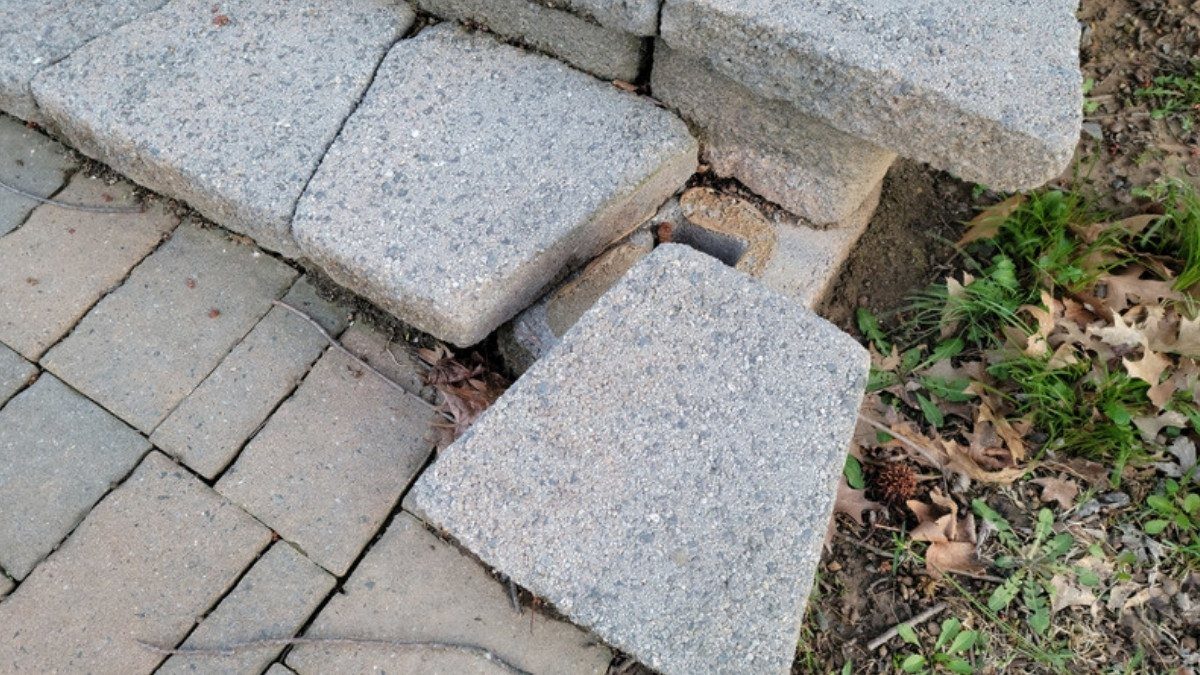
A display shelf gives way over your head. A stair rail pulls loose under your hand, or a stranger robs you in a dark lot outside a business. Each injury happened on property someone else owned or ran, yet South Carolina applies a different rule to each one. Premises Liability Lawyers in Summerville start by naming the hazard. The hazard decides which rule governs and what proof the insurer will expect.
For crimes on business property, the governing case is Bass v. Gopal, a 2011 South Carolina Supreme Court decision. It weighs how foreseeable an attack was against what security would have cost. Falling objects, broken stairs and public land follow other rules, and some carry shorter deadlines. Write down the hazard and its exact location, keep anything involved, and learn who owns or manages the property.
Tara L. Frost and Jack C. Frost were high school sweethearts at Summerville High School. Both later graduated from the Charleston School of Law, and they now practice together at Frost Law Group. Tara served as a Dorchester County Magistrate Judge and later as a Dorchester County Associate Probate Judge. Those two posts showed her how a court weighs evidence, preparation and credibility. The firm represents people hurt by unsafe conditions at stores, motels, parking lots, stairways and public property around Summerville.
For a free, confidential consultation about the property where you were hurt, call Frost Law Group at (843) 419-6653. The call goes to an attorney, not a call center.
Free case review
Tell us what happened. An attorney will explain your options and what to do before you talk to the insurance company.
On this page
- Which Hazards Premises Liability Lawyers in Summerville Handle
- Falling Merchandise and Overhead Hazards a Summerville Property Injury Lawyer Investigates
- The Bass v. Gopal Test a Summerville Negligent Security Attorney Applies
- Stairs, Railings, and Lighting Defects a Summerville Property Owner Liability Attorney Proves
- Government Property Injuries and the Tort Claims Act Limits a Summerville Lawyer Explains
- How a Summerville Premises Lawyer Handles Injuries to Children on Someone Else's Land
- Premises Liability Lawyers in Summerville Who Will Review What Happened on the Property
Which Hazards Premises Liability Lawyers in Summerville Handle
What hurt you, and who was responsible for that spot? Frost Law Group starts with both questions. A claim can also begin with a falling object, a broken stair, a failed light or a crime a business should have guarded against.
The law sorts the injured person too. Sims v. Giles, a 2001 Court of Appeals decision, recognizes adult trespassers, invitees and licensees, with children as a fourth group. Customers are usually invitees, owed reasonable care and warnings about hidden dangers the owner knows of or should discover. Social guests are licensees, warned only of concealed dangers the host actually knew about. The next step is matching the hazard to the rule that governs it.
Six Hazards and the South Carolina Rule Behind Each
Falling merchandise and overhead objects follow the created-hazard or notice test from Wintersteen v. Food Lion and Garvin v. Bi-Lo. Broken stairs and loose railings raise the same questions of who made the defect and who knew of it, plus the open and obvious rule in Restatement Section 343A. Lighting failures can land under three different rules. Attacks on business property follow the Bass balancing test. Injuries on land a public body controls follow the South Carolina Tort Claims Act. Children who wander onto land follow Restatement Section 339, which the Supreme Court adopted in 2007.
Who Controlled the Spot Where You Were Hurt
In Jackson v. Swordfish Investments, a 2005 case, a gunman shot a patron inside a nightclub leased in a Columbia shopping center. Its landlord had arranged common-area security, then dropped it once the nightclub stopped paying. Because the landlord did not control the club's interior, the Supreme Court found no duty, leaving open the question for areas a landlord does control. Frost Law Group can ask for the lease and any management or maintenance contract to learn who ran the exact spot.
Falling Merchandise and Overhead Hazards a Summerville Property Injury Lawyer Investigates
Many people assume a falling object proves negligence by itself. The doctrine behind that idea takes its name from a Latin phrase that translates as "the thing speaks for itself." It presumes negligence from an accident that ordinarily does not happen without it. South Carolina does not follow it, as the Supreme Court said in Watson v. Ford Motor Co. in 2010.
So a claim over a box, a sign or a ceiling tile needs evidence of how the owner fell short. Under Wintersteen, that means proof the owner created the danger. It can also mean proof the owner knew about the danger, or should have, and left it in place. That proof can come from the object, the fixture and the business's own records. Whether the evidence is strong enough is a call a lawyer makes only after seeing it.
Photos and Measurements in Place of the Thing Speaking for Itself
In O'Leary-Payne, a Hilton Head shopping center accused a woman who tripped over a metal rod of leaning on that doctrine. The Court of Appeals disagreed in 2006. She had never argued that her injury alone proved negligence. She proved it with photographs and testimony about the rod's height and location. For a falling object, the matching proof is the item's weight, its position, how it was secured and what set it moving.
Stacking, Shelving, and Stocking Records That Show a Created Hazard
Garvin v. Bi-Lo, a 2001 Supreme Court decision, involved canned goods that toppled from a tall stack onto a shopper. The claim failed without proof of defective stacking or proof the store knew the stack had grown unstable. Wintersteen also refused to make a store liable just because its display method made falls foreseeable. Useful records include the stocking schedule, who built the display, any written display instructions and earlier complaints. Frost Law Group applies the same notice rule to spills and wet floors in its retail slip and fall claims.
What if Another Shopper Knocked the Item Loose?
It depends on what the store did before that shopper touched the display. Wintersteen held that South Carolina does not make shopkeepers insurers against every customer's careless act. Suppose a shopper pulled an item down seconds before it struck you. The store generally answers only if the display was already unsafe or the store had notice. Video, the item's position and employee accounts usually settle which version holds up, though no one can predict a jury's view.
The Bass v. Gopal Test a Summerville Negligent Security Attorney Applies
On October 10, 2011, the South Carolina Supreme Court rewrote the test for crimes on business property. Bass v. Gopal, Inc. held that a business owner "has a duty to take reasonable action to protect its invitees against the foreseeable risk of physical harm." The Court dropped its older imminent harm rule, which required the owner to know, or have reason to know, that an attack was about to happen. Under the new balancing test, "the more foreseeable a crime, the more onerous is a business owner's burden of providing security."
Frost Law Group applies that test to shootings, robberies and assaults at motels, stores, gas stations and other businesses. Across fourteen years in law enforcement, Jack C. Frost moved from the Summerville Police Department to detective work at the Charleston County Sheriff's Office. He knows how police reports are written and how investigations gather evidence. Those records can help measure what an owner knew and when.
A Knock at an Orangeburg Motel Room Door
In 1999, Gerald Bass was a guest at an Orangeburg motel run by Gopal, Inc., a Super 8 franchisee. Starting around 10 PM on September 28, a man knocked on his door three times. After the third knock, his roommate opened the door without looking, and both men stepped outside. The man demanded money, shot Bass in the leg and fled. The circuit court granted summary judgment to Gopal, ending the case before trial, and the Supreme Court affirmed.
Two Questions the Balancing Test Asks
Bass splits the owner's duty into two questions. First, was the crime foreseeable? Second, given that risk, which security measures made economic sense, and did the owner fall short of them? Bass himself cleared the first question and failed the second. A claim that answers only one question tends to end the same way. Both questions call for their own evidence.
Was the Attack Foreseeable at That Address?
Prior crimes on the property weigh heavily under Bass. Their absence, though, "does not foreclose the duty to provide some level of security if other factors support a heightened risk." The Court quoted a California decision warning that a landowner "should not get one free assault" before facing liability. Evidence can come from the property, the surrounding area and the owner's own knowledge.
Crime Records and Forecasts for the Property
Bass had no report of earlier crimes at the motel. A software change had erased the local public safety department's records from before 2000. He relied instead on a crime forecasting report rating the motel's risk of crimes against persons at 3.5 times the national average. The Court held that enough to show some foreseeability, while a countywide crime rate alone would not be. Frost Law Group can ask early for incident data at the exact address, whether the Summerville Police Department on North Cedar Street or another agency holds it.
Warnings the Owner Heard Before the Attack
Lord v. D & J Enterprises, decided in 2014, shows a second route. In 2008, a gunman shot a customer inside a Rock Hill check-cashing store. The shooting came during a string of York County armed robberies that mostly targeted small businesses. Before that day, the owner had followed the news coverage and warned employees that "there is a madman on the loose." The Supreme Court treated that testimony as evidence of foreseeability, even without any earlier crime at the store.
Were the Owner's Precautions Reasonable for the Risk?
Bass called hiring guards "no small burden" and hard to require without prior crimes on the premises. A business in a high-crime area may still need cheaper steps like extra lighting, fences, locks, cameras or staff training. Bass lost because his own security consultant said a first incident gave the motel too little data to justify cameras or guards. Lord's case went back for trial after her consultant explained why a guard at the entrance fit the known robbery spree. Whether a business did enough turns on evidence an attorney must gather.
How Act No. 42 Treats an Attacker Missing From the Lawsuit
Act No. 42 expanded the list of people whose fault a jury counts under Section 15-38-15, for claims that arise after January 1, 2026. Jurors may weigh the fault of some wrongdoers who are not parties. Subsection (H), though, bars adding a nonparty to the verdict form when that person acted willfully, wantonly, recklessly or intentionally. A deliberate attack generally fits that description. So a business usually cannot move a share of fault onto an absent attacker, though it may still argue the attacker caused the harm.
Naming the attacker as a defendant changes how the jury divides fault. Since July 1, 2005, the statute has generally capped what a defendant owes at its own percentage whenever jurors set its fault under 50%. Subsection (F) makes an intentional wrongdoer answerable for the full amount. Frost Law Group can weigh that choice with you, because it turns on facts no general rule settles.
Does Bass v. Gopal Reach an Apartment Complex?
Generally, no. Bass governs businesses and the invitees they bring onto their property. The Supreme Court's 2019 decision in Wright v. PRG Real Estate Management reaffirmed that residential landlords generally have no duty to guard tenants against crime. A landlord that voluntarily takes on security may still answer for doing it carelessly. Frost Law Group handles those apartment injury claims under the landlord rules instead.
Stairs, Railings, and Lighting Defects a Summerville Property Owner Liability Attorney Proves
A plastic shopping bag with black streaks became evidence in a Charleston County escalator case. Under the general rule, the owner answers for a defect it created, or for one it knew about or should have found and left unfixed.
Frost Law Group looks at who built the stairs, who maintained them and who inspected them. A broken tread at a restaurant may trace back to the building owner, a tenant or an outside repair company. Each can be a separate defendant with its own insurer. Only a verdict or a settlement fixes the split among them.
The Escalator Pinch Point in Gazes v. Dillard's
Ruth Gazes rode an escalator at a Dillard's in Charleston County in 1995 with a bag looped around her wrist. Partway up, she was jerked left and pulled off her feet. A forensic engineer noted the escalator and a nearby column sat only five inches apart, a "pinch point" with no guard. An accident reconstructionist tied the marks on her bag to the handrail. The trial judge excluded their opinions on the cause and directed a verdict for the defense, taking the case from the jury. In 2000, the Court of Appeals reversed and ordered a new trial.
Building Codes and Repair Records for Stairs and Railings
Section 6-9-10 of the South Carolina Code requires municipalities and counties to enforce building codes. Section 6-9-50 ties those codes to the latest International Code Council editions. The code in force when a staircase was built or altered can help show what a careful owner should have done. Its weight in a particular claim turns on the facts and the court's rulings. Repair invoices, tenant complaints and work orders can also show someone knew a railing was loose before it gave way.
Lighting Problems Fall Under Three Different Rules
Poor lighting appears in three kinds of claims, and each follows its own rule. Darkness on a step can cause a fall. In a parking area, it can invite a robbery. On a public street, a dead streetlight can hide a hole or a curb. Sorting the lighting problem into the right category comes first, because the proof and the defenses change with it.
A Dark Stairway and the Fall Itself
For a fall, darkness is part of the condition, and the usual notice questions apply. Owners often reply that the darkness was open and obvious. Under Section 343A, which South Carolina follows, an owner may still answer for an obvious danger when it should have anticipated the harm anyway. Your own caution counts as well. South Carolina reduces an award by your share of fault and bars recovery once that share passes 50%.
A Dim Parking Area and the Security Question
For a crime, lighting is one of the cheaper measures Bass listed for a business in a high-crime area. In Bass itself, the guest's own consultant rated the motel's lighting adequate. At apartments, Wright held that lighting and shrubbery choices alone did not create a security duty. The same dim lot may be judged one way at a store and another way at an apartment complex.
A Streetlight Out on a Public Street
Item 15 of Section 15-78-60 covers an "illumination device" that is missing or broken, along with signs, signals and warning devices. The government answers only when the problem stayed uncorrected for an unreasonable time after actual or constructive notice. A dated report to whichever agency maintains the light can help prove that notice.
Government Property Injuries and the Tort Claims Act Limits a Summerville Lawyer Explains
Section 15-78-60 of the South Carolina Tort Claims Act lists 40 kinds of loss a government entity does not answer for. Outside those exceptions, Section 15-78-40 makes the state and its political subdivisions liable like a private person. Political subdivisions include counties, school districts, special purpose districts and towns such as Summerville.
Frost Law Group can check early whether a public body owns or maintains the spot where you were hurt. A town sidewalk, a county park, a public school or a state road brings shorter deadlines and damage limits into play. For premises liability lawyers in Summerville, the next task is testing the facts against the exceptions. Whether one applies turns on records an attorney has to review.
Exceptions That Bar Common Claims Against Public Owners
A handful of the 40 exceptions come up often after injuries on public land. Discretionary decisions fall under item 5, and claims based on a nuisance fall under item 7. For parks and playgrounds, item 16 requires actual notice of the defect. Two more exceptions often surprise people, because the same facts could support a claim against a private owner.
Inspections a Town Made or Skipped
Item 13 covers regulatory inspections, including a skipped inspection or a careless one. Suppose a building inspector approved a private building's stairway that later collapsed. The government generally does not answer for that inspection. The claim stays with the owner, builder or contractor responsible for the stairway.
Crimes Committed by People Who Are Not Employees
Item 20 covers "the criminal actions of third persons" and other acts by people who are not government employees. Under item 6, "the failure to provide the method of providing police or fire protection" also falls outside the Act. Together they can defeat a security claim against a public owner that might proceed against a private business under Bass. How they apply depends on the facts and on how courts read each item.
Notice of the Exact Hole on a City-Owned Corner
When notice decides a government claim, the notice must match the defect. In a 2012 Darlington County case, a college student stepped into a hole on a grassy corner the city owned. The parks director testified that trucks had cut that corner for years, leaving depressions his crews kept refilling. The Court of Appeals held that knowing about the corner-cutting was not notice of the particular hole. No one could say how long that hole had existed, so a jury would have had to guess.
A 2007 Charleston sidewalk case came out differently. Leaves partly covered that hole and cracks spread from it. A city official also said it had probably been that way a while. Photos showing wear, debris and cracks around a defect can supply the same kind of proof.
The 180-Day Wait After a Verified Claim and the Damage Caps
Under Section 15-78-110, suit against a government entity generally must come within two years of when the loss was or should have been discovered. That period grows to three years only if you first file a verified claim, meaning a sworn written claim, with the agency or political subdivision. Section 15-78-80(d) gives the agency one year from that discovery date to receive the claim.
Once a claim is filed, Section 15-78-90 bars suit until 180 days pass. The agency can end that wait sooner by disallowing the claim or rejecting a settlement offer. Under Section 15-78-80, 180 days of silence counts as a disallowance.
The suit names the agency or political subdivision, not the employee. Only a circuit court can hear it, in whichever county the act or omission happened. For the Dorchester County part of Summerville, circuit court sits at 5200 East Jim Bilton Boulevard, St. George. Section 15-78-120 limits any one person to $300,000 for a single occurrence and all claimants together to $600,000. It also bars punitive damages and prejudgment interest, and Frost Law Group can walk through these limits before you decide how to proceed.
How a Summerville Premises Lawyer Handles Injuries to Children on Someone Else's Land
Picture a nine-year-old cutting across an open construction lot who falls into an unguarded drainage pit. An adult trespasser is owed only the duty not to be injured willfully or wantonly. Children are treated differently, because the law accounts for dangers a child cannot recognize.
Frost Law Group handles claims for children hurt on private and public land, including dog bite strict liability claims under Section 47-3-110. A bite claim turns on that statute's own terms, including whether the child was somewhere public or lawfully on the property. For a hazard built or left on the land, the questions start with whether the owner knew children came onto the property and what the owner did about the danger.
The Georgetown County Canal Case That Adopted Section 339
International Paper owned a canal running 27 miles through Georgetown County to carry Pee Dee River water to its plant. In 1998, a ten-year-old boy crossed it on a drainage pipe. He went into the murky water holding a cast net and, tragically, drowned. The trial court directed a verdict on attractive nuisance, the older rule for hazards that draw children onto land, because the boys had come for a dirt jumping hill, not the canal. In Henson v. International Paper, the Supreme Court rejected that "property line" rule but still affirmed the result. It merged attractive nuisance and unguarded dangerous condition into one exception for children.
That exception follows Section 339 and covers artificial conditions, meaning things built or placed on the land. The owner must have reason to know children are likely to trespass there. It must also know, or have reason to know, of a condition posing an unreasonable risk of death or serious harm that children, because of their youth, would not recognize. The owner's benefit from the condition and the burden of removing it must be slight compared with that risk, and the owner must fail to use reasonable care. A claim over a pool, a machine or an open trench has to satisfy each point.
School and Playground Injuries Under the Tort Claims Act
A child hurt at a public school or playground faces the Tort Claims Act's added rules. Item 25 covers the supervision, protection and control of any student, and it allows liability only for gross negligence. That is a much higher bar than the ordinary carelessness that decides most premises claims. Item 16 requires actual notice before a public entity answers for a playground defect. A written report of a broken slide or a loose swing chain can supply that notice.
Who Approves a Settlement for an Injured Child?
Section 62-5-433 sets the approval route by the child's net share. A net share over $25,000 needs a circuit judge's approval on a verified petition. Payment then goes through a conservator, a person appointed to manage it for the child, or under a probate court order that protects it. For smaller shares, the probate court may approve instead. No approval is automatic, and the court decides based on the child's interests. Claims worth $2,500 or less may be settled by a parent or guardian without any court.
Section 15-3-40 can also give a child extra filing time, but never past one year beyond the 18th birthday. Whether it helps depends on the child's age.
Premises Liability Lawyers in Summerville Who Will Review What Happened on the Property
A police case number gives Frost Law Group a place to start. So does a manager's incident report, a photo of a loose railing or a letter from a town clerk.
Talk with the premises liability lawyers in Summerville at Frost Law Group about which rule fits your hazard and what proof it demands. The consultation is free and stays confidential, with no obligation attached. If a public body owns the property, an attorney can also map the Tort Claims Act deadlines with you.
The office is at 128 Linwood Lane, Summerville, SC 29483. An attorney can go through photos, reports and medical records there with you.
Call (843) 419-6653, or send the office a message online to describe the hazard that hurt you.
The attorneys at Frost Law Group
 Tara L. FrostAttorney at Law · Personal injuryTara L. Frost focuses on personal injury, car accident and truck accident claims. A lifelong resident of the tri-county area, she meets clients at the Linwood Lane office in Summerville.
 Jack C. FrostAttorney at Law · Former Summerville police officer and Charleston County Sheriff's Office detectiveJack C. Frost spent fourteen years in law enforcement with the Summerville Police Department and the Charleston County Sheriff's Office before he practiced law.