
Apartment Injury Lawyers in Summerville
- Free consultation
- No fee unless we win
- Available 24/7
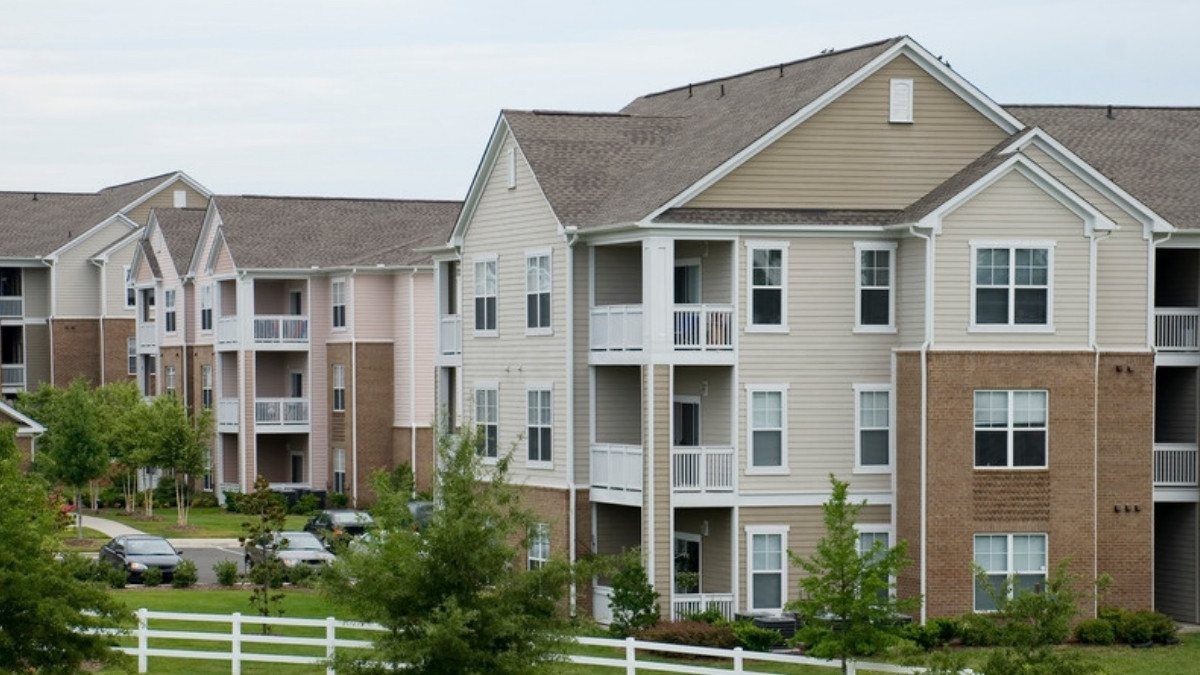
The stair tread outside your second-floor door had rocked for a while, and you told the leasing office. Then it gave way under you on the way down. Apartment Injury Lawyers in Summerville start with two facts. Where exactly were you hurt, and did the landlord know about the problem first?
Chapter 40 of Title 27 of the South Carolina Code, the Residential Landlord and Tenant Act, lists a landlord's upkeep duties. Those duties differ between shared spaces the landlord controls and the unit you lease. Many claims also turn on notice, meaning proof the landlord knew of a defect or heard about it and left it unfixed. Save every repair request, and photograph the spot before maintenance changes it.
Frost Law Group's Summerville office has two attorneys, the husband-and-wife team of Tara L. Frost and Jack C. Frost. They were sweethearts at Summerville High School, and both later took law degrees from the Charleston School of Law. Tara's practice centers on personal injury, while Jack brings fourteen years of police and sheriff's office work. They represent tenants and guests hurt at rental properties.
Call Frost Law Group at (843) 419-6653 for a free, confidential consultation about the injury and the lease. One of the two attorneys picks up, not a call center, and talking with the firm commits you to nothing.
Free case review
Tell us what happened. An attorney will explain your options and what to do before you talk to the insurance company.
On this page
- How Apartment Injury Lawyers in Summerville Use the Residential Landlord and Tenant Act
- Stairs, Walkways, and Parking Areas a Summerville Apartment Complex Injury Attorney Examines
- Repairs Inside Your Unit and the Notice a Summerville Tenant Injury Lawyer Needs
- Smoke Detector Rules and Housing Code Duties a Summerville Rental Injury Lawyer Reviews
- When a Summerville Apartment Injury Attorney Can Raise a Security Failure
- Apartment Injury Lawyers in Summerville Who Understand Your Lease and Your Injury
How Apartment Injury Lawyers in Summerville Use the Residential Landlord and Tenant Act
Before 1986, the traditional South Carolina rule said a landlord owed no duty to keep leased premises safe. Robinson v. Code, a 2009 Court of Appeals case, quoted that old rule before explaining what replaced it. In 1986, the General Assembly enacted the Act and put upkeep duties for residential rentals into statute. Frost Law Group builds each apartment claim on those duties.
Courts read the Act to allow a claim in tort, the branch of law covering injuries. Watson v. Sellers, a 1989 decision, recognized a claim against a landlord who fails to make needed repairs after notice. Ten years later, Nedrow v. Pruitt confirmed that a negligence action may proceed under the Act. A tenant still has to prove a duty, a breach and an injury the breach caused. A fall in a store runs on a different test, which Frost Law Group applies in retail slip and fall claims.
Five Maintenance Duties in Section 27-40-440
Subsection (a) of Section 27-40-440 gives a landlord five jobs. It must follow building and housing codes that materially affect health and safety. It must make whatever repairs keep the premises fit and habitable. Common areas must stay reasonably safe, and also reasonably clean where a property has more than four units. The landlord generally supplies running water and reasonable hot water and heat. It must also keep supplied wiring, gas, plumbing, heating, cooling and elevators in reasonably good and safe working order.
Owners, Management Companies and the Disclosure Duty
The company that collects your rent may not own the complex. Section 27-40-420 requires the landlord, or anyone signing leases for it, to name an owner or authorized agent in writing, with an address. A manager who skips it counts as the landlord under Section 27-40-210. When a landlord sells in good faith, Section 27-40-450 generally releases the seller only for events after the tenant gets written notice of the sale. Those papers are among the first things apartment injury lawyers in Summerville review before naming anyone.
Lease Clauses That Try to Excuse the Landlord
A lease may say the tenant releases the landlord from injury claims or will repay its losses. Section 27-40-330 forbids a rental agreement from making a tenant excuse or limit the landlord's liability arising under law. It also bars a promise to indemnify the landlord, meaning to reimburse it for that liability. Any such clause is unenforceable. Frost Law Group can read the full lease and each addendum, including community rules, since a release can appear in any of them. How a court treats a given clause still depends on its wording and the facts.
Filing Deadlines and Which Court Hears a Tenant Injury Claim
Under Section 27-40-610, a tenant may sue for actual damages in a magistrate's court or in circuit court. Section 22-3-10 limits a magistrate to civil disputes of $7,500 or less, and injury claims usually exceed that limit. The Summerville Magistrate Court, a Dorchester County court, meets at 212 Deming Way, inside the Troy Knight Judicial Complex. Larger claims go to the Court of Common Pleas, which is circuit court's civil side. Most injury claims carry a three-year filing period under Section 15-3-530. Housing owned by a government entity may fall under the Tort Claims Act instead, which sets its own deadlines and claim rules. Your own deadline and courthouse turn on facts a lawyer should confirm with you.
Stairs, Walkways, and Parking Areas a Summerville Apartment Complex Injury Attorney Examines
Picture a tenant who parks after dark at a complex off Old Trolley Road and heads to a third-floor unit. The route crosses a cracked walkway, climbs an outdoor stairway and passes a light over a covered landing. All of it is common area, meaning space the landlord controls and no one tenant leases. Section 27-40-440(a)(3) requires the landlord to keep that space reasonably safe.
Notice still matters outdoors, though it can come from more than a complaint. Under Section 27-40-240, notice includes actual knowledge, a received notification and reason to know from the circumstances. What maintenance staff saw on walk-throughs can matter as much as what tenants reported, and Frost Law Group can request those records.
Pools, Laundry Rooms and Other Grounds the Act Covers
Section 27-40-210 defines premises to reach past the walls of a unit. The term covers the building, its facilities and the grounds held out for tenants generally. It also covers any area whose use the lease promises. A pool deck, fitness room, laundry room or mail kiosk can fit. The Act's list of supplied facilities a landlord must keep working even names elevators.
Outdoor Stairways Leading to Upper-Floor Units
An outdoor stairway may be the only way home for an upper-floor tenant. Frost Law Group can request the complex's work orders for those steps, since earlier repairs can show both the hazard and the landlord's awareness of it. Photos from your line of approach, taken before any repair, record the condition as you found it. Ask any neighbor who saw the fall to write down what the step looked like that day.
Treads, Nosings and Railings That Work Loose
A tread that rocks, a split nosing or a railing pulling away from its post is a physical defect in a common area. The nosing is the front edge of a step. A dated written report from a tenant can be strong proof of notice. Without one, the questions become how long the defect existed and whether a routine look would have caught it.
Stairway Lights a Contractor Was Supposed to Check
Alvin Davenport rented a top-floor condominium on Hilton Head Island from its owner. The condominium regime's management company had hired a landscaping contractor whose duties included checking outdoor lights. Davenport phoned the management company about dead floodlights at the foot of his stairway, then fell there in August 1991. His suit named the regime responsible for the grounds, not the owner who leased him the unit. The Supreme Court's 1998 ruling left the fault question for a jury.
Parking Lots and Walkways Between Buildings
A parking lot counts as grounds held out for tenants, so the reasonably safe standard reaches it. A pothole beside a numbered space, a heaved sidewalk slab or a drain missing its grate are typical examples. The landlord may call the hazard open and obvious, meaning plain enough that anyone should have seen it. That defense does not always end a claim. If the owner had reason to anticipate the harm anyway, the claim may survive the defense. Jurors then compare the tenant's fault with the landlord's. Fault over 50% bars the tenant's recovery, while a share at or under that line shrinks the award by the same percentage. Nobody can forecast that split before reviewing photos, records and witnesses.
Can a Visiting Relative Recover for an Injury on Shared Ground?
Sometimes. Section 27-40-610 speaks of what a tenant may recover, but a guest may still sue a landlord in negligence. The Supreme Court's 2011 opinion in Clea v. Odom, an appeal from Sumter County, involved a tenant's dog chained in a common area. It attacked a two-year-old who had come with family to visit relatives at the complex. The landlord controlled that ground, and there was evidence he knew of an earlier attack. The Court held he could face a negligence claim.
For a bite on shared ground, Frost Law Group weighs the landlord's control of the area alongside the dog bite insurance claims it pursues against the owner's coverage. A guest's fall on a broken common stairway raises the same control question.
Repairs Inside Your Unit and the Notice a Summerville Tenant Injury Lawyer Needs
In February 1993, Sabrina Nedrow moved into an apartment with a gas heater. Her case later came up on appeal from Greenville County. Within weeks, she found a heating element leaning on the heater's front glass, and the glass had cracked. She reported the break, and there was evidence the landlord sent her to the gas company for the repair. The glass she installed herself left a gap of about an inch and a half.
About a year later, her ankle-length nightgown caught fire as she stood near the heater. She suffered burns to her back, chest and arms. A jury found for the landlord and the gas company. The Court of Appeals reversed that verdict in 1999.
A Repair Duty the Landlord Could Not Pass to Someone Else
The court held that Section 27-40-440 put an absolute duty on the landlord to fix the heater. That duty was non-delegable, meaning the landlord stays answerable even when someone else does the work. Sending the tenant to the gas company did not shield him. The opinion relied on Durkin v. Hansen, a 1993 case about carpet cleaners a landlord hired for a tenant's unit. The tenant slipped on soapy residue the cleaners left on the kitchen floor. A non-delegable duty arose, the court held, once the landlord took on the cleaning.
Physical Defects Versus Other Dangers Inside a Unit
The fit and habitable duty has limits. Fair v. United States, a 1999 Supreme Court decision, confined it to defects in the inherent physical state of the premises. The Court read it alongside Section 27-40-510, which requires the tenant to keep the unit reasonably safe. A rotted bathroom subfloor or a ceiling that falls after a roof leak sits on the landlord's side of that line. A roommate's clutter usually does not.
Appliances get their own rule. Section 27-40-440(a)(5) presumes the landlord supplied any appliance in the unit unless the lease specifically excludes it. No lease may exclude one needed for essential services, such as heat, hot water or gas for cooking. The lease's appliance list, set beside what actually sat in the kitchen and utility closet, can show who supplied a given appliance.
Proving the Office Received Your Repair Request
Robinson v. Code treated notice as part of a tenant's claim for failure to maintain a rental. The court pointed to the Act's reference to written notice specifying the acts and omissions that make up the breach. A text to a maintenance worker's phone may help. A dated written request sent the way the lease directs is stronger proof. Keep screenshots, emails and any ticket numbers.
Where Section 27-40-240 Says a Notice Arrives
Under the Act, a landlord receives a notice once someone delivers it to the place of business where the lease was made. Delivery to any other place the landlord holds out for receiving communications also counts. At a large complex, that is often the leasing office, and a request portal named in the lease may qualify. Whether a channel counts can turn on the lease and on how the complex told tenants to report problems.
When the Front Desk Knew but Maintenance Did Not
Section 27-40-240(C) covers a request that stalls inside the landlord's own organization. Notice to an organization takes effect once it reaches the person handling that matter. At the latest, it takes effect when reasonable diligence would have brought it to that person. So a leasing agent who never forwarded your email to maintenance may not help the landlord's defense.
How Your Own Upkeep Duties Affect Fault
Section 27-40-510 gives tenants duties too, including keeping the unit reasonably safe and clean and using appliances and plumbing reasonably. In Nedrow, the court approved a jury instruction on those duties because the landlord claimed the tenant shared the blame. Any fault a jury assigns to you lowers an award, and Frost Law Group weighs your conduct as closely as the landlord's. How a jury might divide fault rests on evidence still to be gathered and tested.
Smoke Detector Rules and Housing Code Duties a Summerville Rental Injury Lawyer Reviews
Section 5-25-1380 says that failing to follow the rental smoke detector article does not, by itself, create a claim for death or injury. That holds whether the claim rests on the statute alone or on negligence. The article still sets duties. Section 5-25-1330 makes the owner of a rental dwelling responsible for supplying and installing smoke detectors, and for explaining at move-in how to test them and change batteries.
The article covers one-family and two-family rentals, manufactured housing included. A rented duplex or a rented mobile home near Knightsville fits those words. A unit in a larger apartment building may answer to building and fire codes beyond the detector article. Frost Law Group can sort out early which rules govern the building and measure the owner's conduct against them.
The Tenant's Written Notice and the Owner's Fifteen Days
Section 5-25-1330(B) requires the tenant to report a detector problem to the owner in writing. The owner then has fifteen days to repair or replace the detector. An owner who finds that the household deliberately damaged a detector owes no repair after telling the tenant so in writing. Batteries are not the owner's job under the article. The State Fire Marshal or a local fire official enforces it, and a second violation is a misdemeanor.
What the Seneca Fire in Robinson v. Code Decided
On a February morning in 2004, an upholstered chair caught fire in a rented house in Seneca. The house had no smoke detectors. Two men died from carbon monoxide poisoning and smoke inhalation, and firefighters found a woman alive but overcome by smoke. She and the two estates sued the owner over the missing detectors.
In 2009, the Court of Appeals affirmed an order striking those allegations under Section 5-25-1380. The complaints also never alleged that anyone told the owner the detectors were missing. The court did not decide what written notice would have changed. That is why, in a rental fire claim, what the tenant reported and when can matter so much.
Housing Code Violations That Materially Affect Health and Safety
The first duty on the Section 27-40-440 list requires compliance with building and housing codes that materially affect health and safety. The Act defines those codes broadly. They include any law, ordinance or regulation on fitness for habitation or on a building's construction, maintenance or use. Where a code sets a higher duty than the rest of the section, subsection (b) makes the code the measure.
Location matters too, because Summerville spans Dorchester, Berkeley and Charleston counties. A complex inside town limits and one just outside can answer to different local ordinances, so the property's exact location is worth confirming first.
When a Summerville Apartment Injury Attorney Can Raise a Security Failure
Does an apartment complex have to protect its tenants from crime? Under South Carolina law, the general answer is no. Cramer v. Balcor Property Management, a 1994 Supreme Court decision, said a landlord generally has no duty to provide a tenant security against crimes committed by third parties. The Court reaffirmed that rule in 2019 in Wright v. PRG Real Estate Management, calling it "still undoubtedly the law in South Carolina."
Wright also explained when a landlord can answer for a crime anyway. Frost Law Group can measure an assault or robbery at a complex against those exceptions. Jack C. Frost was a Summerville police officer and corporal before he joined the Charleston County Sheriff's Office, where he later worked as a detective. That work taught him the way officers assemble a crime report.
Two Exceptions the Supreme Court Described in Wright
Wright distinguished two of the recognized routes around the general rule. One covers a landlord's own act that directly raises a tenant's risk. The other covers security a landlord chose to provide and then handled carelessly. For that second route, Wright named Section 323 of the Restatement (Second) of Torts as the South Carolina standard. The Restatement is a published summary of tort rules that courts may adopt.
A Master Key, an Unlocked Door or an Unsecured Ladder
The first route is the affirmative acts exception. Wright listed three examples of direct action by a landlord. One is handing a master key to someone who should not have it. Another is leaving an apartment door or window unlocked, and the third is failing to secure a ladder a criminal then uses. Key logs, work orders and maintenance records may show whether any of that happened.
Security a Complex Chose to Provide
Under Section 323, a landlord that takes on a security service must perform it with reasonable care. A duty arises only if its carelessness increased the risk, or if the tenant suffered harm by relying on the promised service. The duty reaches only as far as the undertaking, so its scope depends on what the complex promised.
Courtesy Officers Promised at the Wellspring Complex
Denise Wright rented at Wellspring, a complex in the Columbia area, from 2003 until 2008. A manager told her security officers were on duty. The monthly newsletter listed a security pager number and called security a "very top priority." The officers were residents in law enforcement who paid reduced rent, and none had served there since July 2008. Two armed men robbed her in a common area that September. The Supreme Court held that a jury must decide whether a duty arose.
Lighting and Shrubbery Alone Do Not Create a Duty
Wright also argued that a dark pole light and overgrown shrubs let her attackers hide. The Supreme Court agreed with the Court of Appeals that lighting and landscaping choices gave rise to no security duty. Those measures serve other ends, such as preventing accidental injuries and improving appearance. A burned-out light can still matter in a fall case under the common area duty. By itself, it creates no duty to guard against crime.
Security Measures Meant for Residents Rather Than Visitors
A guest attacked at a complex faces an added hurdle. Goode v. St. Stephens United Methodist Church, a 1997 Court of Appeals case, shows why. Third persons assaulted a tenant's social guest at an apartment complex, and the guest sued the landlord. The landlord had repaired locks, secured windows, warned tenants about crimes and inspected the grounds. The court found those steps served residents rather than the public. It saw no proof of careless performance, or of reliance that caused the assault.
Crime Reports, Newsletters and Leasing Promises as Evidence
What a complex told tenants about security can shape whether Section 323 applies. Whether its words reach that standard is a fact question a lawyer has to test. The lease, move-in brochures, newsletters, emails and any posted security number all belong in the file. In Wright, an internal manual tenants never saw said the complex generally did not provide security and told staff never to suggest it did. The police report counts as well, whether the Summerville Police Department on North Cedar Street or a county sheriff's office responded.
A business such as a motel or store answers to a different rule. Frost Law Group evaluates those premises liability claims against businesses under the balancing test from Bass v. Gopal.
Must a South Carolina Apartment Complex Install Security Cameras?
Nothing in the Act requires cameras. Where a complex runs them anyway, footage of a parking lot or stairwell can show the lighting, the timing and who else was nearby. Some systems record over older footage on a set cycle. Frost Law Group can ask management in writing to keep the footage, though no one can promise a recording still exists.
Apartment Injury Lawyers in Summerville Who Understand Your Lease and Your Injury
Start with the lease, every addendum and any community rules sheet you signed. Add repair requests, portal screenshots, texts to maintenance and photos of the spot where you were hurt. Medical records and any police or incident report finish the file. Those papers help show whether you have a common area claim, an in-unit repair claim or neither.
Bring that file to a free, confidential consultation with the apartment injury lawyers in Summerville at Frost Law Group. Either Tara L. Frost or Jack C. Frost can walk through which landlord duties may apply and what proof is missing. No attorney can tell you the outcome at that meeting, and neither of them will pretend otherwise.
Tara and Jack meet clients at 128 Linwood Lane, Summerville, SC 29483, and they can set a Friday afternoon appointment when you ask for one.
Call (843) 419-6653 or describe the injury at your complex online, and bring the lease when you come in.

The attorneys at Frost Law Group
 Tara L. FrostAttorney at Law · Personal injuryTara L. Frost focuses on personal injury, car accident and truck accident claims. A lifelong resident of the tri-county area, she meets clients at the Linwood Lane office in Summerville.
 Jack C. FrostAttorney at Law · Former Summerville police officer and Charleston County Sheriff's Office detectiveJack C. Frost spent fourteen years in law enforcement with the Summerville Police Department and the Charleston County Sheriff's Office before he practiced law.