
Distracted Driving Accident Lawyers in Summerville
- Free consultation
- No fee unless we win
- Available 24/7
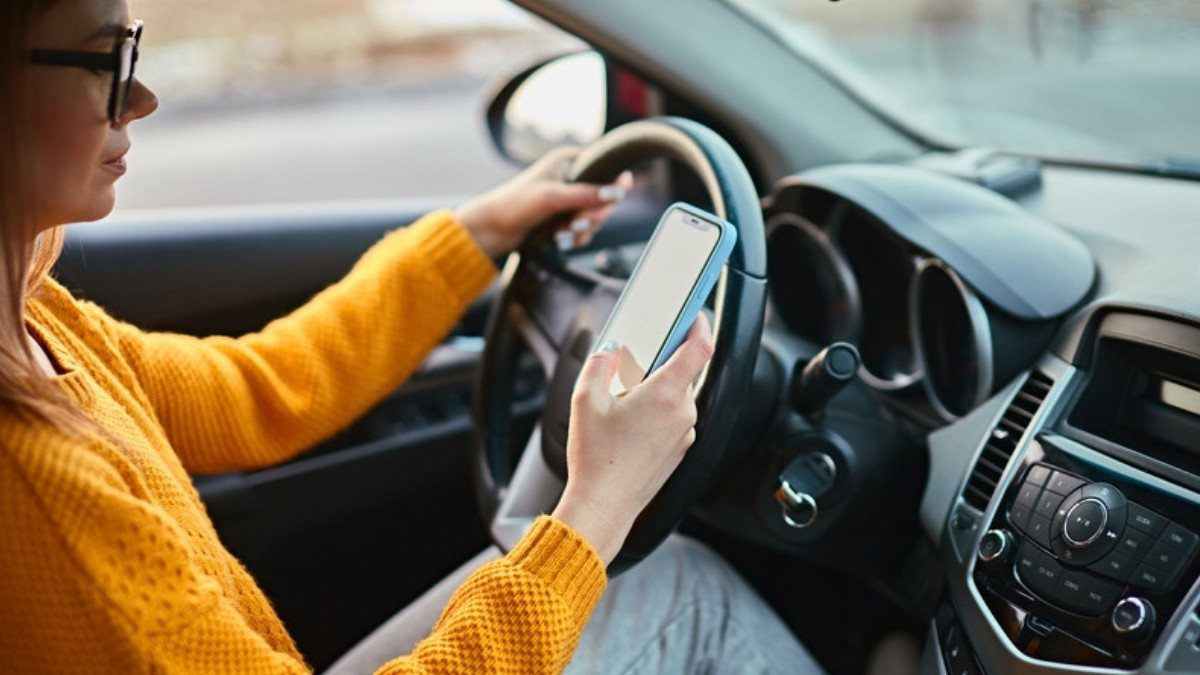
The driver who rear-ended you on Main Street had a phone in hand, according to the witness who stopped. Until September 1, 2025, South Carolina punished that only if the driver was reading, writing or sending a text. Since then, simply holding or supporting the phone on a public road has been unlawful. Tara L. Frost and Jack C. Frost work as distracted driving accident lawyers in Summerville. The crash date is the first fact they check.
The change came through 2025 Act No. 40, the state's Hands-Free and Distracted Driving Act, which rewrote Section 56-5-3890. For the first 180 days after it took effect, officers could only issue warnings. A violation can matter in an injury claim, though its weight depends on evidence tying the phone to the impact. Write down what you saw the other driver doing, and keep the name of anyone who saw it too.
Tara and Jack Frost were Summerville High School sweethearts, and the Charleston School of Law granted both their law degrees. Tara L. Frost also knows the view from the bench. She is a former Dorchester County Magistrate Judge, and deciding cases taught her which testimony and exhibits hold up. Frost Law Group represents people hurt by drivers whose attention was on a screen.
Frost Law Group answers at (843) 419-6653, and an attorney takes the call. The consultation is free, and it stays confidential.
Free case review
Tell us what happened. An attorney will explain your options and what to do before you talk to the insurance company.
On this page
- How Distracted Driving Accident Lawyers in Summerville Use the Hands-Free Law
- What Section 56-5-3890 Bans and Allows for a Summerville Texting Crash Attorney
- Proving Phone Use After a Wreck With a Summerville Distracted Driver Lawyer
- Distraction in the Collision Report and the Fact Book a Summerville Car Wreck Lawyer Reads
- Work Drivers, Rideshare Drivers and Teen Drivers in Summerville Distraction Claims a Lawyer Reviews
- Talk With Distracted Driving Accident Lawyers in Summerville About Your Crash
How Distracted Driving Accident Lawyers in Summerville Use the Hands-Free Law
Section 56-5-3890 has two versions that matter to a crash claim, and the crash date picks between them. Frost Law Group starts there, because the 2025 rewrite reaches far more phone use than the 2014 law it replaced. Section 7 of Act No. 40 keeps the old law in force for rights and liabilities that arose before September 1, 2025.
One legal link between a phone and a claim is a doctrine called negligence per se. In Fairchild v. South Carolina Department of Transportation, decided in 2012, the state Supreme Court restated that breaking an applicable statute is negligence per se. That phrase means the violation itself shows carelessness. Whether the violation caused the crash is ordinarily a question for the jury.
A search of South Carolina appellate decisions turned up none applying that rule to the hands-free law. How courts will treat it remains open. A claim therefore rests on proof of what the driver did, not on the statute alone.
The 2014 Texting Ban That Governs Older Crashes
From June 9, 2014, through August 31, 2025, Section 56-5-3890 barred one thing. A driver could not use a wireless device to compose, send or read a text-based message on a public street or highway. The 2014 version did not reach talking on a handheld phone, and it exempted hands-free devices and GPS directions.
A fine could not exceed $25 per violation or $50 for one incident. The violation was not a criminal offense, and it stayed off the driver's motor vehicle record. The statute also barred reporting it to the driver's insurer. An officer needed probable cause, based on a clear and unobstructed view, before stopping anyone for it.
The Hold or Support Rule Since September 1, 2025
The rewrite bans three things on any public highway. A driver may not hold or support a mobile electronic device with any part of the body. Reading, composing or sending text is also off limits, including email, app interactions and website content, and so is watching video, games or video calls.
The fine is $100 the first time. A repeat within three years costs $200 and adds 2 points under Section 56-1-720, and no part of either fine may be suspended. The stop standard dropped from probable cause to reasonable suspicion, still grounded in the officer's clear and unobstructed view. The Act calls the offense distracted driving. Watching a movie on a phone propped in a cupholder breaks the video ban even if the driver never touches the phone.
What Fairchild Adds About Punitive Damages
Fairchild arose from a crash on I-95 involving a truck towing a trailer. The Court found evidence that the truck driver may have broken the speed statute, Section 56-5-1520, and the following-distance statute, Section 56-5-1930. It also restated that a statutory violation is some evidence of recklessness, though not recklessness by itself. That evidence, with an inference that the violations caused the crash, let the punitive damages question reach the jury.
Punitive damages still require clear and convincing evidence of reckless, willful or wanton conduct under Section 15-32-520(D). A driver watching a video at highway speed might raise that question, but the answer turns on the proof. No lawyer can promise that a phone violation will support punitive damages.
What if the Crash Happened Before September 1, 2025?
Then the 2014 version governs, under the savings clause in Section 7 of Act No. 40. A driver holding a phone to talk before that date broke no hands-free rule, because none existed yet. Texting was still banned, so a lawyer compares the timing of any message with the moment of impact. Section 56-5-1930 on following distance, for example, may apply either way.
What Section 56-5-3890 Bans and Allows for a Summerville Texting Crash Attorney
The statute's device list starts with a cell phone, a portable computer, a GPS receiver and an electronic game. It also reaches any similar stand-alone device that communicates, displays or records digital content. CB radios, ham radios, commercial two-way radios, subscription emergency devices and prescribed medical devices fall outside that definition. The statute also expressly permits an earpiece or a wrist device for voice calls.
Frost Law Group reads the exemptions as closely as the bans, because a driver's insurer may point to them. A single condition, such as whether the driver held the phone or had to type, can decide whether a use was lawful. Each claimed exemption gets checked against the video, the witnesses and any records before anyone accepts it.
Where the Ban Applies and the Local Rules It Replaced
The ban covers driving on public highways, and the section says nothing about private lots. Subsection (G) preempts local ordinances on phone use while driving, so one statewide rule applies inside and outside Summerville's town limits. The Act also directs SCDOT to post signs about the law at every interstate entry point. The Department of Public Safety receives 25% of the fines to educate the public about distracted driving.
Exemptions a Driver May Claim After a Crash
Section 56-5-3890(C) lists seven situations where the section does not apply. They include a first responder on duty and a driver reporting a crash or hazard to public safety officials. A driver using equipment the carmaker installed is covered too. So is a driver sending or receiving data on a digital dispatch system while performing job duties. Each exemption has limits. Several apply only while the driver neither holds nor supports the phone. An insurer defending the driver may raise any of them, and each one needs testing against the facts of the crash.
Uses That Require the Phone to Stay Untouched
Several exemptions share one condition. The driver may not hold the device or support it with any part of the body. Someone steering with one hand while the other grips the phone gets no help from any of them. That holds true whatever the phone was doing at the time.
Maps, Music and Traffic Updates
Directions, listening to audio and checking traffic or road conditions are permitted when they require no typing. A phone mounted on the dash and showing a route fits that description. Entering a new address while the car moves does not, because that takes typing.
Starting or Ending a Call Without Typing
The statute lets a driver start or end a call in a way that requires no typing. Unlocking the phone for that purpose, or for directions, is covered too. A voice command or a single touch on a mounted phone can fit the exemption. Typing a number while moving does not.
Parked, Stopped or Dictating by Voice
The statute permits dictating a message that the phone converts to text, if the driver does not hold or support the phone. A driver who is lawfully parked or stopped is outside the section entirely. The statute does not define "lawfully parked or stopped." Whether it covers a car waiting at a red light on Main Street is an open question. A lawyer would not assume the answer either way.
A Call to 911 as the Reason for a Phone in Hand
Some drivers say the phone was out to report the crash or a hazard. Subsection (C)(3) does exempt a driver reporting an accident, emergency or safety hazard to a public safety official. The timing matters, though. A call placed after the impact does not explain a phone in hand before it. Records can show when any call went out.
Proving Phone Use After a Wreck With a Summerville Distracted Driver Lawyer
Picture a pickup rolling into the back of your car as traffic slows at the Dorchester Road and Old Trolley Road intersection. The driver tells the officer he glanced at the radio. A witness in the next lane says the driver's head was down, and a screen was lit. Cases like this turn on sorting out that conflict.
The hands-free law limits what officers learn at the scene. Under subsection (E), a violation gives an officer no power to take the phone, search it or look at its screen. So the collision report may say nothing about a phone even when one was in the driver's hand. The proof has to come from other sources, and the people who saw the crash are the usual starting point.
Witnesses, Video and the Driver's Own Words
Eyewitnesses often supply the first proof. Another driver, a passenger or a pedestrian may have seen a bent head or a raised phone. The at-fault driver's own statements to the officer or an adjuster can matter too. Jack C. Frost learned how officers take those statements, and how the words end up in a report, during fourteen years in law enforcement.
Witness Names in the Officer's Written Report
Witnesses sometimes leave before a report is complete, so names gathered at the scene help. Section 56-5-1270 covers any crash an officer investigates that involves injury, death or apparent damage of $1,000 or more. Within 24 hours after finishing, that officer sends SCDMV a written report naming the participants and witnesses interviewed. According to SCDMV, the official copy holds more than the short form handed out at the scene.
Dashcam and Storefront Video
Video can show a head tilted down or a car drifting before impact. Dashcam files from either car, and footage from shops along Main Street, may capture the seconds before the crash. Some systems overwrite old files on a loop, which is why a written request asking the business owner to keep the file can matter.
Phone Records Through the Court Process
Once a case is in court, a lawyer can seek the driver's phone records through the court process. The court's rules govern what the other side must produce. Records that show a message sent or a video playing at the moment of impact can tie the phone to the crash. A lawyer then lines up those records against the report's timeline and the witness accounts.
Why a Hands-Free Conviction Stays Out of the Injury Trial
Section 56-5-6160 says no evidence of a conviction for a violation of Chapter 5 is admissible in any civil action. A hands-free conviction falls under Chapter 5, so the conviction itself cannot come into the injury case. Evidence of the conduct is different, and witnesses and records can still show what the driver did. How the statute treats a guilty plea or a paid ticket is a separate question a lawyer researches before relying on either.
Will the Insurer Ask About Your Own Phone?
It may. Under South Carolina's comparative fault rule, a share greater than half ends the claim, and anything less cuts the award by that share. Keep your phone and its records as they are. Frost Law Group can help you decide whether to talk to the other driver's insurance company at all, before anyone records a statement.
When a distracted driver keeps going after the impact, the case becomes one of the hit and run claims Frost Law Group handles. Uninsured motorist coverage may then come into the picture.
Distraction in the Collision Report and the Fact Book a Summerville Car Wreck Lawyer Reads
On form TR-310, South Carolina's Uniform Traffic Collision Report, the officer picks one primary contributing factor and may add up to four more. Its code list includes Distracted/Inattention, Cell Phone and Texting as separate contributing-factor codes. A lawyer can check which code the officer chose and whether any phone code appears at all.
In 9,293 collisions statewide during 2024, officers picked Distracted/Inattention as the primary factor. They included 8 fatal crashes, 1,776 injury crashes and 7,509 with property damage only. Those crashes killed 8 people, seriously injured 95 and left 2,361 with other injuries. The narrower codes were rare as primary factors, with On Cell Phone in 92 collisions, Texting in 60 and no deaths under either. Every one of those counts predates the hands-free law, so none of them measures its effect.
Why Dorchester County's Factor List Uses a Different Count
County pages in the SCDPS 2024 Traffic Collision Fact Book tally every time a factor appears on a report, up to five per crash. On that measure, Distracted/Inattention did not make Dorchester County's five most-listed factors in 2024. The county's list ran Failed to Yield Right of Way, Driving Too Fast for Conditions, Improper Lane Usage or Change, Followed Too Closely and Ran Off Road. Charleston County listed Distracted/Inattention 2,965 times, second on its own list.
Nobody should compare those county listings with the statewide primary-factor count, or with each other as shares. A low listing in Dorchester County says what officers wrote down, not what drivers were doing. Codes can also overlap. Frost Law Group handles drunk driving crash claims when a phone and alcohol turn up in the same file.
Dorchester County Crash Totals Behind a Summerville Claim
Dorchester County logged 3,958 collisions in 2024, including 32 fatal crashes that killed 37 people. Its population death rate more than doubled in a year, reaching 21.2 per 100,000 after 8.8 in 2023. The county ranked 10th of 46 in fatal collisions, up from 21st the year before. Crashes peaked between 3 PM and 6 PM, when 972 occurred, while the most fatal ones came from 6 PM to 9 PM. Officers recorded 519 collisions on Dorchester Road, SC 642, more than on any other county road.
SCDOT estimated about 33,100 vehicles a day in 2024 on US 17A, Summerville's Main Street, on the segment that ends at the Berkeley County boundary. I-26 Exit 199 connects the interstate to North Main Street. Heavy traffic on those roads means more drivers who may have seen a phone in the other car. Those totals give a claim its local backdrop, not proof of what happened in one crash.
Ordering the Report From SCDMV or Summerville Police
SCDMV sells official copies of collision reports online, at branch offices and by mail with Form FR-50. Each report costs $10. By mail, SCDMV wants the FR-50 in duplicate with payment by check or money order. In town, the Summerville Police Department points people to CrashDocs, a third-party site, for its reports. The report number from the scene makes either request simpler.
Can the Report Prove the Other Driver Was on the Phone?
Not by itself. Under Section 56-5-1290, reports required by the crash-reporting statutes cannot prove anyone's negligence or care when damages are tried. An officer testifying may look at one only to jog his or her memory. The report still names witnesses and describes physical evidence. A distraction code with no phone code can lead a lawyer to ask for video and records.
Talk With Distracted Driving Accident Lawyers in Summerville About Your Crash
The date of your crash decides which version of Section 56-5-3890 applies, and the evidence decides whether a phone caused it. As distracted driving accident lawyers in Summerville, Tara and Jack Frost can set the report, any video and the witness accounts against that date.
Frost Law Group has one office, at 128 Linwood Lane, Summerville, SC 29483. The person you reach there is an attorney, not a call center operator. Frost First asks you to call Frost Law Group first, even with nothing but a question.
Ask about a free, confidential consultation before an adjuster records your account. Bring the report number, your photos and a list of witnesses who noticed the other driver's phone.
Phone (843) 419-6653 to set a time to talk, or send a message to Frost Law Group with the date of the crash.

The attorneys at Frost Law Group
 Tara L. FrostAttorney at Law · Personal injuryTara L. Frost focuses on personal injury, car accident and truck accident claims. A lifelong resident of the tri-county area, she meets clients at the Linwood Lane office in Summerville.
 Jack C. FrostAttorney at Law · Former Summerville police officer and Charleston County Sheriff's Office detectiveJack C. Frost spent fourteen years in law enforcement with the Summerville Police Department and the Charleston County Sheriff's Office before he practiced law.