
Truck Accident Lawyers in Charleston County
- Free consultation
- No fee unless we win
- Available 24/7
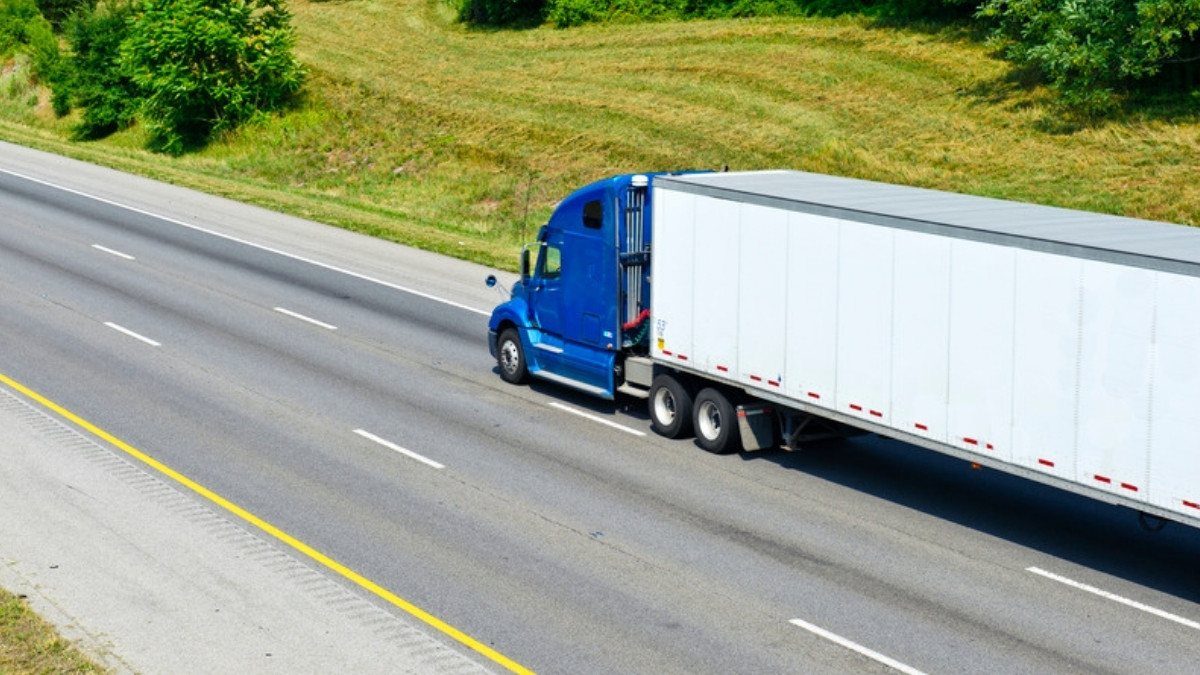
A tractor-trailer drifts into your lane near the Ashley Phosphate Road exit on I-26 and spins your car around. You may not know the truck's company, its insurer or even the state it came from. For truck accident lawyers in Charleston County, the location comes first, since it points to the agency, the rules and the records to check. In the 2024 SCDPS Fact Book, all five of the county's most crash-prone intersections sit on I-26.
The first question is which rulebook bound the truck. Federal rules reach interstate trucks from 10,001 pounds. South Carolina extends them to trucks running only inside the state once they reach 26,001 pounds. Photograph the name and USDOT number on the cab, and keep every form the officer hands you.
The two lawyers at Frost Law Group share a last name, a marriage and a Linwood Lane office. Tara L. Frost and Jack C. Frost take crash cases from Charleston County and nearby counties. Tara's personal injury work focuses on car and truck crashes. From July 2022 through August 2025, she served as a Dorchester County Magistrate Judge. That service showed her how judges weigh evidence, preparation and the credibility of witnesses.
Call Frost Law Group at (843) 419-6653 and ask for a free consultation on a truck crash in Charleston County. You reach a lawyer rather than a call center, and the conversation stays confidential.
Free case review
Tell us what happened. An attorney will explain your options and what to do before you talk to the insurance company.
On this page
- Why Truck Accident Lawyers in Charleston County Study the I-26 Interchanges
- I-526 and US 52 Crash Claims a Charleston County Semi Truck Attorney Handles
- Commercial Vehicle Rules a Charleston County 18 Wheeler Lawyer Applies
- Out of State Truck Drivers in a Charleston County Trucking Accident Attorney's Case
- Trauma Care at MUSC and Trident After a Charleston County Truck Crash, With a Lawyer
- Talk With Truck Accident Lawyers in Charleston County About the Carrier's Records
Why Truck Accident Lawyers in Charleston County Study the I-26 Interchanges
Of the 661 collisions at Charleston County's five worst intersections in 2024, officers classed 565 as property damage only. Each of those five locations lies along I-26. Frost Law Group can take up a truck claim from any of them by looking first at the location, the lane and the time.
SCDPS ranks those intersections by the route and street names officers record on each report. For a truck crash, the location on the report can show where traffic merged and which lane the truck held. Each one also raises its own rule or record question, from post-crash testing to electronic logs. Those questions are worth answering before anyone asks a carrier for its files.
Timing matters too. Grouped in three-hour blocks, South Carolina's 2024 commercial vehicle collisions peaked from noon to 3 PM, with 686, while all collisions statewide peaked from 3 PM to 6 PM. For a truck, the clock time of a crash means little until it sits beside the hour the driver came on duty. Together they can show how much of the driver's 14-hour daily window under 49 CFR 395.3 had run. The driving log can then show whether a 30-minute break was due.
Tow-Away Truck Crashes Where I-26 Meets US 78
Officers logged 190 collisions at I-26 and US 78 in 2024, more than at any other Charleston County intersection, and 167 of them caused property damage only. That count cannot be pinned to a single exit, because SCDOT's 2024 file shows US 78 meeting I-26 in two places. One of them is Exit 205 at University Boulevard. Even a crash with no injury can require a federal drug and alcohol test of the truck driver.
Under 49 CFR 382.303, a tow-away crash can obligate the carrier to test a driver who needs a commercial license. The rule needs two things, a vehicle towed off with disabling damage and a moving-violation citation for the trucker. The citation must reach the trucker within 8 hours to require an alcohol test and within 32 hours to require a drug test. Whether the carrier owed a test turns on both facts, which a lawyer confirms from the report and the carrier's files.
Passing Room Behind a Truck at Ashley Phosphate Road
Ashley Phosphate Road, which SCDOT's 2024 Charleston County file numbers S-75, meets I-26 at the county's second worst intersection. Officers logged 174 collisions there in 2024, and those crashes left 39 people injured. Section 56-5-1930(B) holds a following rule written for trucks and vehicles towing others.
The rule applies on roads outside business and residence districts, whenever conditions allow. A truck trailing another truck must leave a gap that a passing vehicle can safely enter. Picture two tractor-trailers running close together past the Ashley Phosphate Road ramp, leaving a passing car nowhere to pull in. Whether the clause reaches a given stretch of I-26 depends on the surroundings, which maps and scene photos show.
The I-26 and I-526 Junction Seen Through a Truck's Electronic Log
I-26 meets I-526 at the county's third worst crash intersection, with 118 collisions and 20 people hurt in 2024. A truck changing interstates there may be many hours into its trip. Carriers covered by the federal hours rules generally must use electronic logging devices, with narrow exceptions for paper logs.
Under 49 CFR 395.26, the device logs the date, time, location, engine hours and mileage at every duty status change. When the truck has been moving for an hour without a status change, the device adds an automatic entry. Those entries can show the truck's approximate position and how many hours the driver had logged on duty before the crash.
Aviation Avenue, Route S-195 and the Agency Behind the Report
SCDOT's Charleston County file names S-1342 Aviation Avenue, and I-26 at that road logged 93 collisions in 2024. The fifth location on the list, I-26 at S-195, logged 86, and SCDOT's count file gives S-195 no street name. SCDPS cautions that differences in route numbers and names on reports may affect its counts. A lawyer matches each report's location against photos and the truck's own data.
Several agencies write those reports. Charleston police investigated 5,198 of the county's 2024 collisions, North Charleston police took 4,780 and the Highway Patrol took 1,497. Jack C. Frost spent fourteen years in law enforcement, including detective work with the Charleston County Sheriff's Office. He knows how officers fill in a report's location entries and unit numbers, and how they write the narrative that follows.
I-526 and US 52 Crash Claims a Charleston County Semi Truck Attorney Handles
Picture a box truck climbing the ramp from Rivers Avenue onto I-526 while traffic stacks up toward I-26. On I-526, SCDOT's 2024 counts put the Rivers Avenue interchange right after the I-26 junction. Frost Law Group handles truck claims on both roads, and the useful records differ between them.
In 2024, Charleston County logged 1,140 collisions on US 52 and 585 on I-526, the Mark Clark Expressway. Crashes on US 52 killed 7 people and seriously injured 31. I-526 crashes killed 2, seriously injured 7 and left 159 others with lesser injuries.
The Mark Clark Expressway Between Leeds Avenue and Rivers Avenue
SCDOT's 2024 counts follow I-526 past Leeds Avenue, Dorchester Road and I-26 to Rivers Avenue. SCDOT estimated 92,100 vehicles a day between West Montague Avenue and I-26 and 84,600 between I-26 and Rivers Avenue. A truck on a local run along that stretch may not carry an electronic log at all.
A driver can skip the log under 49 CFR 395.1(e) by staying within 150 air miles of the usual work location. The driver must also finish each shift back at that location within 14 hours and meet the rule's other conditions. The carrier then keeps six months of time records listing when the driver reported, how long the driver worked and when the shift ended. A lawyer asks which system the carrier used before requesting either one.
Statewide, officers marked the other vehicle as contributing in 58.4% of 2024 crashes between a commercial vehicle and another vehicle. They marked the commercial vehicle in 36.9%. A carrier's insurer may cite those entries, but they record officers' opinions, not findings about a particular merge near Dorchester Road. Fault in one I-526 wreck rests on its own proof, which a lawyer reviews before offering a view.
Rivers Avenue and Meeting Street Along US 52
Where other roads cross US 52, SCDOT's 2024 Charleston County file almost always labels it Rivers Avenue or Meeting Street. Traffic ran 57,000 vehicles a day between Remount Road and Ashley Phosphate Road. It topped 60,000 on each of the last two segments before the Berkeley County line.
A truck on US 52 deals with signals, driveways and turning traffic that a freeway keeps apart. Two US 52 scenarios show how the legal questions change for truck accident lawyers in Charleston County.
A Truck Turning Left Across an Oncoming Motorcycle
Suppose a tractor-trailer turns left from US 52 into a shopping center as a motorcycle comes through a green light. Section 56-5-2320 required the truck driver to yield to oncoming traffic near enough to be an immediate hazard. Riders hurt this way are among the people Frost Law Group represents in motorcycle crash claims across Charleston County. A jury may still weigh the rider's speed against the truck's turn, and the evidence decides that comparison.
Dump Trucks and Work Trucks That Never Leave South Carolina
Construction and maintenance work accounted for 477 of the commercial vehicles in South Carolina's 2024 collisions. Of those, 24 were in fatal crashes. Dump bodies appeared on 315 vehicles, 10 of them in fatal crashes. Picture a dump truck hauling fill between two job sites off US 52 without ever crossing a state line.
Under Section 56-5-4240, the federal safety rules reach that in-state truck once its weight or weight rating hits 26,001 pounds. Other law and SCDPS regulations can carve out exceptions. A lighter in-state truck is generally exempt. The exceptions are placarded hazardous loads and vehicles designed or used for 16 or more people, driver included. Otherwise, South Carolina traffic statutes and ordinary negligence law set the driver's duties.
Are Truck Crashes Deadlier on US Routes Than on the Interstate?
Statewide numbers from 2024 suggest so. US primary routes carried 818 commercial vehicle collisions that year, with 43 fatal, against 1,054 and 36 fatal on interstates. Truck tractors showed the same pattern, 24 fatal crashes among 1,312 on US routes against 29 among 2,360 on interstates. Those are statewide totals, and a single Rivers Avenue wreck still turns on its own evidence.
Commercial Vehicle Rules a Charleston County 18 Wheeler Lawyer Applies
Under 49 CFR 390.5, federal commercial vehicle rules start at 10,001 pounds for a vehicle used in interstate commerce. Either the actual weight or the weight rating counts, whichever is greater. A tractor-trailer rated at or over that line and hauling freight between states meets the test. Its driver and carrier then face federal rules on hours and markings, and on drug testing and insurance where those rules reach.
Section 56-5-4010(B) puts enforcement of those rules, and of size and weight laws, with SCDPS's State Transport Police Division. Frost Law Group can ask whether its officers inspected the truck or driver after the crash. Whether a violation actually caused the crash is a separate question, and the evidence has to answer it.
Driving Hours Under 49 CFR 395.3 on a Run Into Charleston County
Section 395.3 of the federal motor carrier rules sets the daily limits for drivers of property-carrying trucks. After 10 straight hours off duty, a driver gets a 14-hour window with no more than 11 hours of driving. Once 8 hours of driving pass, the driver needs a 30-minute break from driving. Off-duty time, sleeper berth time and on-duty time away from the wheel all count toward that break.
Weekly caps stop driving at 60 on-duty hours in 7 days, or 70 in 8 days for carriers running daily. Picture a driver who rested from midnight to 10 AM, came on duty and was still driving on I-26 at 1 AM. That driver's 14-hour window closed at midnight, so the last hour of driving broke the rule unless an exception applied. A violation on paper still has to connect to the crash, which a lawyer weighs with the other proof.
The Carrier Name and USDOT Number on Both Sides of the Cab
Under 49 CFR 390.21T, a self-propelled commercial vehicle subject to the federal rules must display its operating carrier's name and USDOT number. The marking must appear on both sides, in contrasting letters readable from 50 feet in daylight. When another company's name also appears, the words "operated by" must precede the operating carrier's name and number. A photo of the cab can identify the carrier before the full collision report is available.
Picture a leased rig on I-26 with a retailer's name painted on the cab and an "operated by" line beneath it. The carrier on that line is ordinarily the company whose logs and insurance matter first. Frost Law Group takes on tractor-trailer wreck claims in which the tractor, trailer and cargo belong to different businesses. The marking is where that sorting begins.
Federal Insurance Floors Behind an Interstate Carrier
Federal insurance minimums in 49 CFR 387.9 depend on the cargo and the carrier. A for-hire interstate carrier of general freight needs at least $750,000 of coverage on vehicles rated from 10,001 pounds. Oil or most listed hazardous materials require $1,000,000, and some bulk hazardous substances require $5,000,000. These amounts set minimums and do not cap what an injured person may recover.
The 30-day limits disclosure in Section 38-77-250 covers only non-fleet private passenger policies, so it generally does not reach a commercial trucking policy. Frost Law Group applies the same federal floors in truck crash claims in Summerville and across Charleston County. How much coverage stands behind a particular truck shows only in the policy papers themselves.
Out of State Truck Drivers in a Charleston County Trucking Accident Attorney's Case
How does a Charleston County lawsuit reach a trucker who lives in another state and went home after the crash? The question is common in South Carolina, where SCDPS counted 42.7% of the commercial drivers in 2024 collisions as out-of-state drivers. South Carolina licenses covered 1,985 of the 3,466 commercial drivers involved.
A license from elsewhere does not change which rules governed the truck. It does change how a lawsuit reaches the driver and the carrier, and where their records sit. Frost Law Group can plan for both before filing, using state and federal rules written for this situation.
Serving a Driver or Carrier Based Outside South Carolina
A lawsuit moves forward only after the plaintiff serves the defendant with the summons and complaint. Service on a defendant in another state can take extra steps. South Carolina law offers one route for drivers, and federal rules add a second route for interstate carriers. Either route can put a Charleston County case in motion without anyone finding the defendant in person.
The SCDMV Director as a Nonresident Driver's Agent
Section 15-9-350 treats a nonresident who drives on South Carolina roads as naming the SCDMV Director to receive court papers. It covers suits arising from a crash here, including one where someone drove for the nonresident or under that person's direction. Picture an out-of-state driver who rear-ends a car at the Aviation Avenue exit and leaves South Carolina that night. Service on the Director can still reach that driver, if the plaintiff follows the statute's steps.
A Signed Return Receipt and the Affidavit of Compliance
Section 15-9-370 sets out the steps. The plaintiff leaves a copy of the process, with a fee, at the Director's office. Notice of that service and a copy of the process then go to the defendant through a mail service that brings back a signed receipt. Afterward, the plaintiff files the return receipt and an affidavit of compliance with the summons and complaint.
A Refused Envelope and Service by Open Mail
A defendant may simply refuse to sign for the envelope. Section 15-9-380 answers that move. The plaintiff keeps the returned envelope and sends the notice and summons by open mail. Filing the envelope and an affidavit of mailing with the clerk of court then gives the service the same force as personal service.
Process Agents Named on a Carrier's Form BOC-3
Federal rules give a second route against an interstate carrier. Under 49 CFR Part 366, a motor carrier must name a process agent for every state it operates in or crosses. The designations go on Form BOC-3, and each agent must live or keep an office in its state. A carrier running trucks through Charleston County on I-26 should therefore have a named agent in South Carolina.
A Carrier Register That Lists Crashes in Other States
Carriers must keep each entry in their accident register for three years after the crash, under 49 CFR 390.15(b). Each entry names the state and nearest town, the date, the driver and the count of injuries and deaths. For an out-of-state carrier, that register can show crashes elsewhere that no South Carolina report mentions.
Frost Law Group can request the register, and discovery offers a route if the carrier will not hand it over. A carrier based elsewhere may keep its files far from Charleston County. What an earlier crash proves about this one is a question the court decides under the rules of evidence.
Federal Court When the Driver and Carrier Come From Other States
Out-of-state defendants can sometimes move a case to federal court. Section 1332 of Title 28 of the United States Code covers suits between citizens of different states. More than $75,000 must be at stake, not counting interest and costs.
Section 1441 of that title lets a defendant remove such a case to the federal division covering the county. For Charleston County, Section 121 names the Charleston Division, which holds court in Charleston. Section 1446 generally gives the defendant 30 days after receiving the complaint to file for removal.
Diversity alone cannot support removal if any properly joined and served defendant is a South Carolina citizen. Suppose a shipper incorporated and based in South Carolina loaded the trailer, and the plaintiff properly joins and serves it. The case can then stay in the Court of Common Pleas at 100 Broad Street. A lawyer sorts out every party's citizenship before filing.
Does an Out-of-State License Change Which Trucking Rules Apply?
No, the federal rules follow the vehicle and the interstate trip, whatever state issued the driver's license. South Carolina's 26,001-pound rule in Section 56-5-4240 matters only for trucks operating entirely inside the state. Its traffic statutes, such as the following-distance rule in Section 56-5-1930, apply to every driver on its roads. The trip records show which set of rules governed the truck.
Trauma Care at MUSC and Trident After a Charleston County Truck Crash, With a Lawyer
On the trauma center roster the Department of Public Health publishes, MUSC is the Lowcountry Region's only Adult Level I center. MUSC, at 171 Ashley Avenue, also holds South Carolina's only Pediatric Level I designation. In North Charleston, Trident Medical Center holds the region's only Adult Level II designation. So both of the Lowcountry's highest adult trauma levels sit in Charleston County.
DPH also posts the adult field triage and bypass protocol that EMS crews follow for major trauma. Where an ambulance goes depends on that protocol and the patient's condition. A person hurt on I-26 may reach either center, or a closer hospital first.
Of 145 deaths in South Carolina's 2024 commercial vehicle collisions, 123 were people riding in the other vehicles. Officers coded another 130 people in those other vehicles with suspected serious injuries, against 44 inside the trucks and buses. Frost Law Group can gather the records from each facility that treated an injured person, starting with the ambulance run report.
Treatment Away From the Scene and the Carrier's Testing Duty
The federal testing rule turns partly on medical care. Under 49 CFR 382.303, an injury crash can trigger a drug and alcohol test. Someone must immediately receive treatment away from the scene, and the truck driver must get a timely moving-violation citation.
An ambulance record and an emergency department arrival time can prove the first element. Picture a driver carried from the University Boulevard ramp by ambulance as an officer tickets the trucker. The citation and the carrier's test file would prove the rest, if they exist. Whether a test happened, and what it showed, are facts a lawyer requests in writing.
A Three-Year Filing Deadline Against Short Record Periods
Most South Carolina injury suits have three years under Section 15-3-530. The Tort Claims Act governs a crash with a government truck instead, and its Section 15-78-110 sets two years from when the loss was discovered or reasonably should have been. A third year opens only if a verified claim reached the agency ahead of any suit. Section 15-78-80(d) makes the agency's receipt of that claim due within one year of the same date. Federal record rules for trucking companies run shorter still.
Driver vehicle inspection reports need to survive only three months, and hours-of-service records six months. Once those minimums pass, the federal rules no longer require the carrier to keep either file, even while an injured person is still in treatment. Frost Law Group can put a preservation request in writing before those periods run out.
What if the Truck Driver Also Went to the Hospital?
The testing duty stays in place. Under Section 382.303(e), nothing in the rule delays necessary medical care. A driver may also leave the scene to get emergency treatment. A driver facing a required test still has to stay readily available for it.
Section 382.303(g) accepts a police breath or blood test for alcohol and a police urine test for drugs. Each must meet the governing testing standards, and the carrier must obtain the results. A lawyer can ask the carrier and the investigating agency for both.
Talk With Truck Accident Lawyers in Charleston County About the Carrier's Records
Start with the side of the truck. The name and USDOT number there let Frost Law Group identify the carrier and ask it in writing to hold its records. Truck accident lawyers in Charleston County can then match those files against the crash location, the report and your medical chart. A lawyer cannot promise how a claim ends, yet a written request puts the carrier on notice to keep its files.
Bring the report number, truck photos and discharge papers to a free, confidential consultation at 128 Linwood Lane, Summerville, SC 29483. Friday meetings after noon are possible on request. Paralegal Cassie Snyder helps with the case file and with client communication.
Call (843) 419-6653 or leave the Summerville office a message online that gives the crash date, the nearest exit and the name painted on the truck's door.

The attorneys at Frost Law Group
 Tara L. FrostAttorney at Law · Personal injuryTara L. Frost focuses on personal injury, car accident and truck accident claims. A lifelong resident of the tri-county area, she meets clients at the Linwood Lane office in Summerville.
 Jack C. FrostAttorney at Law · Former Summerville police officer and Charleston County Sheriff's Office detectiveJack C. Frost spent fourteen years in law enforcement with the Summerville Police Department and the Charleston County Sheriff's Office before he practiced law.