
Tractor Trailer Accident Lawyers in Summerville
- Free consultation
- No fee unless we win
- Available 24/7
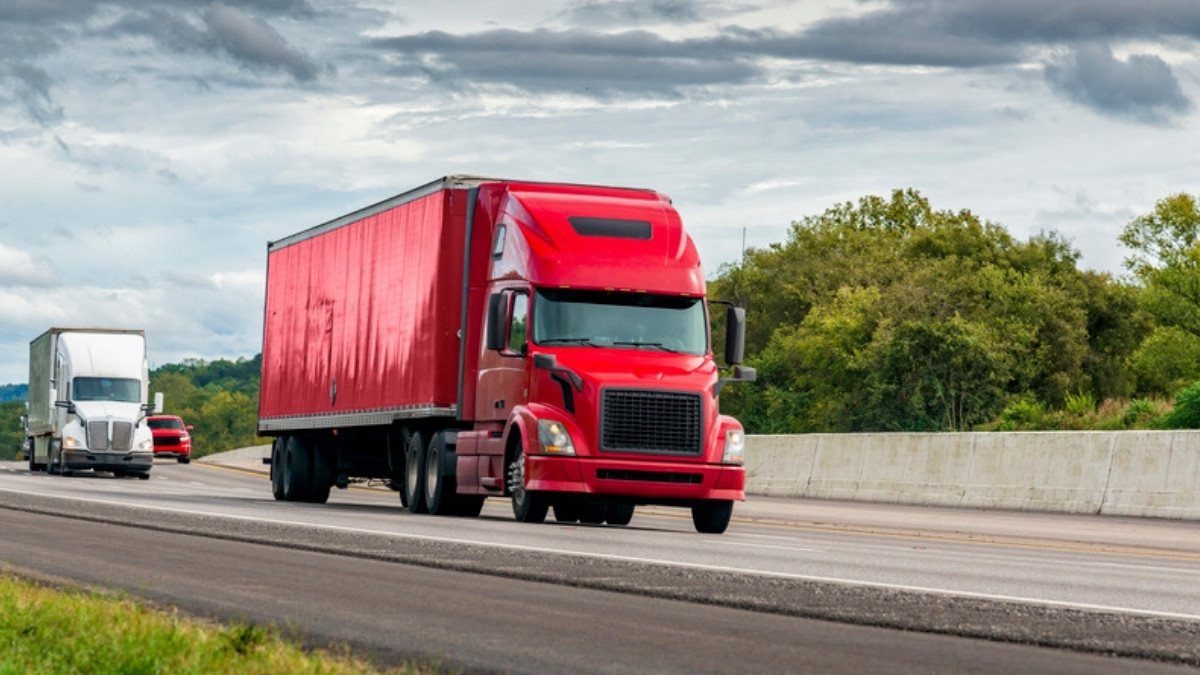
A tractor-trailer is three things moving at once, a tractor, a trailer and the freight it carries. If that rig hits you near the Jedburg Road exit on I-26, each part may have a different owner. Tractor trailer accident lawyers in Summerville work through the rig one part at a time. Federal rules set separate standards for the brakes, the coupling, the load and the driver.
Some of those records do not last long. A carrier need only keep a driver inspection report that flags a defect for three months under 49 CFR 396.11. Get medical care first. Then photograph the tractor's door, the trailer's rear doors and the steel bar hanging beneath them. Keep the collision report number too.
Frost Law Group has two attorneys, Tara L. Frost and Jack C. Frost, and one office in Summerville. Tara's personal injury practice focuses on car and truck accidents. Jack spent fourteen years as a Summerville police officer and corporal and as a deputy and detective with the Charleston County Sheriff's Office. He learned how an investigation comes together and how an officer puts a crash scene on paper.
Reach Frost Law Group at (843) 419-6653 for a free, confidential consultation about the rig that hit you. An attorney at the firm takes the call, not a call center.
Free case review
Tell us what happened. An attorney will explain your options and what to do before you talk to the insurance company.
On this page
- Why Tractor Trailer Accident Lawyers in Summerville Inspect the Whole Rig
- Brakes, Tires, and Maintenance Records a Summerville 18 Wheeler Lawyer Requests
- Cargo and Coupling Failures a Summerville Semi Accident Attorney Examines
- Driver Logs and Qualification Files a Summerville Big Rig Crash Lawyer Reviews
- Underride, Jackknife, and Wide Turn Crashes Seen by Summerville Truck Injury Lawyers
- The Federal Insurance Minimum a Summerville Tractor Trailer Crash Attorney Starts From
- Call Tractor Trailer Accident Lawyers in Summerville About the Truck That Hit You
Why Tractor Trailer Accident Lawyers in Summerville Inspect the Whole Rig
SCDPS sorted the vehicles in South Carolina's 2024 commercial vehicle crashes by configuration. A truck pulling a semitrailer led the named categories, with 954 of 3,466 vehicles. The same table ties 49 deaths to collisions involving those rigs. Lawyers at Frost Law Group can start a tractor-trailer claim with a question the officer's report may not answer. Who owned, loaded and maintained each unit of the rig?
The Fact Book defines a truck tractor as a single motorized unit designed mainly to draw trailers. The trailer behind it may belong to a leasing company. A container chassis may come from an intermodal equipment provider with its own repair duties under 49 CFR 396.3. Under 49 CFR 396.17, the tractor and the semitrailer must each pass an annual inspection.
Picture a rig merging onto I-26 at the Nexton Parkway interchange, Exit 197. SCDOT's interstate diagrams label that exit Berkeley County. The tractor could belong to an out-of-state carrier and the trailer to a leasing firm. A shipper may have loaded the freight and sealed the doors. Tractor trailer accident lawyers in Summerville request records from each company by name. Which one answers for which failure depends on contracts and proof a lawyer has to gather.
Separate Owners for the Tractor, the Trailer and the Chassis
The code sheet for South Carolina's collision report appears in the 2024 Fact Book. It gives officers a vehicle attachment field with codes for a semitrailer, a flatbed, twin trailers and a petroleum tanker. That entry shows what the tractor pulled, not who owned it. For a vehicle a carrier controls for 30 consecutive days, 49 CFR 396.3 requires maintenance records. When the carrier does not own the unit, the record must name whoever furnished it. That name can lead a lawyer to the trailer's owner.
Does a Rig That Never Leaves South Carolina Follow the Federal Rules?
Generally, yes, once it reaches 26,001 pounds. Under Section 56-5-4240, the Federal Motor Carrier Safety Regulations reach intrastate commercial vehicles and drivers at or over that line. The count uses weight or weight rating and treats the tractor and trailer as one combination. Other law or a Department of Public Safety regulation can carve out exceptions, and SCDPS enforces the rules through its State Transport Police Division. Frost Law Group handles box truck and delivery van crashes on their own terms. A box truck may fall on either side of that line.
Brakes, Tires, and Maintenance Records a Summerville 18 Wheeler Lawyer Requests
Under 49 CFR 393.48, every brake on a commercial vehicle must be capable of operating at all times. The exceptions are narrow, such as a raised lift axle. A second rule, 49 CFR 393.42, generally requires brakes acting on every wheel. On a tractor-trailer, that duty reaches the trailer's wheels as fully as the tractor's.
Tractor trailer accident lawyers in Summerville compare those rules with the carrier's own files. Picture a loaded rig that cannot stop for traffic backed up on the Exit 199 ramp to North Main Street. The brake and tire records may explain why, or they may point toward speed or distraction. A defect in a file does not prove it caused the crash, and that link is a point the evidence has to establish.
Air Brakes on Both the Tractor and the Trailer
An air-braked tractor pulling an air-braked trailer needs two ways to set the trailer's emergency brakes under 49 CFR 393.43. One must trigger on its own at a set air pressure between 20 and 45 pounds per square inch. The other is a manual control the driver can reach from the seat. A lawyer asks for the service records on both air systems, since the two units may use different shops.
Antilock Brake Rules Tied to the Build Date
Whether a unit needs antilock brakes depends on when it was built. Under 49 CFR 393.55, truck tractors made on or after March 1, 1997, need an antilock system. Air-braked trailers need one from March 1, 1998, onward. Those trailers also carry an outside lamp that signals an antilock malfunction. A tractor made on or after March 1, 2001, must relay that trailer fault to a lamp in the cab.
Automatic Adjusters and the Pushrod Stroke Limit
Air-braked commercial vehicles manufactured on or after October 20, 1994, must have automatic brake adjusters under 49 CFR 393.53. If the adjuster sits outside the brake with an exposed pushrod, an indicator must show under-adjustment. Appendix A to Part 396, the federal annual inspection standard, rejects any brake whose pushrod stroke passes its readjustment limit. Frost Law Group can request the last annual report on each unit, since the tractor and trailer each carry their own.
Tread Depth and Sidewall Damage on Steer and Trailer Tires
A truck tractor's front tires need at least 4/32 of an inch of tread under 49 CFR 393.75. Other tires need 2/32 of an inch, measured in a major groove. No tire may run with ply or belt material exposed, a tread or sidewall separation, or a flat or audible leak. The rule also bars loading a tire past the weight marked on its sidewall, outside a special state permit. Tread strips near the College Park Road exit could come from either unit, so the tire records for both matter.
Repair Orders and Defect Reports Behind Each Unit
A carrier must systematically inspect, repair and maintain every vehicle it controls, according to 49 CFR 396.3. Its records must show due dates, plus the date and nature of each repair. A signed driver report of a leaking brake chamber, with no repair noted, reads very differently from a clean file. Repair orders for both units deserve a request by date range, since a shop may have worked on only one.
Cargo and Coupling Failures a Summerville Semi Accident Attorney Examines
A flatbed loaded with bundled plastic pipe leaves a yard off Jedburg Road and heads toward Charleston on I-26. One of its straps has a cut in it. SCDPS counted 136 collisions statewide in 2024 whose first harmful event was a cargo or equipment loss or shift. A first harmful event is the first event in a crash that causes injury or damage. In another 22, the first harmful event was a separation of units. Both counts cover every vehicle type, not just tractor-trailers.
The load and the hitch raise two separate questions. The shipper that loaded the freight and the carrier that owns the coupling may be different businesses. Flatbeds made up 384 of the 3,466 vehicles in the Fact Book's 2024 commercial vehicle tables. Whether a shifted load or a failed coupling caused a given crash turns on physical evidence a lawyer must preserve.
Federal Tie-Down Rules for Flatbeds and Closed Vans
Under 49 CFR 393.100, cargo has to stay contained or secured so it cannot leak, spill, blow or fall. It also cannot shift enough to upset the truck's stability or handling. Under 49 CFR 393.102, the securement must hold against set forces without passing its breaking strength. Those include 0.8 times the force of gravity pushing forward and 0.5 times gravity pushing sideways. In a closed van, freight braced against strong walls or other freight can meet that standard. Where tie-downs do the work, 49 CFR 393.106 sets a floor for their combined working load limit, figured by the rule's formula. That rated capacity must equal at least half the weight of the cargo they hold.
How Many Tie-Downs a Long Article Needs
Length drives the count under 49 CFR 393.110 when nothing blocks an article from sliding forward. An article no longer than 5 feet needs one tie-down if it weighs no more than 1,100 pounds. A heavier short article needs two, as does any article longer than 5 feet up to 10 feet. Past 10 feet, the count starts at two and adds one for each further 10 feet or part of 10 feet. So an unblocked 24-foot bundle of plastic pipe needs at least four. Section 393.110(d) sets these counts aside for items such as steel beams that need special fastening methods.
Cargo Checks in the First 50 Miles and Every 150 Miles
The driver must check the cargo and its securement within the first 50 miles of a trip, per 49 CFR 392.9. Rechecks follow at each change of duty status, after 3 hours of driving, or after 150 miles, whichever comes first. The rule excuses a driver of a sealed trailer with orders not to open it. It also excuses the driver when the load sits in a way that makes inspection impracticable. In those cases, a lawyer at Frost Law Group may look harder at the shipper that loaded the trailer.
Log Loads and Other Freight Section 56-5-4100 Leaves Out
Section 56-5-4100 keeps a vehicle off South Carolina highways unless its construction or loading stops the load from escaping. The section also states that nothing in it bars a damages claim. Subsection (G) exempts certain cargoes from the load rules, such as forest products, poultry and livestock, plus paper and textile products. A rig under the federal rules still faces 49 CFR 393.116, which calls for bunks or stakes that cradle the logs. Each outer log must touch at least two of those supports. Which rule set reached the truck is the first question in any cargo claim.
The Fifth Wheel Lock and Brakes That Set on Breakaway
A semitrailer couples to the tractor at the fifth wheel, which holds the trailer's kingpin. The fifth wheel's lower half must attach firmly to the tractor's frame under 49 CFR 393.70. Its lock must hold both halves together until someone works a manual release. The federal annual inspection standard fails a fifth wheel with missing mounting fasteners or cracked welds. More than 3/8 inch of play at the pivot bracket pin also fails. If a trailer breaks free, 49 CFR 393.43 requires its brakes to set on their own and hold for at least 15 minutes. A lawyer asks who coupled the trailer and whether the driver checked the coupling before the trip.
Driver Logs and Qualification Files a Summerville Big Rig Crash Lawyer Reviews
A driver qualification file opens with the job application and grows with each check the carrier runs. The file stays with the carrier while the driver works there and for three years after, as 49 CFR 391.51 requires. Tractor trailer accident lawyers in Summerville read it beside the driver's duty logs. The file shows whom the carrier put in the cab. The logs show what that driver did before the crash.
Tara L. Frost held a seat on the Dorchester County magistrate bench from July 2022 until August 2025. That time showed her how a court weighs documents, preparation and credibility. A gap in a driver's file is a fact the carrier has to explain. What it proves in a given case depends on the rest of the evidence a lawyer gathers.
Hiring Checks a Carrier Must Keep on File
Within 30 days of hiring, 49 CFR 391.23 requires the carrier to request the driver's record from each licensing state. That record covers the prior three years. The carrier must also look into the driver's safety history with DOT-regulated employers over those years, crashes included. Every twelve months after that, 49 CFR 391.25 calls for a fresh driving record and a review. The review gives great weight to speeding, reckless driving and impaired driving.
A Road Test That Covers Coupling, Turning and Backing
Before a new driver runs a rig for a carrier, 49 CFR 391.31 calls for a road test. The test uses the type of vehicle the carrier plans to assign. With combination units, it covers coupling and uncoupling, along with turning, braking, backing and parking. Under 49 CFR 391.33, a carrier may accept a valid commercial driver's license instead. That substitute does not include double or triple trailer and tank vehicle endorsements. For a driver pulling doubles, a lawyer checks which document the file actually holds.
The Duty Log That Rides in the Cab
Carriers under the federal hours rules have generally had to use electronic logging devices since December 18, 2017. In a tractor-trailer case, the log does more than count hours. Under 49 CFR 392.9, each change in duty status also triggers a cargo recheck. A duty change logged at a fuel stop in Ladson marks a point where the driver owed a look at the straps. Frost Law Group also handles wrecks involving tired truck drivers, where the same entries count against the federal driving limits.
Must a Carrier Pull a New Hire's Driving Record?
Yes, under the federal rules. If a licensing agency sends nothing back, 49 CFR 391.23(b) requires the carrier to document a good faith effort. A file holding neither the record nor that proof leaves the carrier with something to explain. Whether the gap supports a claim against the carrier itself is a South Carolina law question. The answer depends on the facts, including how the gap connects to the crash.
Underride, Jackknife, and Wide Turn Crashes Seen by Summerville Truck Injury Lawyers
A common belief holds that a driver whose car strikes the back of a trailer is always at fault. South Carolina uses modified comparative negligence instead. A jury sets each party's share of fault and trims an award by the injured person's share. Once a person's share passes 50%, that person recovers nothing. A trailer left on a dark shoulder without triangles brings the carrier's conduct into that allocation. So does a missing rear guard.
In 2024 multi-unit collisions involving a truck tractor, officers marked 46.4% of the truck tractor drivers as contributing. They marked 43.7% of the other units the same way. Tractor trailer accident lawyers in Summerville look closely at underride, jackknife and wide turn crashes. Frost Law Group can build the fault picture in each one from scene evidence and equipment records. No lawyer can predict how a jury will split it.
When a Car Slides Under the Back of a Trailer
South Carolina's collision report has its own underride and override field. The code sheet in the 2024 Fact Book lists an underride with compartment intrusion, an underride without intrusion, and an override. That entry tells a lawyer whether the trailer's rear reached into the car's passenger compartment. The next question is whether the trailer carried the guard the law requires.
Rear Impact Guards Under 49 CFR 393.86
Federal rear guard rules turn on a trailer's build date. Appendix A to Part 396 sets the annual inspection standard for those guards. A newer trailer fails if its guard is missing, loose, cracked at a weld or mounted too high. A lawyer can ask for the guard's measurements and photos before anyone repairs, scraps or sells the trailer.
Trailers Built on or After January 26, 1998
Trailers and semitrailers built on or after January 26, 1998, need a guard meeting Federal Motor Vehicle Safety Standard No. 223. The rule covers units rated at 10,000 pounds or more. The guard's horizontal bar may sit no higher than 22 inches off the ground at any point. It must reach within 4 inches of each side and sit within 12 inches of the rear. Pole trailers, pulpwood trailers, low chassis vehicles and special purpose vehicles fall outside this rule.
Older Trailers and Tall Straight Truck Bodies
An older standard covers trailers built before that date, along with straight trucks. It applies when the rear bottom edge of the body sits more than 30 inches off the ground empty. The guard's bottom then may sit no higher than 30 inches. It may sit up to 18 inches in from each side and 24 inches forward of the rear. Truck tractors themselves fall outside the rear guard rule.
South Carolina's 53-Foot Trailer Guard Requirement
Section 56-5-4070 of the South Carolina Code caps a trailer in a two-unit tractor combination at 53 feet, load included. That limit applies on the interstate system and other designated highways, and subsection (D) sets the same cap elsewhere. A 53-foot trailer must also carry a rear underride guard under the same statute. So a missing guard on I-26 may break a state statute and a federal regulation at once.
A Rig Stopped on a Dark Interstate Shoulder
SCDPS counted 1,252 truck tractor collisions in darkness with clear or cloudy weather in 2024. Of those, 27 were fatal. When a commercial vehicle stops in a travel lane or on the shoulder for any reason other than a necessary traffic stop, 49 CFR 392.22 requires hazard flashers at once. Warning devices must go out within 10 minutes. On a divided highway such as I-26, two go 100 and 200 feet back. A third goes on the traffic side within 10 feet of the rear. It also matters whether the trailer carried the reflective sheeting or reflectors that 49 CFR 393.11 requires on wide, heavy trailers built from December 1, 1993, onward.
Jackknife Crashes and the Report's Sequence of Events
A jackknife happens when a trailer swings out of line and folds toward its tractor. South Carolina's report lets an officer code up to four events for each vehicle, and a jackknife has its own code. Yet SCDPS lists a jackknife as the first harmful event in only 24 collisions statewide in 2024. A trailer that folds and then strikes a car may carry a first harmful event of collision with a motor vehicle instead. Under 49 CFR 392.14, rain, fog or smoke that cuts visibility or traction calls for extreme caution and lower speed. A jackknife claim weighs the antilock records, the weather and the speed evidence together.
Wide Right Turns That Sweep a Trailer Across Lanes
Under Section 56-5-2120, a right turn and its approach must stay as close as practicable to the right-hand curb or roadway edge. For a 53-foot trailer, what counts as practicable is a fact question, since a long rig may need extra room. Section 56-5-2150 bars a turn until the move is reasonably safe and requires a signal for at least the last 100 feet. Picture a rig turning right from Dorchester Road onto Ladson Road as a car slips into the gap on its right. The SCDPS Fact Book records 49 collisions at the junction of those two roads in 2024. The signal, the mirrors and the trailer's kingpin-to-axle distance all bear on fault. Section 56-5-4070 caps that distance at 41 feet on a 53-foot trailer.
The Federal Insurance Minimum a Summerville Tractor Trailer Crash Attorney Starts From
How much coverage must the company behind a tractor-trailer carry? The answer starts with the federal schedule of limits in 49 CFR 387.9. For general freight hauled across state lines for hire, the floor is $750,000 on vehicles rated at 10,001 pounds or more. Oil and most listed hazardous materials raise it to $1,000,000. Certain bulk hazardous loads raise it to $5,000,000. The schedule lists those amounts under a column dated January 1, 1985, and an amendment published July 21, 2026, left them unchanged.
Tractor trailer accident lawyers in Summerville read the trailer's placards and the carrier's shipping papers to find the right row. Under 49 CFR 387.5, the public liability those minimums cover includes bodily injury, property damage and environmental restoration. A cargo spill cleanup and a crushed car can count against the same coverage as your medical bills. Picture a placarded tanker overturning near the Exit 205 interchange at University Boulevard, which SCDOT places in Charleston County. Frost Law Group also represents people hurt in big rig wrecks in Charleston County. What any claim may be worth depends on policies and facts a lawyer has to confirm.
The regulation sets the least a carrier must hold, not a cap on what an injured person can recover. A carrier may carry more. Under 49 CFR 387.15, an insurer must issue the MCS-90 endorsement, an add-on to the carrier's policy, in the carrier's exact name. If the harm exceeds every liability policy, your own underinsured motorist coverage may apply. Section 38-77-160 describes it as coverage for damages beyond the liability limits the at-fault party carries. Insurers must offer it, but buying it is optional, so whether you have it depends on your policy.
Call Tractor Trailer Accident Lawyers in Summerville About the Truck That Hit You
The trailer's rear guard, the straps on a flatbed and the driver's road test may sit with three different companies. At Frost Law Group, tractor trailer accident lawyers in Summerville can identify those companies and ask each one to preserve its records. No lawyer can promise how a claim will end, but a lawyer can ask for the right files early.
Jack C. Frost's family brought him to Summerville when he was eight, and he graduated from Summerville High School. Tara L. Frost has spent her whole life in the tri-county area. Bring the report number, photos of the trailer's rear and your own insurance card to a free, confidential consultation.
The office is at 128 Linwood Lane, Summerville, SC 29483. It keeps 9 AM to 5 PM hours Monday through Thursday. Friday hours stop at noon, though you can ask for a Friday afternoon meeting.
Call (843) 419-6653 or reach the Linwood Lane office online with the crash date, the location and what you recall about the truck.

The attorneys at Frost Law Group
 Tara L. FrostAttorney at Law · Personal injuryTara L. Frost focuses on personal injury, car accident and truck accident claims. A lifelong resident of the tri-county area, she meets clients at the Linwood Lane office in Summerville.
 Jack C. FrostAttorney at Law · Former Summerville police officer and Charleston County Sheriff's Office detectiveJack C. Frost spent fourteen years in law enforcement with the Summerville Police Department and the Charleston County Sheriff's Office before he practiced law.