
Who Is Liable in a Truck Accident
- Free consultation
- No fee unless we win
- Available 24/7
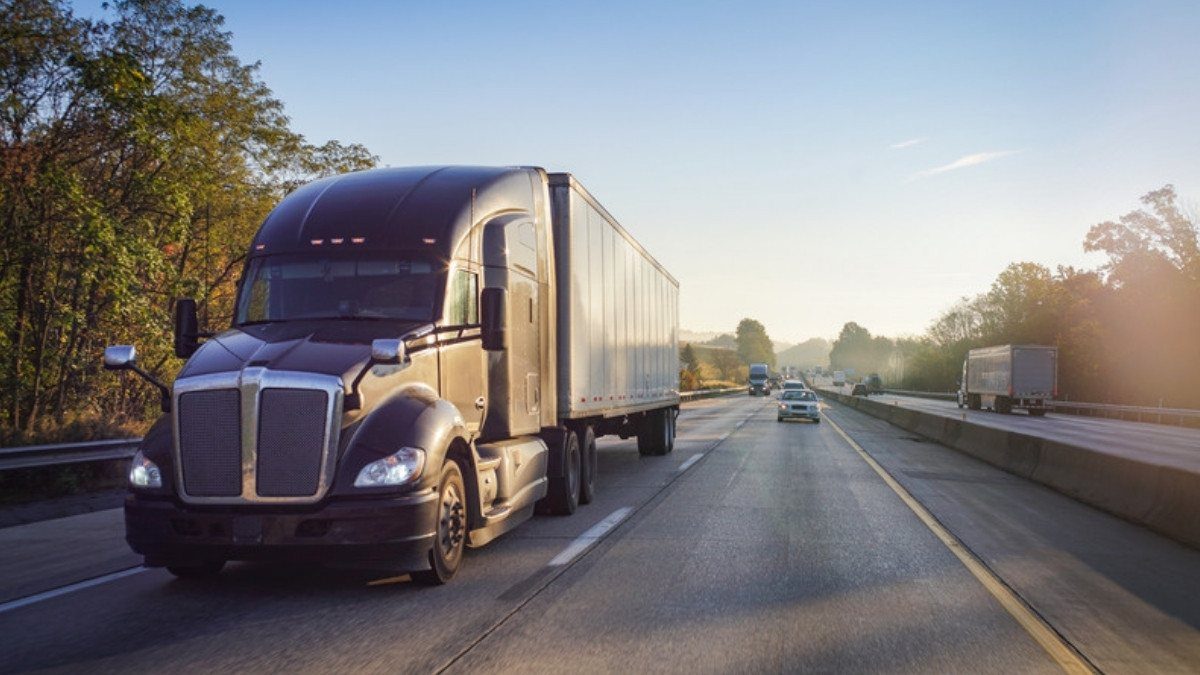
Who is liable in a truck accident depends on who controlled each part of the trip. The driver, the motor carrier, the owner or leasing company, a freight broker, the shipper or loader and a repair shop may each carry part of the responsibility. South Carolina's fault rules then decide how the damages divide among them.
Federal safety rules in Title 49 of the Code of Federal Regulations assign duties to drivers, carriers and the businesses around them. On May 14, 2026, a unanimous U.S. Supreme Court decided Montgomery v. Caribe Transport II. It held that a safety exception in federal motor carrier law keeps that law from overriding a claim that a broker carelessly hired an unsafe carrier. Each party's share of fault still depends on evidence a lawyer reviews.
From its Summerville office, Frost Law Group takes on truck crash claims, and Tara L. Frost focuses her practice on personal injury, including truck accidents. Her service as a Dorchester County Magistrate Judge ran from July 2022 to August 2025. Watching competing parties from the bench taught her how judges test evidence, preparation and credibility in a contested case.
Call Frost Law Group at (843) 419-6653 to sort out the companies behind the truck that hit you. The consultation is free and confidential, and you decide afterward whether to go further.
On this page
- When Is the Motor Carrier Responsible for Its Driver
- Can the Truck's Owner or Leasing Company Be Liable
- Can a Freight Broker Be Sued After a Crash
- What About the Shipper, the Loader or the Repair Shop
- How Is Fault Divided Among Several Trucking Defendants
- Talk With a Summerville Truck Accident Attorney About Every Party
When Is the Motor Carrier Responsible for Its Driver
A carrier may answer for its driver when the driver was hauling under that carrier's operation, depending on the relationship and the evidence. Frost Law Group can start with the truck's own markings. Under 49 CFR 390.21, a self-propelled commercial vehicle must show the carrier's legal name and USDOT number on both sides. When another company's name also appears, the operating carrier's name must appear after "operated by."
Picture a box truck on Dorchester Road with a furniture store's name on the doors. Beneath it, an "operated by" line names a carrier from another state. Out-of-state drivers made up 42.7% of the commercial vehicle drivers in South Carolina collisions during 2024. Against an out-of-state driver, Section 15-7-30(D) allows suit where the conduct mainly happened or in the injured person's home county. The federal rules also make the carrier require its drivers to follow them, under 49 CFR 390.11.
Does an Independent Contractor Label Protect the Carrier?
Not by itself. Under the federal leasing rules in 49 CFR Part 376, a carrier hauling in equipment it does not own needs a written lease. That lease hands the carrier "exclusive possession, control, and use" for the lease term. The carrier must also take "complete responsibility for the operation of the equipment" during that time. Yet the same regulation says those clauses do not decide whether the driver is a contractor or an employee. So a contractor label alone does not settle who is responsible. A lawyer reads the lease and the dispatch records to see who controlled the work.
Which Carrier Records Show Whether It Followed the Rules?
Hours records, driver files and maintenance logs carry most of that proof. A property-carrying driver may drive 11 hours within a 14-hour window after 10 hours off duty. Carriers must keep duty status records for at least 6 months. Qualification files on each driver stay on hand through employment and for three more years.
Frost Law Group represents people in truck driver fatigue claims, which can turn on those logs. A rule violation can be evidence of negligence. Section 56-5-4240 extends the federal rules to trucks of 26,001 pounds and up that operate only within South Carolina, and the State Transport Police Division of SCDPS handles enforcement.
Can the Truck's Owner or Leasing Company Be Liable
An owner can be liable for its own negligence, but federal law protects a rental or leasing business from liability based only on ownership. That protection comes from Section 30106 of Title 49 of the United States Code, known as the Graves Amendment. It applies when the owner is in the trade or business of renting or leasing motor vehicles. The owner and its affiliates must also be free of negligence and criminal wrongdoing. The shield covers harm during the rental or lease period.
Suppose a leasing company rents a box truck to a moving business, and a bald tire it never replaced blows out on US 78. The claim against that company rests on its own maintenance, which the statute does not protect. The lease and the service history, which Frost Law Group can request, show what the owner knew. Section 30106 also leaves state financial responsibility and insurance laws in place. Any result still depends on the facts.
When the Tractor and the Trailer Have Different Owners
Federal leasing rules call the titleholder the owner. Anyone holding exclusive use of equipment without title counts as an owner too. The lessor is whoever grants the use of equipment, with or without a driver. A tractor from one company can pull a trailer titled to another, and each owner's exposure turns on its own conduct and its relationship with the driver. The trailer's registration and the lease papers show which business held which unit that day.
Does the Graves Amendment Cover an Owner-Operator?
The statute's text does not answer that directly. Section 30106 reaches owners "engaged in the trade or business of renting or leasing motor vehicles." A driver who owns one tractor and leases it to a carrier may or may not fit that phrase. A lawyer researches that point for the specific lease. The answer can change which parties stay in the claim.
Can a Freight Broker Be Sued After a Crash
Yes, at least for interstate shipments. Since May 14, 2026, a federal safety exception has kept federal law from blocking a claim that a broker carelessly hired an unsafe trucking company. Under 49 U.S.C. 13102, a broker is a business, other than a carrier, that arranges truck transportation for pay. In Montgomery, C.H. Robinson had coordinated the shipment and hired Caribe Transport II to haul it. The lower courts found the claim barred, and the Supreme Court reversed.
The dispute turned on the Federal Aviation Administration Authorization Act. That Act preempts, meaning overrides, state laws related to a broker's prices, routes or services. A separate clause says preemption does not limit a State's power to regulate safety with respect to motor vehicles. The Court placed a negligent-hiring claim against a broker inside that safety exception. Whether a broker belongs in a particular claim depends on what the broker knew and did.
What the Montgomery Decision Did Not Decide
It did not make any broker liable. The claim still has to be proved under state negligence law. South Carolina's rules for a broker's choice of carrier need their own research in each case. The Court also assumed, without deciding, that the claim would otherwise be preempted. It declined to address subsection (b), which covers intrastate broker services and has no safety exception. A shipment that never leaves South Carolina therefore raises a question the Court left open.
What Evidence Shows a Broker Chose a Carrier Carelessly?
In Montgomery, the injured driver alleged the broker knew or should have known of the danger from the carrier's safety rating. On his account, hiring that carrier was reasonably likely to result in crashes. Proof of that kind centers on what the broker saw when it booked the load. Frost Law Group represents people hurt in tractor-trailer crashes, where a broker may stand between the shipper and the carrier. Deciding who is liable in a truck accident with a broker involved takes that booking history.
What About the Shipper, the Loader or the Repair Shop
Each may share responsibility through its own conduct, though federal rules place the main loading and maintenance duties on the carrier and its driver. Under 49 CFR 392.9, a driver must be satisfied the cargo is properly distributed and secured before driving. The driver must also inspect it within the first 50 miles. Another federal rule, in Part 393, requires loading that keeps cargo from leaking, spilling, blowing, falling or shifting enough to affect stability.
A carrier, shipper, receiver or transportation intermediary may not coerce a driver into breaking those rules, under 49 CFR 390.6. A 2024 amendment to Section 56-5-4100, the state's own load statute, requires that any load and its covering stay securely fastened. Forest products, poultry and several other cargoes fall outside its loading rules, and its text preserves any claim for damages.
Picture gravel spilling from an uncovered dump truck on Orangeburg Road. That statute requires such a load to sit 6 inches below the tops of the walls or be covered. Frost Law Group can trace who loaded that bed, and each party's share depends on the evidence.
When a Shipper's Loading Causes the Crash
Federal law requires a truck lease to say who is responsible for loading and unloading. A long-standing federal appeals court rule, from a 1953 Fourth Circuit decision, puts the primary loading duty on the carrier. Under that rule, a shipper that takes on the loading answers for hidden defects the carrier could not see. The carrier stays liable when the bad loading was apparent. Because it is a federal court decision, not a South Carolina ruling, a lawyer checks whether state courts would follow it.
When a Repair Shop's Work Is Part of the Cause
Every motor carrier must systematically inspect, repair and maintain its vehicles under 49 CFR 396.3, or have that work done. Parts must stay in safe and proper operating condition at all times. So the federal duty remains the carrier's even when an outside shop turns the wrenches. An outside shop's own liability rests on South Carolina negligence law, applied to its work orders and parts. Carriers must keep maintenance records for 1 year where the vehicle is housed, and for 6 months after it leaves their control.
How Is Fault Divided Among Several Trucking Defendants
The jury sets the injured person's share of fault, and on a defendant's motion it also splits fault among the defendants. Section 15-38-15 then decides who pays which share. Since July 1, 2005, that section has generally let a defendant whose fault falls under 50% pay only its own percentage. One found 50% or more at fault faces joint and several liability, meaning it can be made to pay the entire award.
Your own share of fault reduces the award. If your fault tops 50%, South Carolina's modified comparative negligence rule bars any recovery.
Say a jury finds the driver mostly at fault and a broker less than half at fault. The broker would pay only its own percentage, while the carrier behind the driver could owe the rest. Frost Law Group also handles fatal truck accident claims, and Section 15-38-15 covers wrongful death actions too. How any jury divides fault depends on the proof at trial.
What Act No. 42 Changed for Claims After January 1, 2026
The under-50% rule has existed since 2005. What Act No. 42 of 2025 altered is the set of people whose fault the jury may count. The new rule governs a claim only if it arose or accrued after January 1, 2026.
In those cases the jury can weigh wrongdoers who were never sued, the so-called empty chair. Defendants get 180 days after filing to disclose them, and good cause can extend that. The Act also dropped two carve-outs that once kept grossly negligent and alcohol-related defendants fully liable. Full joint and several liability still attaches to willful, wanton, reckless or intentional conduct, and to illegal drug conduct.
Why the Carrier and Its Driver May Count as One Party
Section 15-38-15(C)(3)(a) lets a court treat two or more persons as a single party when dividing fault. It requires that treatment when one defendant is vicariously responsible for another. That means answerable for the other person's conduct through agency or employment. For newer claims, subsection (H) forbids placing a nonparty on the verdict form when the defendant's liability is imputed from that nonparty's fault. So a carrier sued only for its driver's conduct cannot seat that driver in the empty chair.
Talk With a Summerville Truck Accident Attorney About Every Party
Write down every name you saw on the truck. Include the cab doors, the trailer, the USDOT number and any "operated by" line. Add the name of any tow or repair company that arrived. Working out who is liable in a truck accident starts with those names.
The office sits at 128 Linwood Lane, Summerville, SC 29483, and either attorney at Frost Law Group can go through the list with you. The driver, the carrier, the owner, any broker and the loading records can each get a close look. That meeting is a free, confidential consultation.
Bring the collision report number, photographs of the truck and any letter from a trucking company's insurer. Those papers help Tara L. Frost and Jack C. Frost see which companies may share fault.
Dial (843) 419-6653 for Tara or Jack, or reach Frost Law Group online with the date of the crash and the carrier's name.

The attorneys at Frost Law Group
 Tara L. FrostAttorney at Law · Personal injuryTara L. Frost focuses on personal injury, car accident and truck accident claims. A lifelong resident of the tri-county area, she meets clients at the Linwood Lane office in Summerville.
 Jack C. FrostAttorney at Law · Former Summerville police officer and Charleston County Sheriff's Office detectiveJack C. Frost spent fourteen years in law enforcement with the Summerville Police Department and the Charleston County Sheriff's Office before he practiced law.