
Uninsured Motorist Coverage in South Carolina
- Free consultation
- No fee unless we win
- Available 24/7
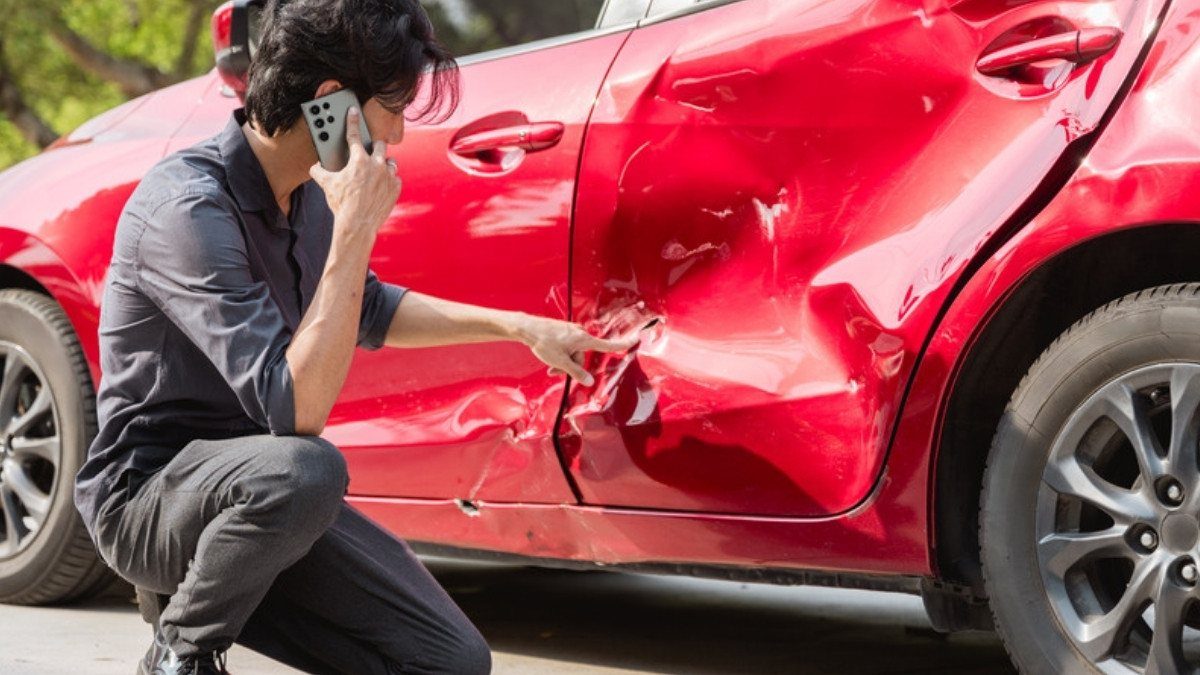
Uninsured motorist coverage in South Carolina is mandatory on every auto policy. Up to its limits, it pays what an at-fault driver with no insurance would have owed you. It also covers a driver nobody can identify, if the claim meets extra conditions. Underinsured motorist coverage is optional, and it pays when the at-fault driver carries too little coverage.
The rules sit in South Carolina's motor vehicle insurance statutes, Title 38, Chapter 77. Section 38-77-150 bars any insurer from issuing an auto policy without an uninsured motorist provision. Section 38-77-160 then makes insurers offer higher uninsured limits and underinsured coverage, both at your option. Which coverage fits your crash depends on the other driver's policy, your own declarations page and the proof of fault.
Frost Law Group handles claims involving drivers who carried no insurance or too little, and drivers who were never identified. Summerville has been Jack C. Frost's hometown since age eight, when his family moved there from Virginia, and he finished Summerville High School. Tara L. Frost is tri-county born and raised. They can read the policy language and the crash report together.
Frost Law Group takes calls about uninsured and underinsured claims at (843) 419-6653. There is no charge for the consultation, it stays confidential, and it obligates you to nothing.
On this page
When Does Uninsured Motorist Coverage Pay
Uninsured motorist coverage pays when the driver who caused your crash counts as uninsured under state law, and that definition reaches further than a missing insurance card. Frost Law Group can start an uninsured claim with that definition. It decides whether your own carrier owes anything at all.
Mandatory uninsured coverage can be no lower than the Section 38-77-140 minimums. For bodily injury, the floor is $25,000 per person, with $50,000 as the total for one crash. For your own car, the property piece of that coverage must be at least $25,000, and the policy may carve out the first $200. The Department of Insurance calls that $200 a deductible. It says you should get it back if your carrier later collects from the uninsured driver.
Uninsured coverage also does not pay twice for the same dent. Section 38-77-210 excuses it from covering property damage that insurance or some other source already paid. So if your collision coverage fixed the car, the uninsured property piece may add nothing for those repairs.
What Counts as an Uninsured Vehicle Under Section 38-77-30
Section 38-77-30(14) lists several ways a car can qualify. A driver with no liability policy at the state minimum is the obvious one. A car also qualifies when its insurer successfully denies coverage, or when that insurer goes insolvent or into receivership. The list also reaches a vehicle whose owner or driver is unknown, subject to the extra conditions in Section 38-77-170. Even a state or local government vehicle qualifies when someone drives it without proper authorization.
Proving the Claim Against Your Own Carrier
Your own insurer owes only what the uninsured driver would legally owe you. So fault and damages still need proof, the same as in any other crash claim. Under Section 38-77-150, the suit papers have to reach your carrier, which may then appear inside 30 days and defend using the uninsured driver's name. After it pays, Section 38-77-190 lets the carrier chase the uninsured driver for its money.
How Is Underinsured Motorist Coverage Different
Underinsured motorist coverage is optional, and it starts only after the at-fault driver's liability coverage runs out. Section 38-77-30(15) describes an underinsured vehicle as one insured at least at the state minimum, but for less than your damages. Before anyone counts on that second layer, Frost Law Group can compare the two policies.
Imagine a driver with minimum limits who turns left across your path on Old Trolley Road. Your surgery and lost pay run past $25,000. That driver's carrier may pay up to its per-person limit. After that, underinsured coverage you bought may reach the rest, up to your own underinsured limit. Section 38-77-160 also says offered underinsured coverage can reach damages beyond a statutory cap on recovery.
Checking Your Offer Form Under Section 38-77-350
Insurers must offer optional coverages on a form the Director of Insurance approves. Once the named insured signs a form an agent has filled out, the law presumes conclusively that the choice was informed and knowing. That makes it hard to argue later that nobody explained underinsured coverage. Section 38-77-350(E) cuts the other way. When an insured never sends back a signed offer form within 30 days, the insurer must add both coverages at the liability limits.
Section 38-77-350(C) adds a timing point. Renewals and replacement policies do not require a fresh offer. So a form signed years ago may still decide what your current policy carries.
Settling With the Driver Who Hit You
Section 38-77-160 forbids any underinsured motorist policy from making you get your carrier's approval to settle with the at-fault party. Your underinsured carrier still receives the suit papers, and it has 30 days from service to appear. If the at-fault carrier pays its full liability limits, your own carrier may take control of the defense for itself. Section 38-77-160 also shields underinsured benefits from subrogation and assignment.
What If the Driver Who Hit You Drove Away
Uninsured motorist coverage can still pay, as long as the claim meets Section 38-77-170, which lawmakers rewrote effective May 20, 2024. The definition in Section 38-77-30 treats an unknown driver as uninsured, and Section 38-77-170 then adds three conditions. Frost Law Group handles hit and run crash claims built around those conditions, starting with when police heard about the crash.
First, you or someone speaking for you must tell a police agency about the crash, and the timing has to be reasonable in light of everything that happened. No clock in hours appears in the statute. Inside Summerville, that usually means the town police department on North Cedar Street. Second, the claim needs one of three kinds of proof. Third, your failure to identify the other car and driver at the scene cannot stem from your own negligence.
The proof can be contact between the two vehicles, an eyewitness, or a recording. Any eyewitness except your car's owner and driver can qualify by signing an affidavit that carries a printed warning about false statements. If that person refuses, a court may order a deposition before suit under Rule 27. The 2024 rewrite added recordings, so a doorbell camera on Old Trolley Road that caught the fleeing car causing the crash could satisfy the statute.
Can You Stack UM or UIM Coverage
Sometimes, but only a Class I insured may stack, and Section 38-77-160 caps how far the coverage reaches. To stack is to combine coverage from more than one vehicle or policy toward a single claim. The South Carolina Supreme Court limited it to Class I insureds in its 1998 Concrete Services decision.
The statute ties coverage beyond the basic limits to the vehicle involved in the crash. If none of your household's insured vehicles was in the crash, the ceiling becomes the coverage on a single vehicle carrying the higher or underinsured amount. Frost Law Group can read each declarations page in the household before anyone says whether a second policy adds anything. No one can promise a stacked recovery, since the answer turns on policy terms and facts.
Class I and Class II Insureds in Plain Terms
Class I covers the named insured, that person's spouse, and relatives sharing the household. Class II reaches a permitted driver of the insured car and any guest aboard it. A Class I insured need not own the vehicle involved to stack. A Class II insured, such as a coworker riding along to lunch on Main Street, can claim under that car's policy but cannot stack.
Why an Umbrella Policy May Add Nothing Here
People buy umbrella policies to guard against large lawsuits. Section 38-77-161 frees any excess or umbrella policy from carrying uninsured or underinsured coverage. So an umbrella may pay nothing when an uninsured driver hurts you, unless its own terms add that protection. Read the umbrella policy and its declarations together, and ask the agent in writing whether it includes either coverage.
Are You Covered on Foot, on a Bike or in Someone Else's Car
Often yes for a Class I insured, because the statute covers such a person, in its words, "while in a motor vehicle or otherwise." That phrase comes from Section 38-77-30(7). In the South Carolina Supreme Court's 2013 opinion in Carter v. Standard Fire, the court repeated that underinsured coverage, like uninsured coverage, is "personal and portable." As a general rule, it follows the insured person rather than the insured car.
That matters in Dorchester County. The 2024 Fact Book counted 36 pedestrian victims and 18 bicyclist victims there, with 4 pedestrians and 1 cyclist killed. Frost Law Group represents pedestrians hit by cars. When the driver had little or no insurance, a household auto policy can be the first place to look for uninsured motorist coverage in South Carolina.
Walking or Cycling With a Household Auto Policy
Say a driver with no insurance hits a teenager biking on Central Avenue, and she lives with her parents. Even if she owns no car, she may be a Class I insured under her parents' policy as a resident relative. Carter quoted an earlier case describing underinsured coverage as protection for a person hurt as a passenger or a pedestrian. Whether medical payments coverage also applies depends on the wording of the policy, not on any statute.
Riding in a Friend's Car or on Your Own Motorcycle
As a guest in a friend's car, you are a Class II insured under that car's policy for that crash. Your own household policy may also respond, since you remain a Class I insured there. Motorcycle riders face one wrinkle. The Supreme Court's 2007 Burgess decision, which Carter quoted, upheld a policy term limiting portable underinsured coverage for a rider hurt on a bike he owned and had insured without underinsured coverage. For riders, Frost Law Group handles motorcycle claims against uninsured drivers with that rule in mind.
Ask a Summerville Car Accident Lawyer to Read Your Policy
Two documents often settle the first questions, your declarations page and the signed offer form from when you bought the policy. Frost Law Group can read them against the statutes on uninsured motorist coverage in South Carolina. That review can show which layers may apply to your crash and what proof each one needs.
Tara L. Frost and Jack C. Frost practice at 128 Linwood Lane, Summerville, SC 29483. Phone the office and a lawyer picks up your question, not a call center. Ask for a free, confidential consultation, and bring the police report number, both drivers' insurance details and any letters from your own carrier.
Keep your policy packet close at hand, then send the office a note online or dial (843) 419-6653.

The attorneys at Frost Law Group
 Tara L. FrostAttorney at Law · Personal injuryTara L. Frost focuses on personal injury, car accident and truck accident claims. A lifelong resident of the tri-county area, she meets clients at the Linwood Lane office in Summerville.
 Jack C. FrostAttorney at Law · Former Summerville police officer and Charleston County Sheriff's Office detectiveJack C. Frost spent fourteen years in law enforcement with the Summerville Police Department and the Charleston County Sheriff's Office before he practiced law.