
Who Is at Fault in a Rear End Collision
- Free consultation
- No fee unless we win
- Available 24/7
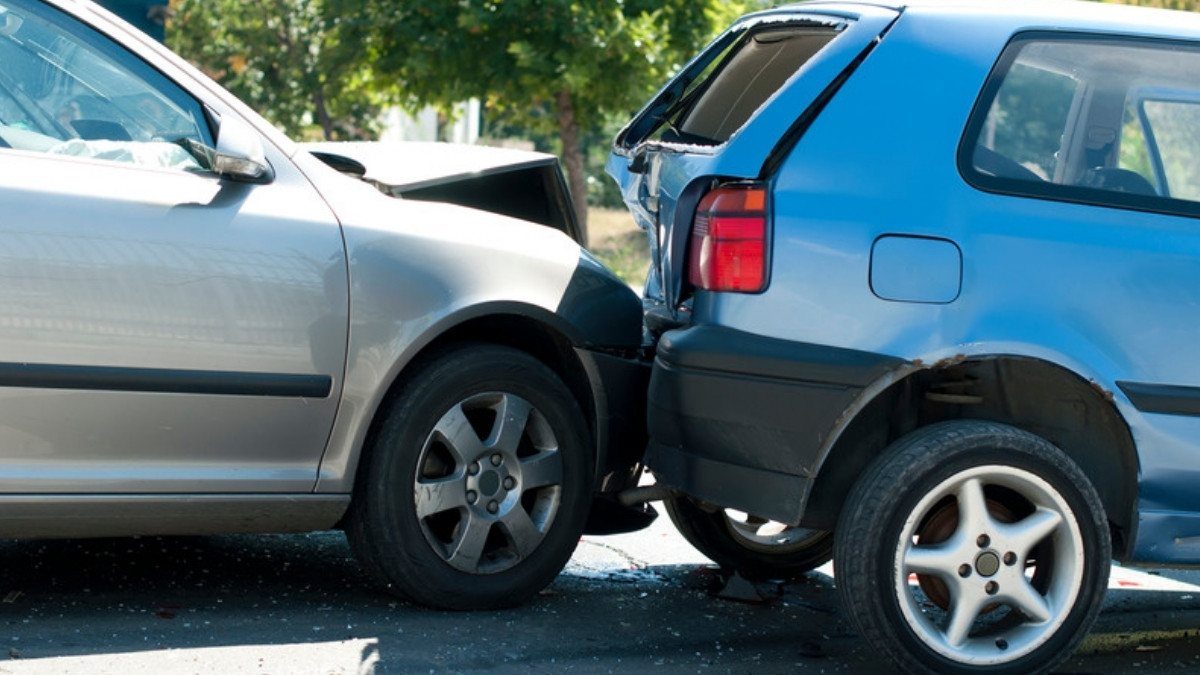
Who is at fault in a rear end collision? In South Carolina, the evidence often points to the trailing driver, because Section 56-5-1930 bars following more closely than is reasonable and prudent. Fault is never automatic, though. A lead driver who stopped suddenly without a signal, cut in, or drove with broken brake lights can share the blame.
Fairchild v. South Carolina Department of Transportation, a 2012 state Supreme Court opinion, describes how South Carolina courts have treated evidence in a rear-end crash. It recounts an older case, Daniels v. Bernard, where a witness saw one car gaining on another before ramming its rear. That testimony let a jury reasonably infer the trailing driver was following too closely and not keeping a proper lookout. An inference is a conclusion a jury may draw, and it may also decline to draw it.
Frost Law Group takes rear-end injury claims from people in the front car and people in the back one. Fourteen years in law enforcement taught Jack C. Frost how investigators assemble a crash file. He and Tara L. Frost can compare bumper damage, brake lights and the report to see which facts point where. Callers reach one of them directly, not a call center.
After a rear-end crash of any size, reach Frost Law Group at (843) 419-6653. The consultation is confidential and free, and nothing about it obligates you.
On this page
What Does the Following Too Closely Law Require
The law requires enough room behind the car ahead for the conditions, and it sets no number of feet or seconds. Frost Law Group measures a rear-end claim against that flexible standard rather than a rule of thumb. The text sits in Section 56-5-1930 of the South Carolina Code. It measures the gap against three things, the speed of both cars, the traffic around them and the state of the road.
So the test moves with the weather and the hour. A gap that works on a dry afternoon may fall short in a summer downpour. A jury looks at the conditions that existed at the moment of impact, not an ideal day.
Officers record this factor often. All three counties Summerville touches listed Followed Too Closely among their top five factors in 2024, according to the SCDPS Fact Book. Charleston County logged 2,532 listings, Berkeley 618 and Dorchester 408.
Those county figures count every factor an officer lists, not only the main cause. Frost Law Group can also explain crash patterns on Summerville roads for clients hurt on them.
Does the Law Set a Safe Distance in Feet or Seconds?
No, and the missing number leaves room for argument on both sides. A driver creeping through stop-and-go traffic may need less space than one cruising at highway speed. Rain on Dorchester Road can stretch the safe gap further still. A jury weighs the evidence and decides what was reasonable that day.
In 2024, the SCDPS Fact Book listed Followed Too Closely as the primary contributing factor in 9,270 South Carolina collisions. Of those, 1,728 caused injuries. That statewide count measures only the main cause, so it does not compare with the county listings.
Extra Spacing Rules for Trucks and Towing Vehicles
Outside business and residence districts, a truck trailing another truck has to leave a gap that an overtaking car can safely enter. The same goes for any vehicle towing another. Caravans and motorcades carry a similar duty, though funeral processions are exempt. Since 2017, the statute has also excused trailing commercial trucks in an automated platoon, meaning rigs linked by cooperative adaptive cruise control.
Is There a Legal Presumption Against the Rear Driver
No, South Carolina law does not presume the rear driver is at fault. What the courts allow is an inference, drawn from evidence such as one car gaining on another and striking it from behind. A presumption would force the rear driver to disprove fault. An inference simply lets the jury weigh the proof, and Frost Law Group builds rear-end claims on that proof.
Even the officer at the scene starts from the same place. Section 56-5-6170 tells investigating officers that the crash itself does not raise a presumption that anyone broke a traffic law. Any charge has to rest on evidence of a violation.
Within the town, some Summerville police officers in the Traffic Safety Unit have reconstruction training, a skill that goes beyond noting where two bumpers met. Their measurements can say more than the resting spots of the cars. So the answer to who is at fault in a rear end collision comes from the facts, not from the position of the cars alone.
How a Traffic Violation Becomes Negligence in a Rear-End Case
Negligence per se means carelessness proven by breaking a safety statute that fits the situation. Fairchild restated that violating an applicable statute is negligence per se. Causation, meaning whether the violation actually produced the injury, usually goes to the jury. A causative violation can also be some evidence of recklessness. That may let a jury consider punitive damages, which require clear and convincing proof.
The rear driver's traffic conviction itself stays out of the civil case, because Section 56-5-6160 bars that evidence in any civil action. Whether a paid ticket counts under that rule is something a lawyer should check.
What Happened on Interstate 95 in Fairchild
The Fairchild crash happened on Interstate 95, and the appeal came from Colleton County. A commercial-size truck towing a 28-foot trailer struck a minivan whose driver was braking for an SCDOT trailer that partly blocked her lane. The truck and trailer together weighed over eight and a half tons.
Its driver said he held a steady 65 to 70 miles per hour and was maybe 100 feet or more back when she braked. The Supreme Court held that the punitive damages claim should have gone to the jury. Proof that the truck's driver might have violated Section 56-5-1520(A) on speed and Section 56-5-1930(a) on spacing carried that claim.
Who Is Responsible in a Chain Reaction Crash
In a chain reaction crash, every driver whose carelessness contributed to the pileup can share responsibility. The jury assigns each one a percentage. The order of impacts often matters. A middle driver shoved into the car ahead may carry no fault at all. One who had already struck that car before being hit may carry some.
SCDOT estimated an average of 107,600 vehicles a day in 2024 on Interstate 26 from College Park Road to US 78. When that flow stops short, the cars behind have only their following distance to work with. Frost Law Group handles chain collisions across its service area, including car crash claims in Mount Pleasant.
How Shares Are Paid When Several Drivers Are at Fault
Since 2005, Section 15-38-15 has let a defendant found under 50% at fault pay only its own share. A defendant whose share reaches 50% can be held for the entire award, which is joint and several liability. For claims arising after January 1, 2026, Act No. 42 of 2025 widened the jury's view to include people who were never sued. The crash date decides which version applies.
Why a Settling Driver May Still Appear on the Verdict Form
Under the 2026 version, a wrongdoer who settles generally goes on the verdict form anyway, so the jury can weigh that share. Fairchild had a similar shape. The minivan driver signed a covenant not to sue, a settlement in which she agreed not to pursue SCDOT, and SCDOT left the case. Today, a jury deciding a newer claim would usually see a settling party's name when it divides fault.
Talk With a Summerville Car Accident Attorney About a Rear End Crash
Most of the proof in a rear-end case is physical. Photos of both bumpers, the brake lights, any dashcam file and the officer's report all help. So do the names of drivers further back in the line. Together, those items can show who is at fault in a rear end collision like yours.
Tara and Jack Frost meet clients at 128 Linwood Lane, Summerville, SC 29483. Walk through that evidence with them there. Frost Law Group can explain how the following distance statute, the signal rules and comparative fault fit your crash. Ask for a free, confidential consultation before an adjuster tells you the answer is automatic.
Phone (843) 419-6653, or send the Frosts a message online if a call is hard to fit in right now.

The attorneys at Frost Law Group
 Tara L. FrostAttorney at Law · Personal injuryTara L. Frost focuses on personal injury, car accident and truck accident claims. A lifelong resident of the tri-county area, she meets clients at the Linwood Lane office in Summerville.
 Jack C. FrostAttorney at Law · Former Summerville police officer and Charleston County Sheriff's Office detectiveJack C. Frost spent fourteen years in law enforcement with the Summerville Police Department and the Charleston County Sheriff's Office before he practiced law.